
Stain-Resistant Tablecloths: An Everyday Guide
Louis MikolajczakA Stain-Resistant Tablecloth Can Protect Your Table Without Looking Like a Compromise
A stain-resistant tablecloth is often chosen for a very simple reason: the table is used every day. Quick breakfasts, homework, drawing, evening meals, weekend guests… It needs to remain pleasant to look at without forcing you to intervene every time a glass is spilled. The right model doesn't just repel small stains; it also fits the way you live around your table.
The challenge is not to confuse practicality with a rigid appearance. Some easy-care tablecloths have a very soft drape and a gentle color. Others are more structured, ideal for a busy family kitchen or a heavily used table. Above all, you need to choose a finish that is consistent with the space, the rhythm of your meals, and the atmosphere you want to maintain.
Here are useful criteria to ensure you don't just buy a "resistant" tablecloth, but one that is truly pleasant for daily use. These expand on our guide on tablecloth materials for everyday use.
Table of Contents
What a Stain-Resistant Tablecloth Really Needs to Solve
A stain-resistant tablecloth doesn't make a table invincible. It mainly buys you time. When a drop of sauce, coffee, or juice falls on the fabric, the finish limits its immediate absorption. You can blot it up before the stain sets. This margin of maneuver makes meals more relaxed.
It is particularly useful if the table is a versatile piece of furniture. In a small home, the tabletop sometimes serves as a desk, a creative space, and a dining table all in the same day. A protected surface avoids having to put on a new tablecloth every time a marker or applesauce appears. For a large family, it also allows you to keep a table dressed without excessive washing between meals.
Before choosing, identify what bothers you most today. Is it cleaning up after the kids? Greasy marks on a light-colored tablecloth? The fear of bringing out a nice tablecloth when you have guests? The appropriate model varies depending on the answer. A highly protective finish can be reassuring in a busy kitchen; a more subtle treatment may be sufficient for a dining room used with care.
Understanding Finishes Without Getting Lost in Terminology
We often talk about coated, water-repellent, plasticized, or treated tablecloths. These words describe different sensations. A coated tablecloth generally has a surface that is easy to wipe clean with a sponge and retains a textile appearance. A water-repellent finish allows the fabric to breathe more, but requires quick action when something is spilled. A heavily plasticized tablecloth protects effectively, while having a neater and sometimes shinier look.
The right choice depends on the room. In a kitchen where you eat three times a day, an easy-to-wipe surface genuinely saves time. In a quieter dining room, a soft-touch fabric with light protection might be more pleasant. Don't hesitate to feel the material if you can: visual comfort doesn't replace the sensation you get when placing your hands on the table.
Also, consider the flexibility. A tablecloth that is too stiff can sometimes form pronounced creases at the corners and lift up when you sit down. A material that drapes naturally makes the table more inviting and requires fewer adjustments during the meal.

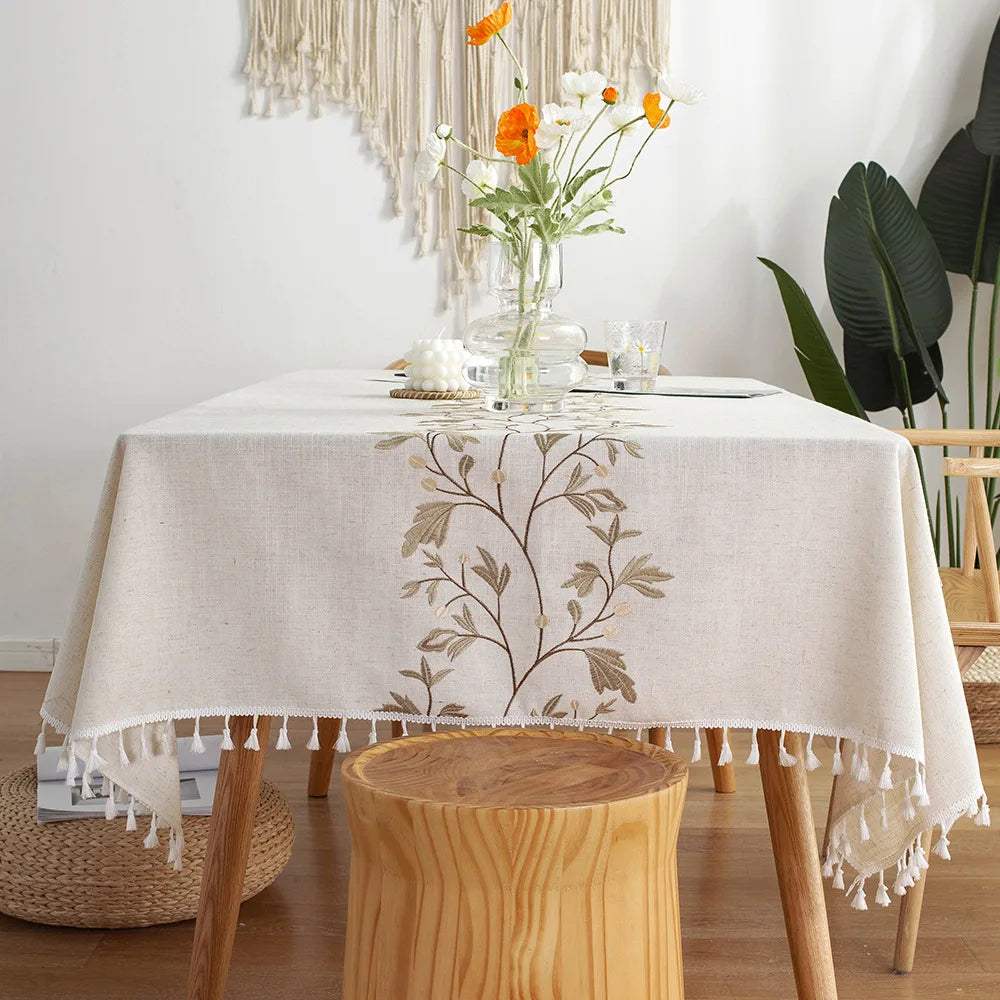
A stain-resistant finish gives you time to blot while maintaining a natural drape.
Choosing an Easy-to-Live-With Color and Pattern
White is elegant, but it demands a very serene relationship with small marks. If your table is used a lot, an off-white, a speckled beige, a warm gray, or a discreet print will often be more restful. These shades maintain a bright atmosphere while making light marks less visible between washes.
Patterns are not just for festive tables. A fine stripe, a soft small check, or a low-contrast botanical design adds character without overwhelming the tableware. If your plates are already colorful, look for a calm background. If your tableware is white, a pattern can do all the decorative work and save you from constantly adding centerpieces, placemats, and accessories.
A stain-resistant rectangular tablecloth can therefore remain very decorative. The important thing is to match it to the contrast level of the room. In a kitchen already rich in wood and objects, a textured solid color brings calm. In a very neutral dining room, a subtle pattern can give the table presence.
The Right Steps After a Meal
The first reflex matters more than any miracle product. Blot a stain without rubbing, using a clean cloth. Rubbing often spreads the substance and can push the color into the fibers. For a fresh mark, lukewarm water and a little mild soap are often sufficient. Then follow the specific recommendations for the tablecloth: some wash very well in a machine, others prefer simple surface cleaning.
Avoid harsh products used out of habit. A protective finish can lose effectiveness if it's stripped away with every minor incident. Regular, gentle, and quick maintenance is better. After the meal, shake off crumbs, wipe the used area, then allow the tablecloth to breathe if it has been folded or damp.
For more stubborn stains, take the time to check the material before acting. Wine, tomato, wax, or oil do not all require the same approach. A calm routine prevents damage to a tablecloth you specifically chose for durability.
Matching the Size to Your Table and Habits
Effective protection doesn't compensate for the wrong size. A tablecloth that's too short moves easily and exposes the table edges to bumps. A tablecloth that's too long gets in the way of knees and risks getting caught under chairs. Measure your table and choose a drop length suitable for everyday use, which is generally simpler than a formal reception drop.
If you use extensions, plan for a second tablecloth or a larger size for occasions when the table is extended. Trying to stretch a small tablecloth over a large table often creates creases and unprotected areas. A table that hosts many gatherings deserves two easy-to-use solutions, rather than a single tablecloth used in all configurations.
Finally, consider storage. A tablecloth that is carefully folded and easily found will be used. A light cover, a clean drawer, or a dedicated shelf is sufficient. Practicality begins before the meal: it also depends on how easily you can take out and put away the linen.
| Usage | Material or Finish | Advantage | Mistake to Avoid |
|---|---|---|---|
| Family meals | Flexible water-repellent treatment | Liquids penetrate less quickly | Confusing stain-resistant with waterproof |
| Table used all day | Speckled shade or discreet pattern | Small marks are less visible | Choosing a too demanding color |
| Frequent washing | Textile compatible with a simple routine | Stress-free maintenance | Ignoring manufacturer's instructions |
Conclusion
The best stain-resistant tablecloth is one that allows you to use your table without constantly monitoring it. Choose the finish according to your daily life, a color that stands up to real life, and a size that drapes naturally. With these three criteria, the protection becomes invisible: the table simply remains beautiful, ready for the next meal.