
Highlight the tabletop
The wood, glass, or stone remains visible on the sides. The textile then acts as a guiding thread and primarily protects the central area.

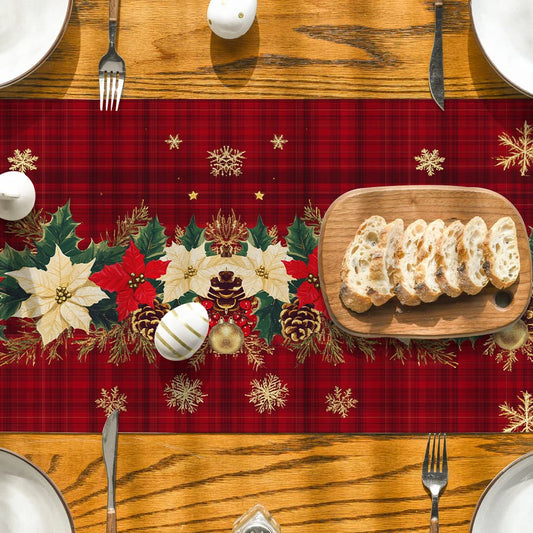


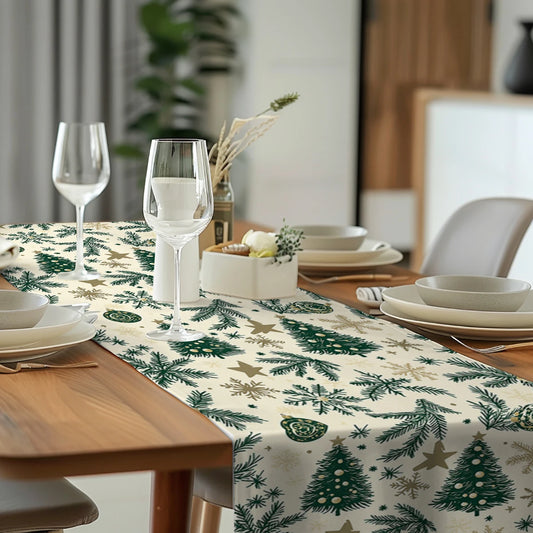

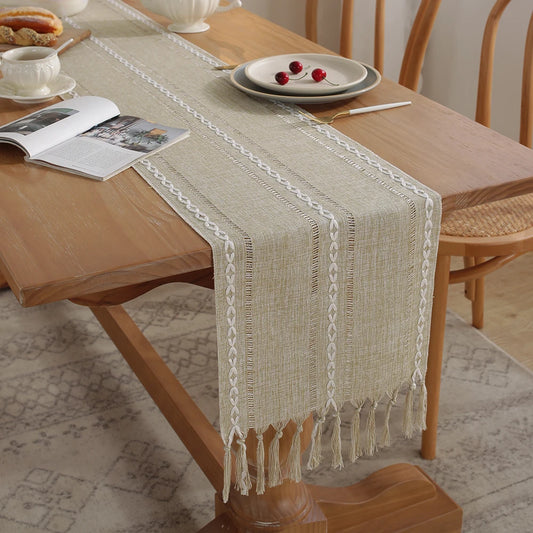


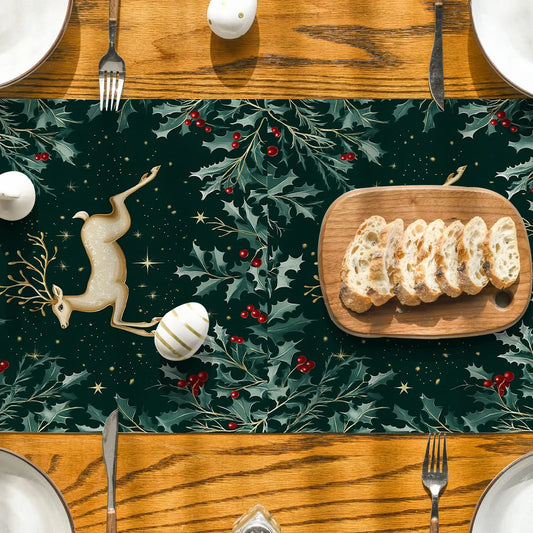


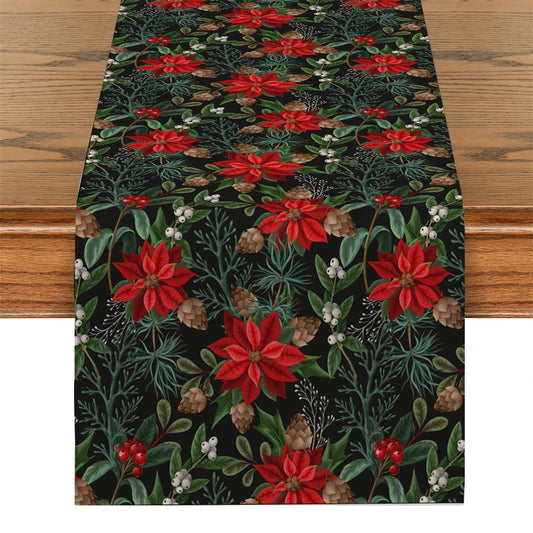


The table runners holds a special place in decor: it doesn't cover the entire table, but creates a visual line that organizes the center and highlights the items placed upon it. Used alone on a beautiful tabletop, it lets the wood or stone show through. Placed over a tablecloth, it adds color, texture, or a pattern without replacing the base.
To choose the right one, you need to consider the length of the table, the available width at the center, how the plates are arranged, and the space required for serving dishes. A very wide model can become overwhelming; a runner that is too short looks isolated in the middle of the tabletop. Maison Orea brings together a variety of formats and styles to allow every table runners to play its true role: guiding the eye without getting in the way of the meal.
It creates a central axis, provides spot protection for the area under certain objects, and facilitates creating a centerpiece. It can hold candles, a small vase, serving dishes, or simply remain empty to showcase its material.
Its main advantage is versatility. It can be used every day, then replaced with a more festive color at Christmas, a floral pattern in the spring, or a deeper shade for a dinner party. Unlike a full tablecloth, the table runners leaves a large part of the tabletop visible.
The wood, glass, or stone remains visible on the sides. The textile then acts as a guiding thread and primarily protects the central area.
A dark runner on a white tablecloth immediately structures the table. Conversely, a light-colored model calms down a colorful tablecloth.
It helps distribute small decorative elements along the length while keeping plates and glasses in distinct areas.

First, measure the length of the tabletop. You can choose a shorter runner that stays entirely on the table, or a longer model that hangs down slightly at both ends. Both effects are valid: the first is more contemporary and compact, the second is more reminiscent of the drape of a tablecloth.
If you want a drop, add twice the desired length to the tabletop measurement. For example, for a 180 cm table and a 20 cm drop at each end, look for about 220 cm. This simple formula is more reliable than a chart based solely on the number of guests.
For a very long table, the runner must maintain consistent proportions. However, a model that is too short can be embraced if it serves only as a base for a compact centerpiece. There is therefore no mandatory size: the desired look remains the primary criterion.
The width should leave enough room for plates, cutlery, and glasses. On a narrow table, a wide runner can encroach on the cutlery and complicate service. On a large table, a more generous strip can, conversely, give more presence to the center.
Before ordering, measure the free space between two place settings facing each other. This distance indicates your maximum comfortable width. Models around 30 to 40 cm are common, but the right value depends on your table and the size of your dinnerware.
A round table does not have an obvious longitudinal axis, but a runner can still work. One solution is to have it cross the diameter, like a central strip. A second approach is to use two runners in a cross pattern if the table is large enough. This arrangement creates multiple zones and can structure the place settings.
On a round tablecloth, keep the contrast simple. If the tablecloth is patterned, opt for a solid-colored runner. If it is solid, you can add more pattern or texture. Above all, ensure that the ends do not hang down too low near the knees.
Table Runnerss come in very different materials. Cotton and linen-look textiles create a soft, natural finish. Lace and crochet provide a more open-weave and decorative structure. Voiles or fine textiles can add lightness for a reception, while certain synthetic materials are chosen for their durability or ease of care.
Do not assume that a material automatically possesses a property. A textile presented as "linen" in a title may be a blend, and a shiny look does not necessarily mean it is satin. Check the composition and instructions for the specific product.
For daily use, choose a material that you are prepared to clean regularly. For a one-off event, the visual effect may take priority.
The runner can pick up a color already present in the dinnerware, napkins, or flowers. Sage green, beige, terracotta, or brown work well with wood and natural materials. Burgundy, deep blue, or black provide more contrast on a light base. Gold, rose gold, or silver tones are often used for festive tables, but they are more elegant when limited to a few elements.
A dusty pink table runners can soften a white or gray table. A teal table runners adds more depth. At Christmas, a fir green table runners easily creates a connection with greenery and light-colored dinnerware.
If the table also serves as a desk or a homework area, choose a textile that is easy to remove and store.
For a wedding, christening, or birthday, check the space available for serving dishes before finalizing the decor.

The runner organizes the central zone, while placemats define each place. This combination works particularly well on a bare table or a very understated tablecloth. To avoid clutter, keep at least one of the two elements solid-colored.
If the placemats are textured, choose a smoother runner. If the runner features a bold pattern, use simple placemats. The table gains readability when each textile has a different visual function.
For a spring table, floral patterns and light colors add freshness. In autumn, browns, terracottas, and burgundies create a warmer atmosphere. For Christmas, the Christmas Table collection allows you to coordinate the runner with a tablecloth, napkins, and some festive elements.
A Christmas red table runners can become the only seasonal element on a white base. This approach allows you to keep the same dinnerware and tablecloth from one year to the next while easily changing the mood.
For a more natural table, a eucalyptus or foliage runner may be enough to create the theme without adding numerous decorations around it.
Start by centering the textile. Then place the plates and check that the runner does not go under them if that is not the desired effect. Add the glasses, then install the central objects last. This method allows you to see exactly how much space remains.
Keep decorative elements low enough so that guests can see each other. If dishes are served in the center, plan for several empty zones. A beautiful runner does not need to be entirely covered: letting its material show is part of the decor.
Follow the product label. Machine-washable textiles do not all use the same temperature, and lace, crochet, voile, or runners with decorative finishes may require extra care. Avoid universal stain-removal recipes that risk altering a color or a fiber.
In case of a stain, remove the excess quickly then treat according to the material. Before storing, ensure the textile is completely dry. Long models can be rolled rather than folded if you wish to limit creases and have the necessary space.
For events, store runners by color or length. A small label with the dimensions avoids having to unfold them all before the next reception.
Measure the table and decide if you want a drop. Then add twice the desired drop length to the length of the tabletop.
Yes. It is actually a simple way to highlight a wood, glass, or stone tabletop while structuring the center.
Have it cross the diameter or use two runners in a cross if the table is large enough. Check that the ends do not bother the guests.
It depends on the table and the dinnerware. Measure the free space between two plates facing each other and choose a width that stays within that zone.
Both can be used alone or together. The tablecloth covers the tabletop; the runner primarily highlights the central axis and adds a decorative layer.

Keep your tablecloth in place with the right size, a non-slip protector, clips or weights. Useful solutions for indoor and outdoor tables.
Keep your tablecloth in place with the right size, a non-slip protector, clips or weights. Useful solutions for indoor and outdoor tables.

Prepare a cosy autumn bedroom with textiles, lighting and colours. Simple layers and decorating ideas that keep the room uncluttered.
Prepare a cosy autumn bedroom with textiles, lighting and colours. Simple layers and decorating ideas that keep the room uncluttered.

Find the right tablecloth size for round, rectangular, square or oval tables. Use our simple drop formula, size charts and measuring tips.
Find the right tablecloth size for round, rectangular, square or oval tables. Use our simple drop formula, size charts and measuring tips.
