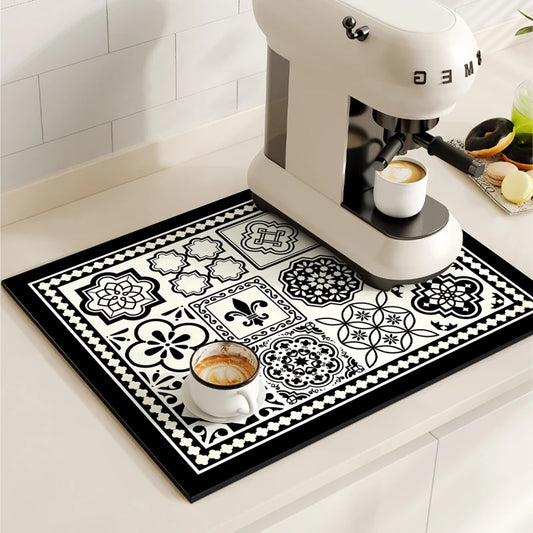
For everyday use
A wipe-clean model is quickly ready for use again after breakfast or dinner. It is an interesting solution when the table is used multiple times a day.
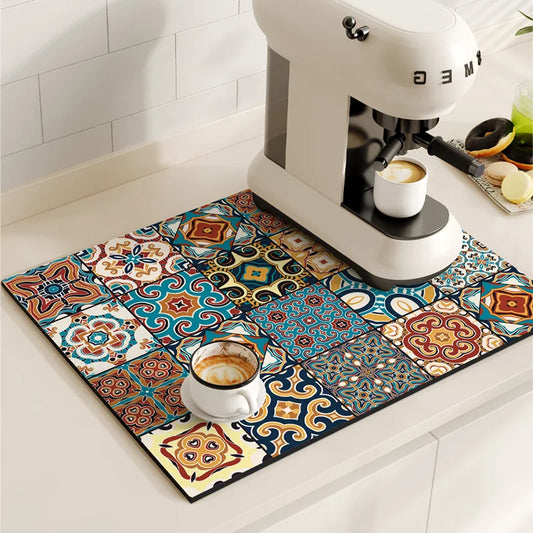
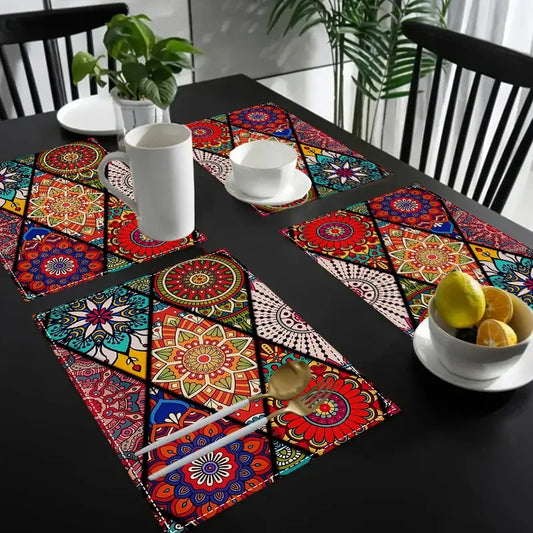
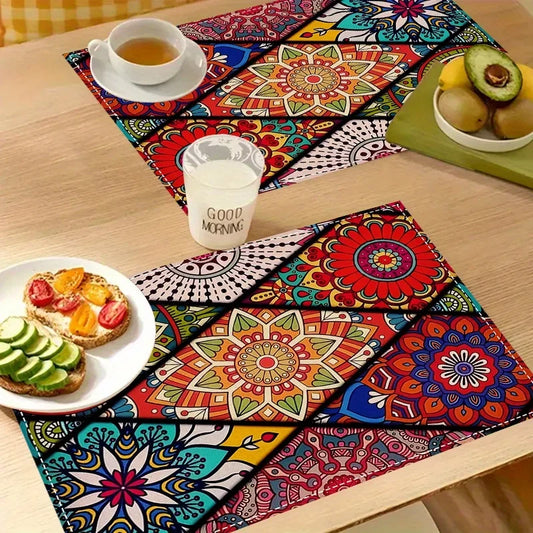
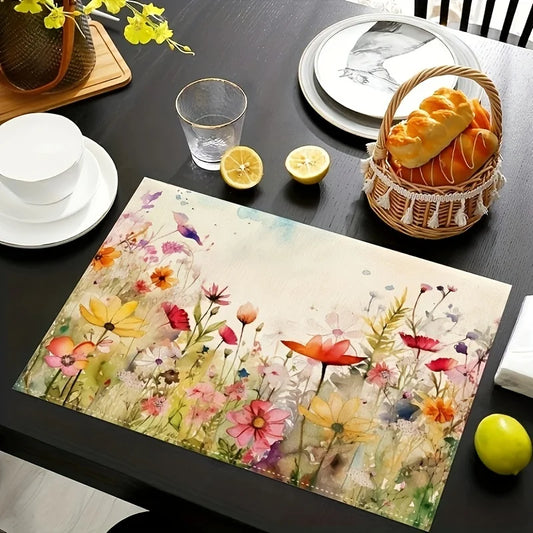
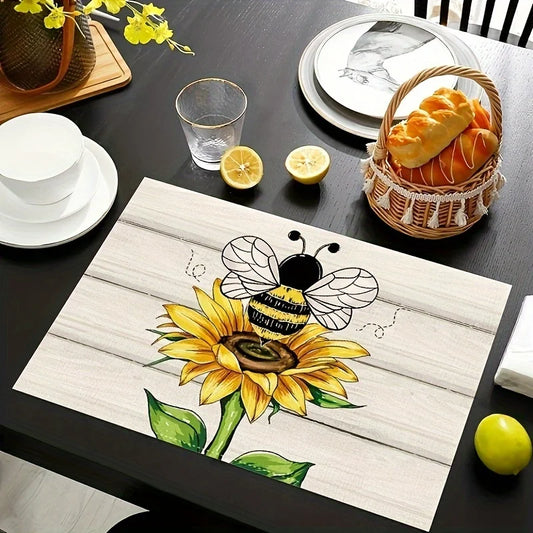
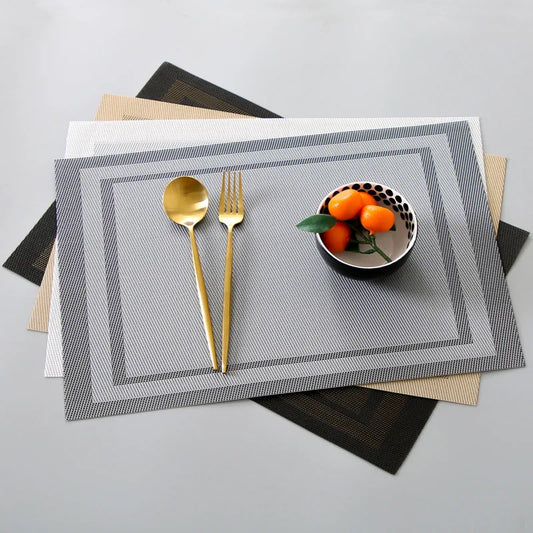
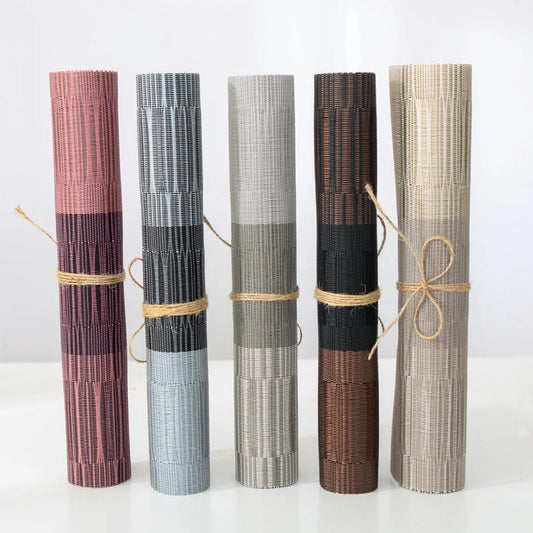
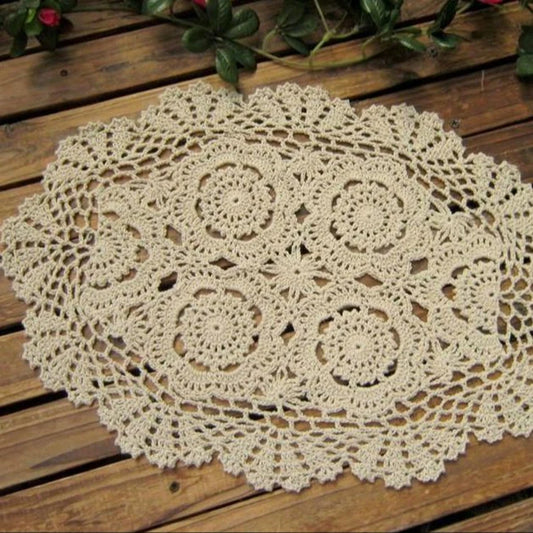
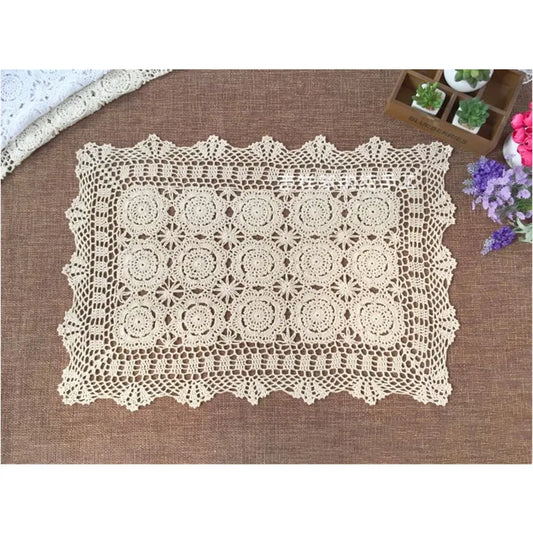
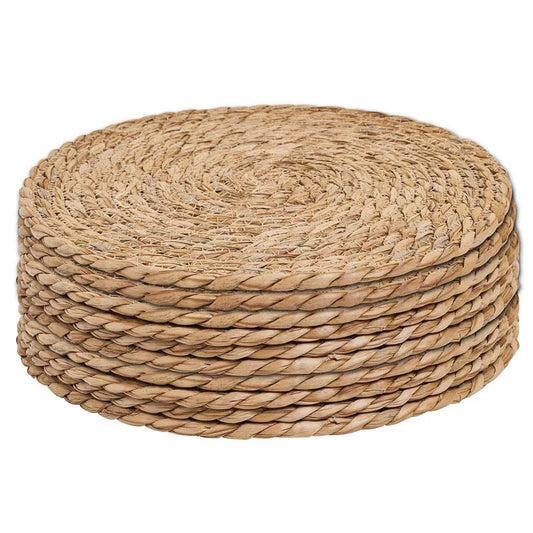
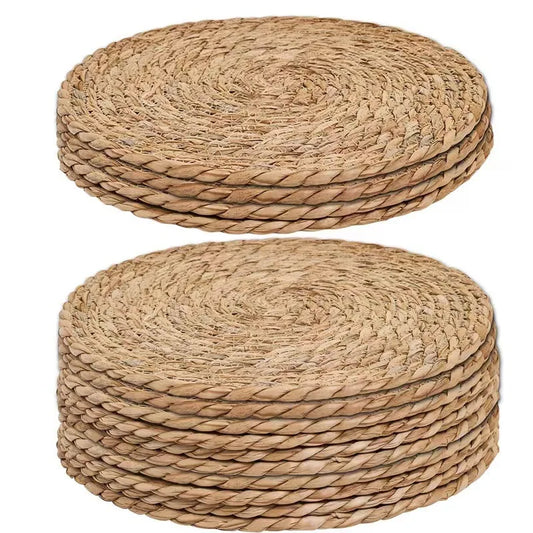
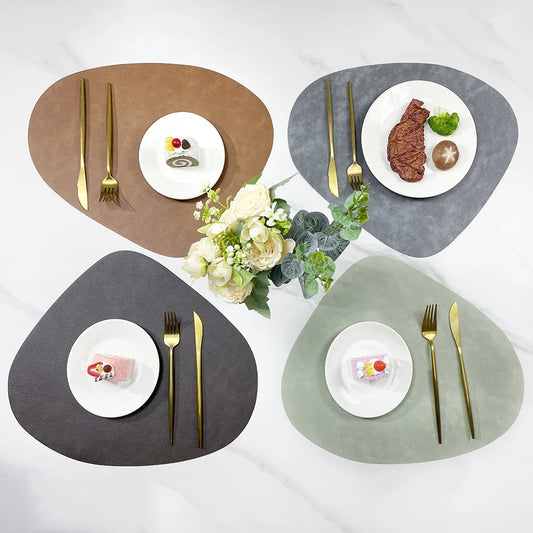
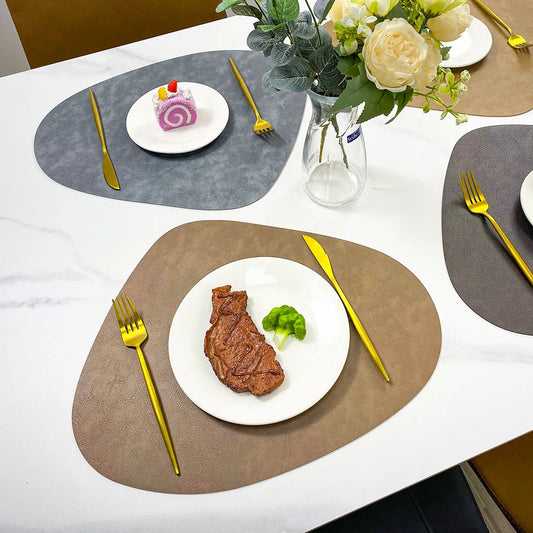
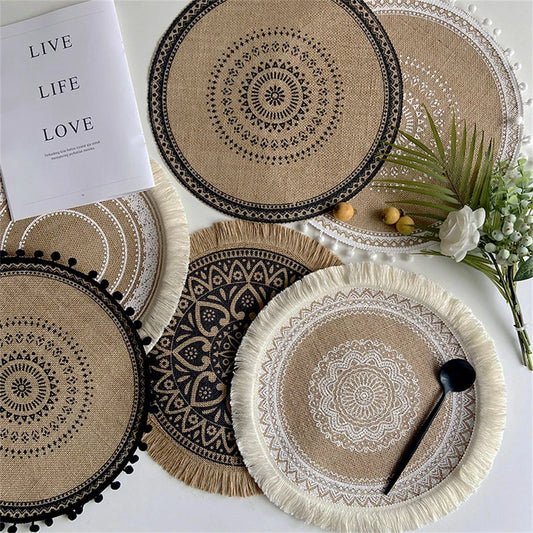
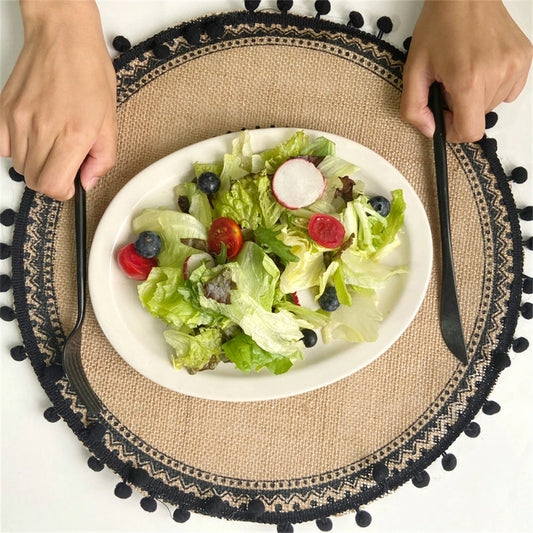
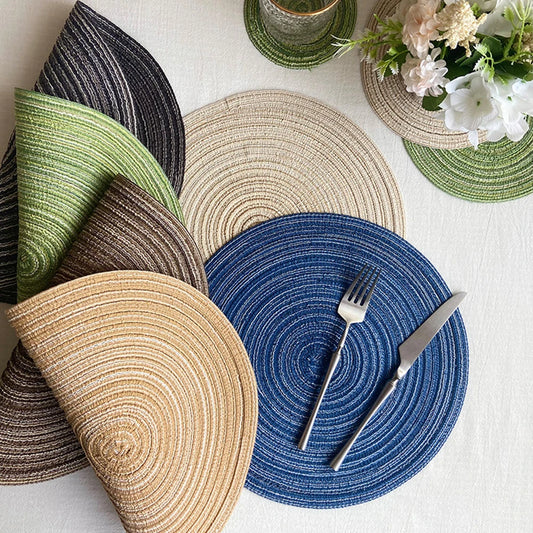
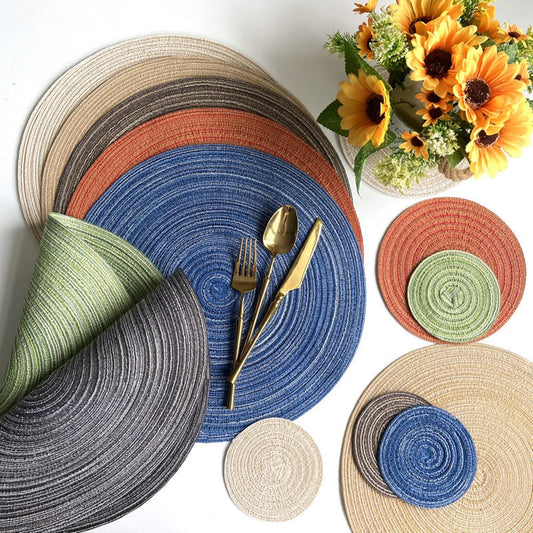
The placemats is a small element that makes a big difference in everyday life. It protects a portion of the tabletop, clearly defines each guest's place, and immediately adds color, texture, or shape to the table. Faster to set up than a full tablecloth, it is equally suitable for breakfast, family meals, or more formal dinners.
The right model depends on your table, the size of your tableware, and, above all, your lifestyle. An easy-to-wipe mat is practical with children. A textile material or leather-look finish will add more depth to a dining table. A rigid model can create a highly structured place setting. Maison Orea has curated this collection to help you choose a placemats that is useful, pleasing to the eye, and simple to maintain.
Its primary function is to create a dedicated zone for the plate, cutlery, and sometimes the glass. This boundary makes the table more organized and prevents items from being placed too close to one another. The mat can also limit direct contact between tableware and the tabletop, catch crumbs, and simplify post-meal cleanup.
However, it should not be confused with a trivet designed to hold very hot dishes. Heat resistance depends on the material. If you are placing a saucepan, dutch oven, or dish straight from the oven, use a stand designed for such temperatures. The placemats remains, first and foremost, a table setting and decorative accessory.
A wipe-clean model is quickly ready for use again after breakfast or dinner. It is an interesting solution when the table is used multiple times a day.
A worked texture, an original shape, or a deep color can transform simple tableware and provide a more refined frame for every plate.
The mat works well on its own on a beautiful tabletop, but can also be layered over a plain tablecloth to add depth and reinforce protection in the most heavily used areas.

The format should offer enough space for the plate and cutlery while leaving a visual separation between two guests. Dimensions vary by model. A rectangle around 30 × 40 cm is common, but larger formats may be preferable for large plates or a more generous presentation.
Before buying, be sure to measure the space actually available on the tabletop. On a small kitchen table, two overly large mats might overlap or leave too little room in the center. On a large table, more generous sizes, conversely, create a balanced composition. Also take into account the diameter of your plates and the space occupied by glasses.
If your table is round, a round or oval model may follow the geometry of the top more naturally. On a rectangular table, straight lines remain easy to align. The right placemats is one that lets the tableware "breathe" without monopolizing the entire surface.
PVC or vinyl models are appreciated for their quick maintenance. A non-porous surface can generally be wiped down easily after the meal, depending on the manufacturer's instructions. They are well-suited to busy kitchens and households that want to put the mats away immediately after cleaning.
Silicone often offers good stability thanks to its grippy feel and flexibility. It can be a good choice for children or creative activities, provided you check the washing instructions and the product's precise thermal resistance.
Faux leather provides a more structured surface and a contemporary look. Bamboo, paper, or other natural materials create a very different effect: warmer or lighter, but with their own specific care requirements. No material is universal; choose based on the look you love and the time you want to spend on cleaning.

A flexible mat is easy to handle, can sometimes be rolled, and adapts to many tabletops. It is practical when you want to quickly store several pieces in a drawer or basket. However, its lightness can make it more susceptible to movement depending on the material.
A rigid placemats gives a more structured impression and stays perfectly flat. This can be appealing on a large table where you want to create neat, defined spots. Storing them requires more space, and you must verify that the underside is compatible with the furniture finish to avoid marks or scratches.
Between the two, many semi-rigid models offer a compromise. The choice therefore depends less on a hierarchy of quality than on your habits: taking the mats out for every meal, leaving them in place, stacking them, or storing them in a small space.
The shape allows you to adapt the mat to the tabletop and create a different atmosphere. The rectangle is versatile and easy to align. The round shape works well with a circular table or tableware with soft lines. The oval placemats can be interesting on a narrow table because its rounded corners visually free up the sides.
Vegetal, floral, or graphic shapes are more decorative. They can become the strong element of a very simple table. In this case, keep other textiles more understated. The goal is not to have every shape match perfectly, but to create a cohesive composition around the plate.
The mat allows the tabletop to show through while protecting dining areas. Shades of beige, green, terracotta, brown, or black create interesting contrasts with wood. Simply ensure the underside of the mat is clean before each use: a grain of sand or dust trapped under a rigid material can mark certain delicate surfaces.
You can play more with textures and colors. A dark mat provides strong structure to the plate, while a natural tone creates a softer look. On a top that is already highly graphic, a solid model avoids visual clutter.
All three can coexist, but it is better to prioritize. If the tablecloth has a bold pattern, choose solid-colored placematss. If the white tablecloth is very understated, the placematss can provide the main color. A table runner placed in the center structures the service area while the placematss organize the individual spots.
To avoid a table that feels too busy, limit the number of significant textures. For example: a solid tablecloth, braided placematss, and simple tableware. Or a bare table, faux leather mats, and a textile runner. This rule allows each element to play its role without competing.
For the holidays, the Christmas Table collection also allows you to build seasonal decor based on a simple foundation. The mats can then be kept and simply supplemented with a central textile or a few accessories.
The priority is usually ease of cleaning and stability. A smooth surface or one that is quickly washable avoids the need to do laundry after every little accident. A large enough format can also catch more crumbs around the plate.
Colors and patterns can make the meal more fun, but the mat should remain simple to use. Avoid accessories that are too thick under a tall glass or a light plate. If the model has specific temperature or washing indications, respect them: a mat designed for meals is not necessarily suitable for the dishwasher or for very hot objects.
Cleaning depends entirely on the material. For PVC, vinyl, silicone, or faux leather, a soft cloth and soapy water are often enough, but always follow the recommendations on the product sheet. Avoid abrasive sponges on printed or coated surfaces.
For natural or textile materials, remove stains quickly and use only the compatible wash mode. Bamboo and certain rigid fibers should not be immersed for long. Paper or fine-fiber mats require further precautions.
Before storing, dry each piece completely. Stack rigid models perfectly flat. For flexible mats that can be rolled, do not tighten them excessively to avoid creating a permanent curve. Proper storage extends the regular appearance of edges and surfaces.
There is no single size. The format should accommodate the plate and cutlery while leaving space between guests. Measure your tabletop and compare the exact dimensions of the models before choosing.
Yes. This layering helps structure each setting and add texture or color. For a balanced result, keep one of the two elements more understated.
Non-porous surfaces like certain PVC, vinyl, silicone, or faux leather are often easy to wipe down. However, exact methods depend on the product, so you should follow its care instructions.
Not necessarily. Thermal resistance varies significantly depending on the material. Always use a dedicated trivet for a saucepan or a very hot dish.
Plan for at least the number of settings you use regularly. One or two extra pieces can be practical when hosting or to temporarily replace a mat during cleaning.

Keep your tablecloth in place with the right size, a non-slip protector, clips or weights. Useful solutions for indoor and outdoor tables.
Keep your tablecloth in place with the right size, a non-slip protector, clips or weights. Useful solutions for indoor and outdoor tables.

Prepare a cosy autumn bedroom with textiles, lighting and colours. Simple layers and decorating ideas that keep the room uncluttered.
Prepare a cosy autumn bedroom with textiles, lighting and colours. Simple layers and decorating ideas that keep the room uncluttered.

Find the right tablecloth size for round, rectangular, square or oval tables. Use our simple drop formula, size charts and measuring tips.
Find the right tablecloth size for round, rectangular, square or oval tables. Use our simple drop formula, size charts and measuring tips.
