
Make a Cold-Looking Bedroom Feel More Inviting
Louis MikolajczakCold Bedroom: Why it Looks Cold, Even When Well Decorated, and How to Visually Warm it Up
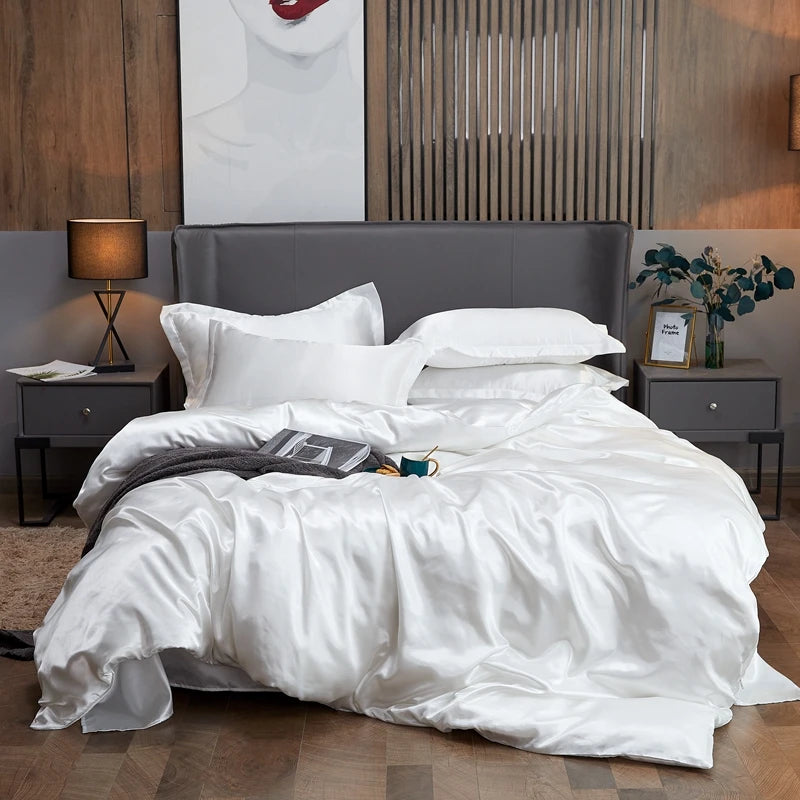
A bedroom can be clean, tidy, even pretty, yet still feel cold. This discomfort isn't always due to wall color. It often comes from a combination of details: overly bright light, very smooth bed linen, flat materials, or a bed that seems placed without connection to the rest of the room.
This topic is important because a bedroom isn't just a room to look at. It's a space where one seeks a sense of rest and welcome. The goal is not to add many objects, but to understand what is truly missing in the composition.
Following up on the article about bed linen colors for a soothing bedroom, here we look at the concrete causes of a visually cold bedroom and simple corrections to make with home textiles, light, and textures.
Table of Contents
Understanding why the bedroom feels cold
The primary cause is often a lack of texture. A very white bedroom with smooth surfaces can look bright in photos but feel sparse in reality. The eye glides over the walls, duvet cover, and furniture without perceiving much depth.
The second cause can be the light temperature. A very cold bulb alters the perception of whites and beiges. Before changing all the decor, also observe the lighting used in the evening.
- Very uniform white can give an impression of a sparsely inhabited room.
- Very smooth bed linen offers little visual relief.
- Cold light can harden certain nuances.
- Absent or very thin curtains leave more hard surfaces visible.
Bed linen as a first lever
The bed occupies a large part of the visual field. It's therefore a good place to correct a cold impression. Slightly textured linen, in an off-white, sand, or warm beige, can be enough to change the room's perception.
This doesn't necessarily mean choosing dark colors. A bedroom can remain bright and become more welcoming thanks to broken shades, visible fibers, and small textile layers. A bedding set consistent with the room's light is a more important foundation than accumulating accessories.

Textures, curtains, and rugs: often overlooked areas
A bedroom can remain cold because the bed is working alone. If curtains are absent or very stiff, the room retains many hard surfaces. A soft sheer or a denser curtain can soften the lines, with an effect that obviously depends on the desired light.
The floor also plays a role in perception. With tiles or a very bare wooden floor, a discreet rug at the foot of the bed or to the side can visually connect the bed to the rest of the room. It can also help reduce some of the internal reverberation; our guide Resonating house: how textiles improve comfort details this point.
| Perceived Problem | Possible Cause | Textile Correction | Desired Effect |
|---|---|---|---|
| Very cold white bedroom | Very smooth surfaces | Ecru linen, textured throw | More relief without losing light |
| Isolated bed | Bare floor or little connection between areas | Rug near the bed | Visual continuity |
| Very harsh ambiance | Large glass surface or absent curtains | Sheer or suitable curtain | More material around the window |
Mistakes that make the room even colder
The first mistake is to respond to visual coldness with accumulation. Adding many cushions, several throws, and objects everywhere doesn't necessarily make the bedroom warmer. Consistency between a few well-chosen materials is often more effective.
The second mistake is to seek only a very strong contrast. Pure black or a very vivid color can add character, but doesn't necessarily address the issue of texture or light.

A simple method to test without error
Observe the bedroom at different times: in the morning, late afternoon, and in the evening with the usual lighting. If it appears cold mainly in the evening, first test the light. If this impression remains constant, then look at the large surfaces and the variety of materials.
Change only one large textile surface at a time. For example, replace a visually very cold duvet cover with an off-white or add a more textured throw. The advice on how to place a bed throw without freezing the decor is useful here. If your goal is more global, the guide slow living decor shows how to add comfort without filling the room.
Conclusion
A bedroom that feels cold doesn't necessarily need renovation or many objects. Better adapted light, more visible materials, and consistent bed linen can already change its perception.
The right approach is to observe the actual room: light, textures, and large surfaces should work together rather than trying to "warm up" the bedroom with a single color.