










Follow the table top
A rectangular tablecloth, a round tablecloth, or an oval tablecloth generally provides the most even drop when the shape matches the furniture.
The tablecloth fulfills several roles at once: it dresses the table top, protects its surface, structures the decor, and can immediately change the ambiance of a dining room. Yet, the right choice doesn’t start with color or pattern. It starts with four simple questions: what is the table's shape, what are its dimensions, how is it used, and how much time do you want to dedicate to its maintenance?
This Maison Orea collection serves as a starting point for comparing the main families of tablecloths. Some people are looking for a soft textile tablecloth for entertaining. Others primarily want a surface that is easy to clean after every meal. Still others need a specific format for a round, oval, or extendable table. This guide helps you choose a tablecloth methodically and guides you naturally toward more specialized collections once your needs are defined.
Always start by measuring the table top. For a rectangular table, note the length and width. For a round table, measure the diameter through the center. For an oval table, record the total length and the width at the widest point. Then, choose the drop you would like to see hanging over the edges.
For many daily meals, a drop of about 20 to 30 cm on each side offers a good compromise between aesthetics and comfort. For a reception, you may want more fabric. However, this benchmark should be adapted to the height of the table, the position of the chairs, and the structure of the legs.
Only once the dimensions are calculated should you compare materials and styles. This method greatly reduces the risk of buying a visually appealing but poorly proportioned tablecloth.
A rectangular tablecloth, a round tablecloth, or an oval tablecloth generally provides the most even drop when the shape matches the furniture.
Daily meals, children, occasional parties, or terrace: the expected level of maintenance can lead you toward a textile, coated, plasticized, or easier-to-wipe material.
A solid-colored tablecloth creates a calm background. A strong color or pattern can become the focal point of the table and require simpler accessories.

The general method is the same for rectangular and square tables: add twice the desired drop to each dimension of the table top. A 160 × 90 cm table with a 25 cm drop therefore requires approximately 210 × 140 cm. For a round table, add twice the drop to the diameter. A 120 cm round table with a 25 cm drop requires approximately 170 cm in diameter.
On an oval table, measure the length and width then add the desired drop on both axes. Rounded edges can slightly change the perception of the drape, hence the interest in a model designed to follow the shape. If you would like detailed explanations on the calculations, the Rectangular tablecloth, Round tablecloth, and Oval tablecloth pages each explore their geometry in depth.
Avoid choosing solely based on the number of people. Two six-seater tables can have very different dimensions. Measuring the table top therefore remains the most reliable benchmark.
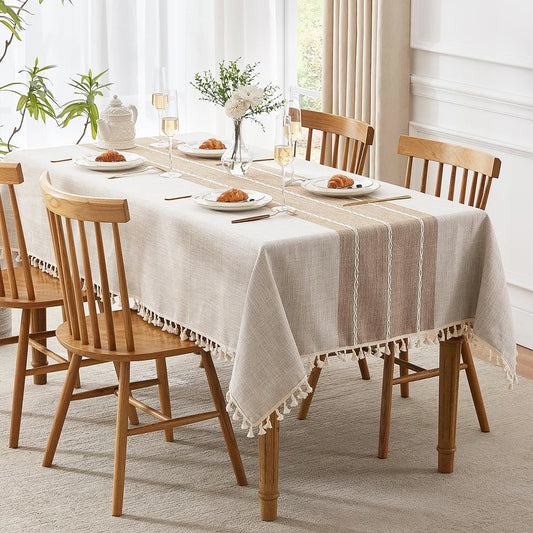
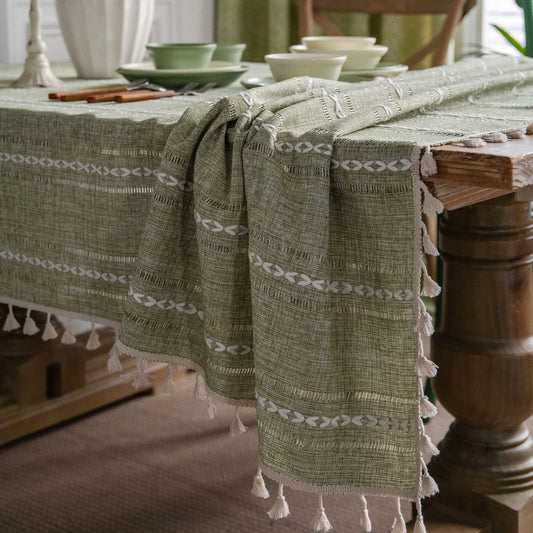
Cotton and natural-look textiles generally provide a soft and warm finish. They are well-suited when the presence of textile is part of the decor. Linen or materials that mimic its appearance bring more texture and a more relaxed drape.
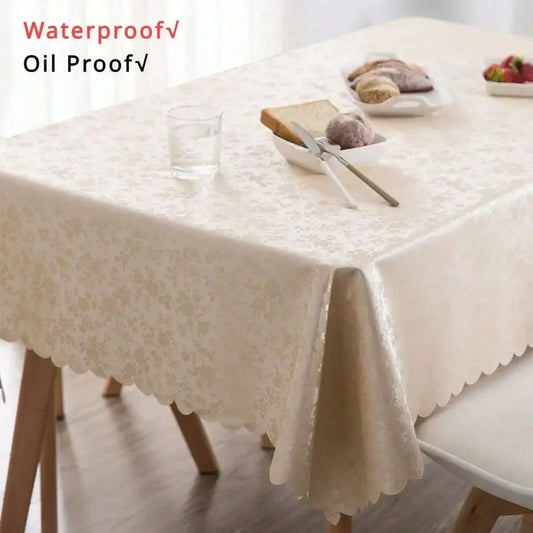
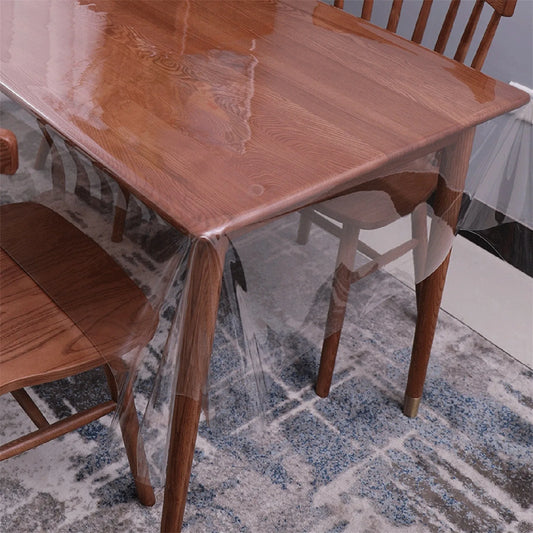
Polyester and synthetic blends can offer a different hold, faster drying, or less wrinkling depending on their construction. Coated fabrics and plasticized materials are often chosen when cleaning with a sponge becomes the priority. If your primary need is protection against liquids, consult the waterproof tablecloth collection directly. For a wax-type surface designed for quick maintenance, the oilcloth tablecloth collection meets this need more precisely.
Do not deduce all properties from the name of a fiber. Two polyester tablecloths can have very different textures and finishes. Always check the composition, the selected variant, and the care instructions.
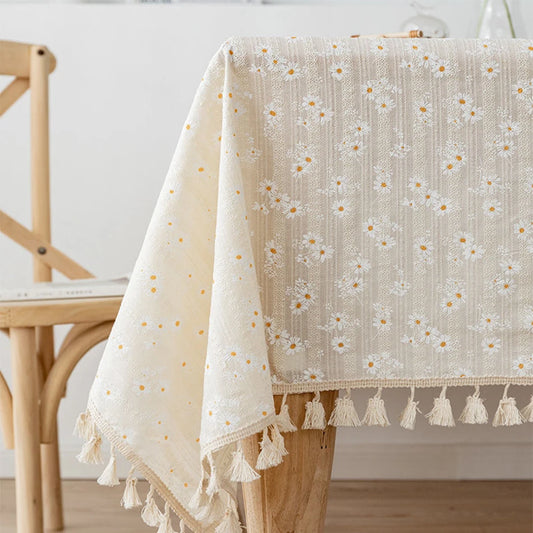
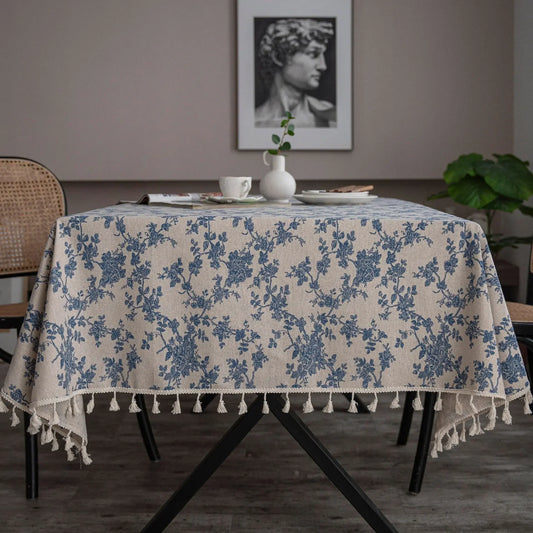
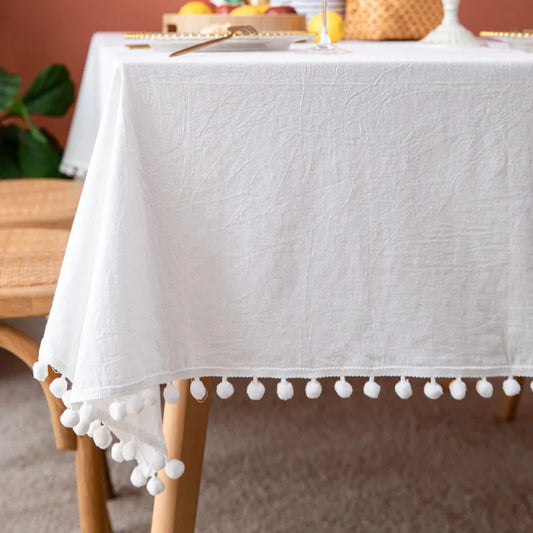
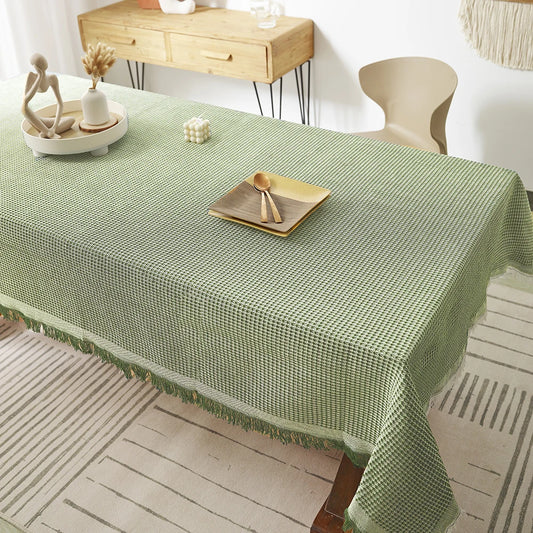
A white tablecloth constitutes a versatile base. It lets the dishes, flowers, or accessories create the color. Beige, ecru, soft gray, and natural tones provide a warmer look while remaining easy to match. Blue, green, terracotta, burgundy, or black add more presence.
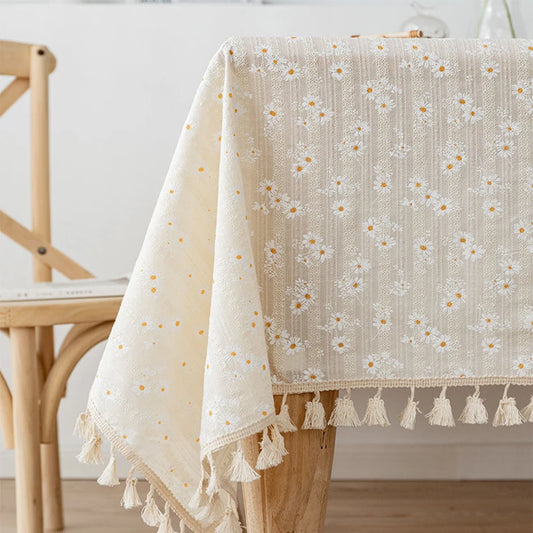
Patterns work particularly well in a room where the walls, rug, and dishes remain understated. If the tablecloth is already very graphic, simplify the elements placed on top. Conversely, a solid-colored tablecloth easily accepts a table runner or more striking placemats.
For a table you want to evolve with the seasons, keeping a neutral tablecloth and then changing the table runner, napkins, or a few accessories is often more flexible than renewing the entire base.
Daily life requires a tablecloth you aren't afraid to use. A surface that is too delicate may end up stored in a cupboard. Therefore, look for a textile or finish compatible with splashes, crumbs, and regular washing.
A product like a stain-resistant rectangular tablecloth can be interesting if its dimensions and instructions match your table. Always check what the product page specifically means by "stain-resistant."
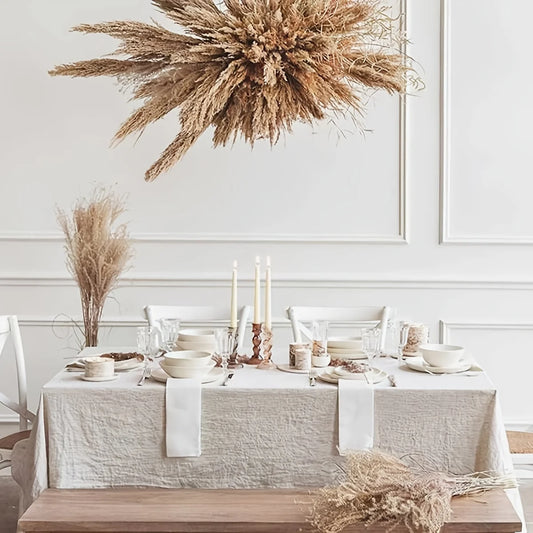
For entertaining, the tablecloth can become the base for a more formal composition. The drape is particularly visible on a large table, so take the time to check the measurements. A soft or textured material can provide more visual depth.
Keep enough space for the dishes. Successful decoration must remain practical once the meal begins.

An outdoor table adds several constraints: wind, dust, pollen, humidity, and sun exposure. A wipeable tablecloth can be very practical, but "outdoor" does not necessarily mean it can remain outside permanently. Consult the product recommendations and store the textile when prolonged exposure is not planned.
The outdoor tablecloth collection details the choice further based on terrace, balcony, garden, and windy areas. If the table is used primarily for floor picnics or nomadic meals, the picnic tablecloth meets a different logic of transport and setup.
In a windy area, avoid an excessively long drop. Suitable accessories can help keep the textile in place, provided they do not mark the material.
These three elements do not need to be used together at every meal. The tablecloth covers the entire table top. The runner structures the center. Placemats define individual places. When you combine multiple layers, give each one a clear visual role.
For example, a solid-colored tablecloth can be paired with a textured runner and simple placemats. A printed tablecloth can be associated with solid-colored placemats and no runner. On a beautiful wooden table, you can forgo the full tablecloth and use only the placemats and a runner.
The most useful rule remains limiting strong patterns. One main graphic element is often enough to make the table interesting.
The instructions depend entirely on the material. The label remains the reference for washing, drying, ironing, and any stain treatments. A white cotton tablecloth, an oilcloth, a coated fabric, and a synthetic tablecloth do not use the same method.
After the meal, remove crumbs and dry residues. In case of a stain, act quickly without spreading it. For a wipeable surface, use a non-abrasive cloth or sponge. For a washable textile, avoid overloading the machine: a large tablecloth needs space to be rinsed properly.
Before storing, ensure the tablecloth is completely dry. Large formats can be folded regularly or rolled if you want to limit certain creases and have the necessary space.
Measure the table top then add twice the desired drop to each dimension. For a round table, add twice the drop to the diameter.
About 20 to 30 cm per side suits many tables. Adapt according to the furniture height, chairs, and desired finish.
Surfaces designed to be wiped quickly are practical for daily use, but each product has its own instructions. Always compare the actual maintenance rather than the material alone.
Yes. Simply keep one of the two elements more understated to avoid clutter and leave enough room for the dishes.
Follow the shape of the table top first if you want an even drop. A different shape can be used intentionally to create a specific decorative effect.

Choose a bed throw that fits your bed and room. Measure its width, calculate the drop and compare sizes for decoration or fuller coverage.
Choose a bed throw that fits your bed and room. Measure its width, calculate the drop and compare sizes for decoration or fuller coverage.

Why does your duvet move inside its cover? Check the size, align the corners and try eight practical ways to keep your duvet in place.
Why does your duvet move inside its cover? Check the size, align the corners and try eight practical ways to keep your duvet in place.

Keep your tablecloth in place with the right size, a non-slip protector, clips or weights. Useful solutions for indoor and outdoor tables.
Keep your tablecloth in place with the right size, a non-slip protector, clips or weights. Useful solutions for indoor and outdoor tables.
