















A simple base
A light-colored tablecloth combines easily with your existing dinnerware. For frequent meals, prioritize a material whose care requirements align with your habits.
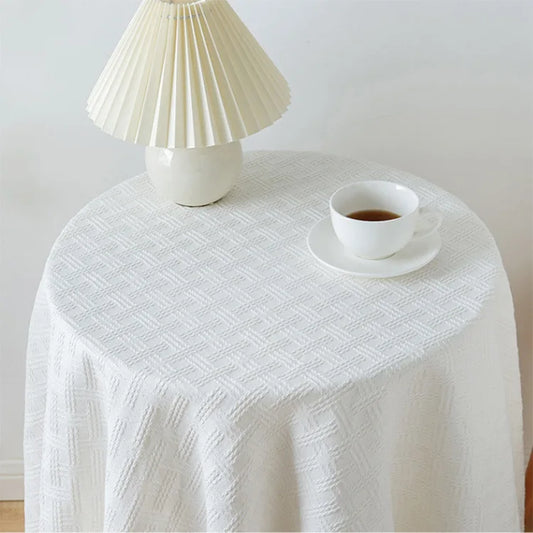
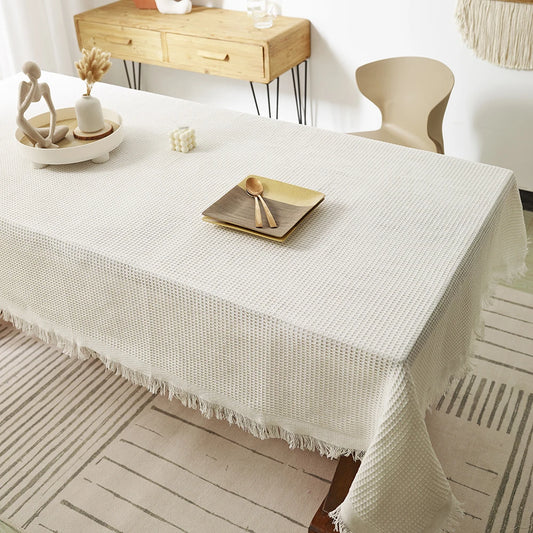
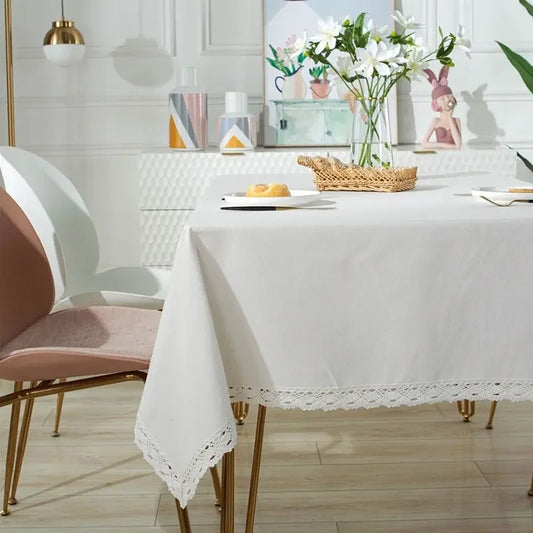
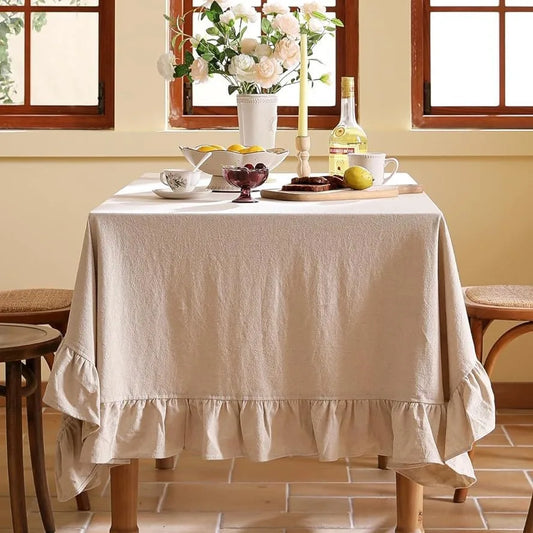
The white tablecloths is one of the simplest bases to integrate into a table setting. It allows dinnerware, flowers, candles, and surrounding materials to take up visual space without imposing a strong color. This neutrality makes it suitable for both daily use and more formal meals, provided you choose a material and maintenance routine consistent with how it will actually be used.
White, however, is not a singular choice: pure white, ivory, ecru, matte surfaces, damask, embroidery, smooth or coated fabrics all produce very different results. The shape of the table and the size also remain essential. In this collection, Maison Orea brings together a variety of models to help you choose a white tablecloths that truly serves your decor instead of simply covering the tabletop.
White acts as a backdrop. On a wooden table, it creates a sharp contrast and highlights the warmth of the material. In a bright room, it extends a luminous and discreet atmosphere. With colorful dinnerware, it allows the colors to become the focal point. With white plates, on the other hand, it creates a tone-on-tone effect that can be enriched through textures.
This versatility allows you to keep the same white tablecloths and change only a few accessories throughout the seasons. A terracotta runner, green napkins, or gold candles are enough to transform the table without changing its base.
A light-colored tablecloth combines easily with your existing dinnerware. For frequent meals, prioritize a material whose care requirements align with your habits.
White allows you to introduce a table runner, flowers, or special dinnerware without immediately creating a cluttered look.
The same tablecloth can be used for Christmas, spring, or a birthday if you change the secondary colors and the elements of the centerpiece.

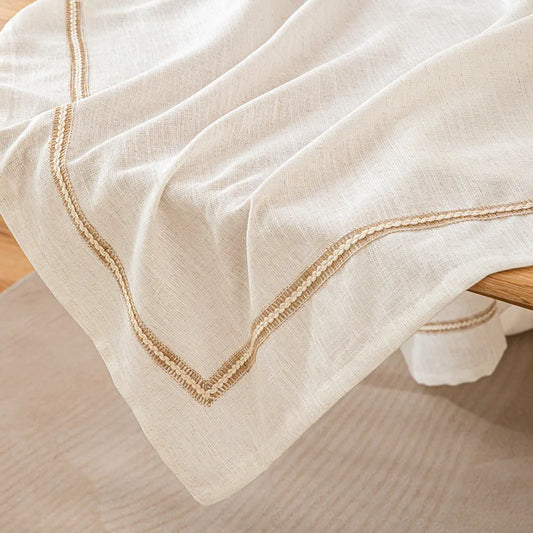
A very crisp white gives a clean and contemporary look. It can be particularly interesting with black, glass, or metal. Ivory and ecru provide a softer transition with wood, beige, terracotta, and natural fibers. In a room with cream walls, pure white creates more contrast; ivory blends more easily into the overall space.
Light also changes perception. A warm lightbulb can make a white tablecloths look slightly cream in the evening, while natural light reveals more tonal differences. If you are composing a very specific set, avoid demanding that several whites from different materials appear identical: the weave and texture strongly influence the perceived color.
Cotton offers a familiar touch and can be suitable for a daily or formal table depending on its weave. Linen or linen-look textiles provide more texture and a more natural drape. Polyester and synthetic blends can be chosen for their ease of drying or their hold, depending on the product construction.
Non-woven or lighter materials can be used for events or temporary purposes. A coated surface or one designed to simplify cleaning can be interesting when the table is heavily used. If your priority is protection against liquids, the waterproof tablecloth collection addresses this requirement more specifically.
For each model, read the composition and the label. A white cotton tablecloth and a white linen-look tablecloth may require very different care.
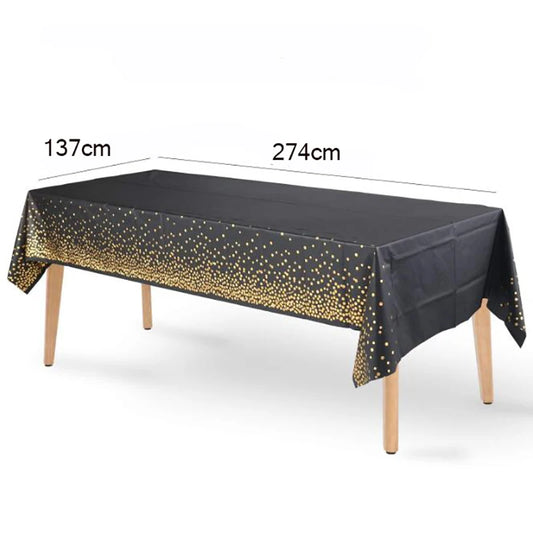
The color doesn't change the method: measure the length and width of the tabletop, or its diameter if it is round, then add the desired drop. A drop of about 20 to 30 cm on each side is suitable for many family meals. For a very formal table, you can choose more, as long as the fabric does not interfere with the guests.
For a long table, consult the rectangular tablecloth collection. For a circular table, the round tablecloth collection explains how to calculate by diameter. White remains a color criterion; shape and size must be treated separately to avoid a poorly fitted choice.
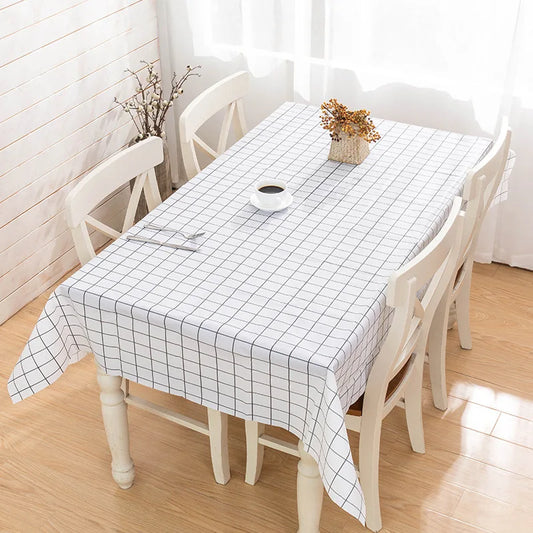
The contrast between white and wood immediately creates a legible table. A slightly textured material sometimes avoids an overly formal effect. You can leave much of the furniture visible with a white runner, or use a full tablecloth and bring the wood back through trivets or decorative elements.
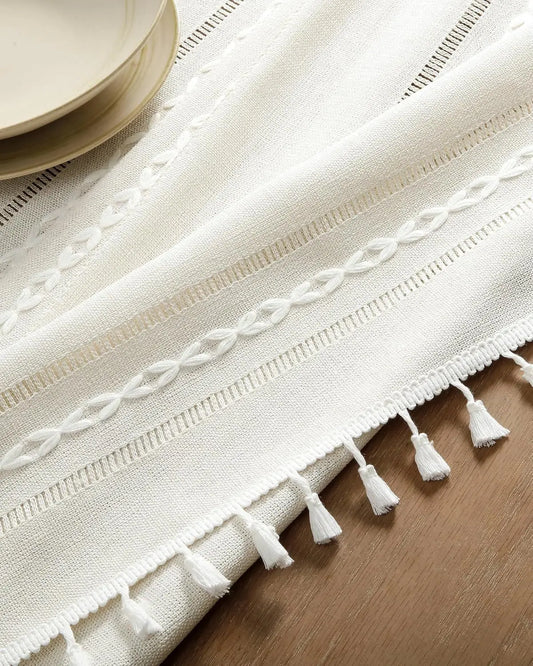
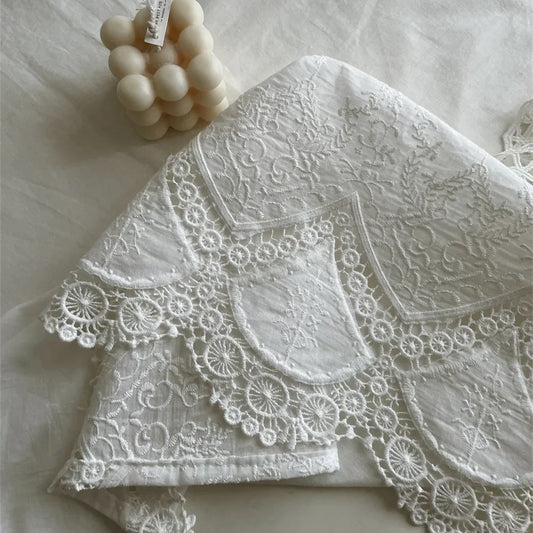
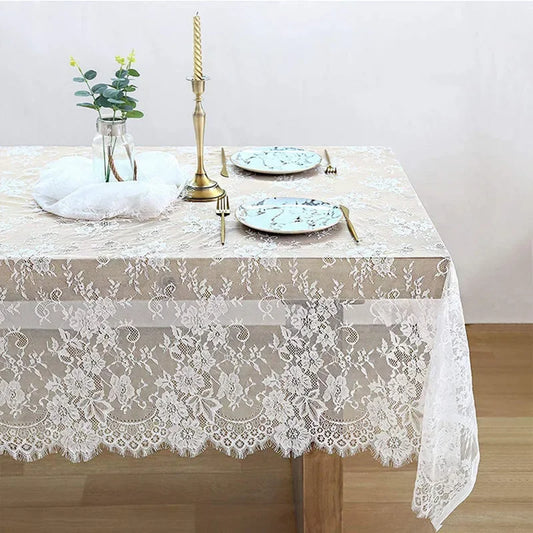
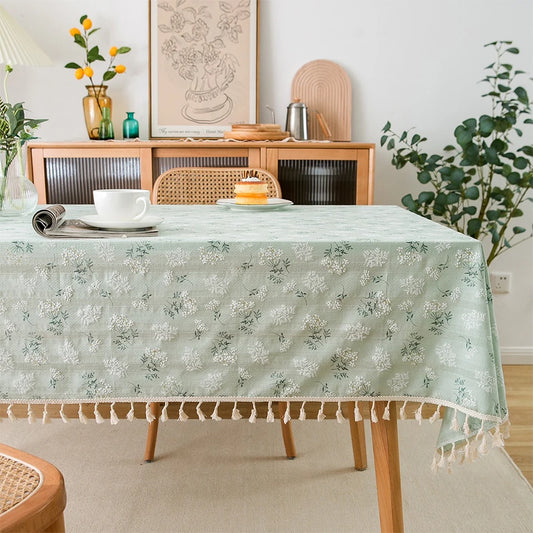
Tone-on-tone works thanks to differences in texture. A damask, embroidered, or subtly embossed tablecloth stands out despite the proximity in color. Add contrasting placemats if you wish to better define the place settings.

It makes certain stains more visible, but that does not mean it is necessarily more difficult to live with. Everything depends on the material, any potential treatment, and your habits. A tablecloth reserved for special occasions does not have the same constraints as a textile used morning and night.
The best reflex is to act quickly in case of a stain. Remove residue without rubbing, blot liquids, and follow the recommendations suited to the material. Do not automatically apply bleach or a strong stain remover: certain fabrics, embroideries, blends, or finishes can be damaged.
A stain-resistant white tablecloths can facilitate some meals, but check what the product sheet actually indicates. "Stain-resistant" does not mean no substance can mark the surface.
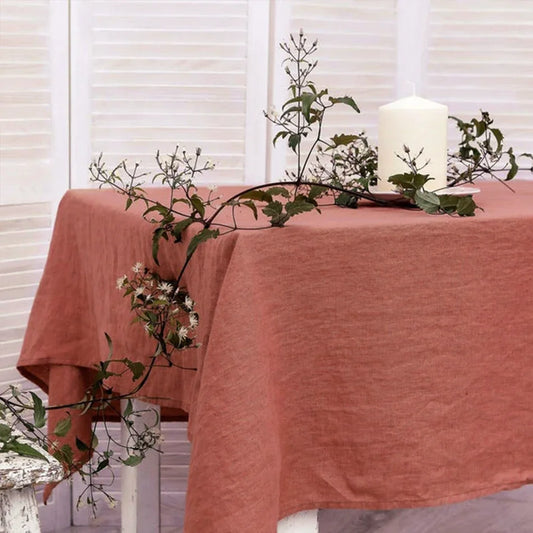
Add material rather than a lot of color. Wood, matte ceramic, textured glass, brushed metal, or woven fibers immediately give depth. Napkins can incorporate beige, green, terracotta, or a soft blue. The centerpiece can remain very simple: a few branches, a low vase, or a series of candles.
For a monochrome table, vary the whites: shiny porcelain, matte textile, cream flowers, and transparent glass. The overall look remains light but is not uniform. Conversely, a single dark accent — black cutlery, a deep runner, or contrasting placemats — is enough to strongly structure the table.
For a wedding, christening, communion, or birthday, white offers a base that adapts to the theme. It can be paired with colorful flowers, ribbons, a runner, or napkins without imposing a palette. A white wedding tablecloth must, however, be chosen like any other: dimensions, material, and maintenance remain priorities.
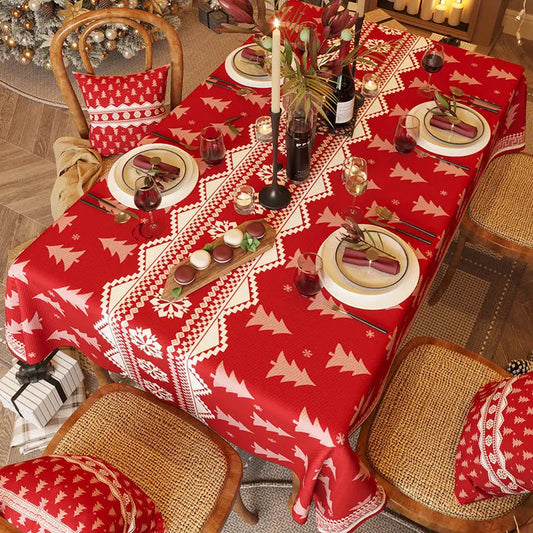
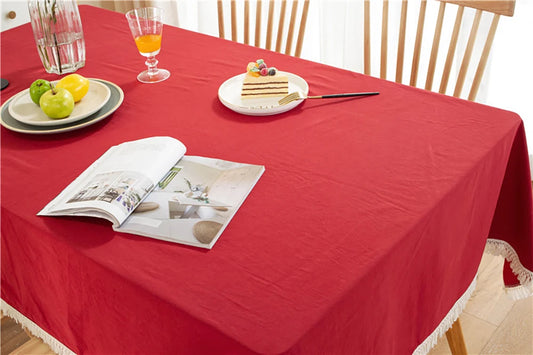
At Christmas, a white Christmas tablecloth can evoke a wintry base and let pine green, red, or gold occupy the small surfaces. The Christmas Table collection allows you to build this decor without overloading the tabletop.
For a reception, also consider the organization of the service. A highly elaborate tablecloth does not need a complex centerpiece if several dishes must remain accessible.
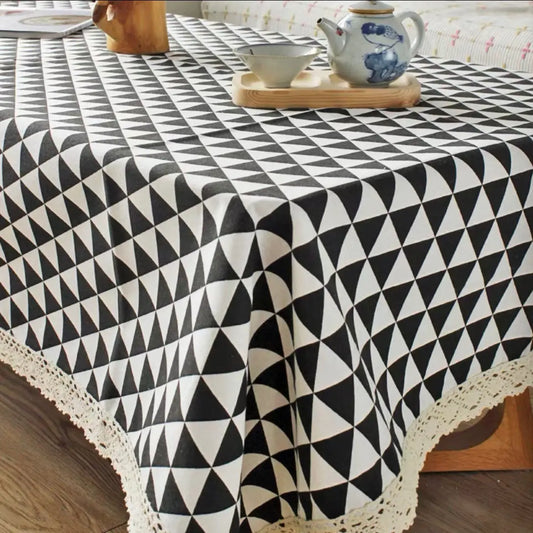
Black and white work well when one remains dominant. On a white tablecloths, a few black elements — placemats, cutlery, candlesticks, or a subtle pattern — are enough to create a contemporary table. A black and white tablecloths that is already graphic can, conversely, be paired with simpler dinnerware.
Gold, brass, or wood can serve as a third material to soften the contrast. Avoid multiplying several metals and patterns on a small table: white is particularly effective when it creates visual space around objects.
Always check the label. Sort laundry to avoid color bleeding and use the temperature compatible with the material. White does not automatically allow high temperatures. A linen, cotton, polyester, or embroidered tablecloth may require different settings.
Before washing, treat stains according to their nature and the textile. Do not aggressively rub printed, embroidered, or coated areas. After washing, remove the tablecloth promptly and dry it according to the instructions. Folding damp textiles can create odors and marks.
For storage, keep it in a dry place. If you use the tablecloth only for receptions, check its condition a few days before the event so you have time to wash it or remove wrinkles properly.
Choose according to your use. Cotton and natural-look textiles offer a soft feel; some blends or treated surfaces can simplify maintenance. Always check the exact composition of the model.
Add natural textures, wood, ceramic, a colored runner, or napkins in a warm shade. A single contrasting material can be enough.
Almost all colors work. White dinnerware gives a tone-on-tone result; deep colors create more contrast. Repeat a shade elsewhere in the decor to tie everything together.
Act quickly and follow the method compatible with the material and the stain. Avoid powerful products that are not recommended, especially on embroideries, blends, and coated surfaces.
Yes. It creates a bright base that works easily with pine green, red, gold, silver, or a more natural palette.

Keep your tablecloth in place with the right size, a non-slip protector, clips or weights. Useful solutions for indoor and outdoor tables.
Keep your tablecloth in place with the right size, a non-slip protector, clips or weights. Useful solutions for indoor and outdoor tables.

Prepare a cosy autumn bedroom with textiles, lighting and colours. Simple layers and decorating ideas that keep the room uncluttered.
Prepare a cosy autumn bedroom with textiles, lighting and colours. Simple layers and decorating ideas that keep the room uncluttered.

Find the right tablecloth size for round, rectangular, square or oval tables. Use our simple drop formula, size charts and measuring tips.
Find the right tablecloth size for round, rectangular, square or oval tables. Use our simple drop formula, size charts and measuring tips.
