







Find the diameter
Measure from one edge to the other through the center of the tabletop. Repeat in a second direction if you want to verify that the table is indeed circular.
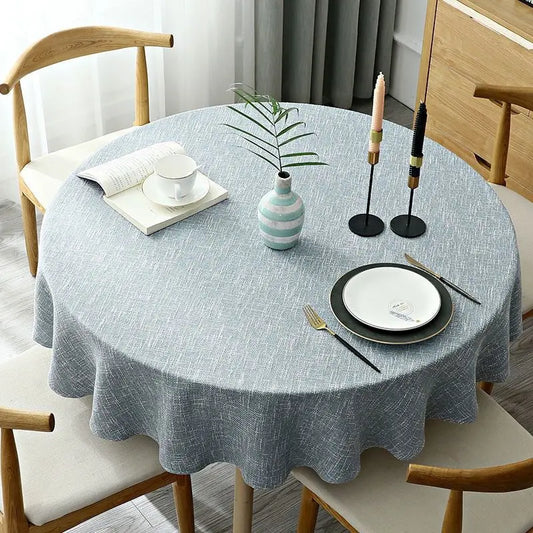
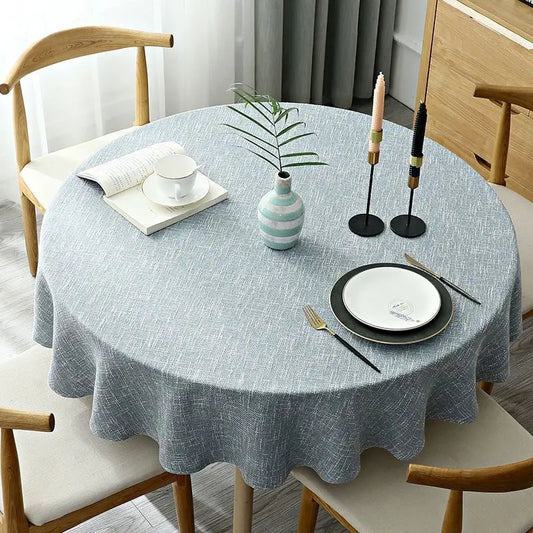
A round tablecloths naturally enhances a circular table because it follows its geometry and creates an even drop all around the tabletop. The essential point is not the number of people seated, but the actual diameter of the table and the length of fabric you wish to let hang over the edge.
A tablecloth that is too small looks like it’s just placed in the center without a real drape. A tablecloth that is too large can reach down to the knees, touch the chairs, or become cumbersome in a small space. Maison Orea brings together different diameters, materials, and styles to help you choose a round tablecloths suited to your tabletop and the way you use your table.
Measure the diameter of the tabletop by passing through its center. Then choose the desired drop. The formula is simple: tablecloth diameter = table diameter + twice the drop.
For a 120 cm round table with a 25 cm drop, look for a diameter of about 170 cm. For a 150 cm table with the same drop, the result is about 200 cm. This method is more reliable than a recommendation based solely on four, six, or eight guests.
Measure from one edge to the other through the center of the tabletop. Repeat in a second direction if you want to verify that the table is indeed circular.
A moderate drop makes daily life easier. A longer drop creates a dressier effect, as long as it does not interfere with legs.
Check the actual dimension of the variant. Some product titles refer to a different diameter than that of all available options.
These dimensions are calculation examples, not a requirement. If you prefer a 20 cm drop, add 40 cm to the table diameter; with 30 cm, add 60 cm.

A drop of about 20 to 30 cm is suitable for many common uses. It gives the textile real presence without hanging excessively over the legs. For a reception, you may want more length. On a small kitchen table or pedestal table, a shorter drop is often more comfortable.
The position of the chairs counts. On a round table with a central pedestal, guests' legs are generally quite free, but a very long tablecloth can still get caught under a chair. On a table with multiple legs, also observe how the fabric hangs around the structure.
If you are unsure, reproduce the drop with a sheet or measure vertically from the edge of the tabletop. You will visualize the result better than with a figure alone.
The round shape comes in many materials. Cotton and linen-look textiles create a soft drape and are attractive when textile aesthetics are important. Coated, plasticized, or easy-to-wipe materials are better for everyday meals, children, or tables regularly exposed to spills.
If your priority is a particularly easy-to-clean surface, also check out the oilcloth tablecloth or the waterproof tablecloth. This collection remains focused on the round shape and the choice of diameter.
Always check the composition. A "linen round tablecloths" can, depending on the product, be linen, a blend, or simply offer an appearance inspired by linen. The product sheet remains the reference.
For a table used several times a day, choose a moderate drop and a textile compatible with frequent maintenance. An anti-stain round tablecloths can be interesting, but check the specific properties and instructions announced on the sheet.
A medium color or a discreet pattern can also be easier to live with visually between cleanings.
You can give more importance to the drape and the material. A round linen tablecloth or a soft textile creates a dressier presence, while a solid-colored tablecloth highlights a more elaborate centerpiece.
For a large reception, measure the table precisely: a few centimeters of difference can be seen all around the circle.

When a product mentions "180 round tablecloths", the number generally refers to the diameter of one option, but there may be several variants on the same sheet. Always check the one you are selecting. If your table measures 130 cm and you choose a 180 cm tablecloth, you get about a 25 cm drop all around: (180 − 130) ÷ 2.
This reverse formula is useful when you have already spotted a tablecloth: drop = (tablecloth diameter − table diameter) ÷ 2. This allows you to compare several options without guessing the look.
A 180 round tablecloths can suit several table diameters with different drops. It is therefore not a size reserved for a specific number of people.
A square tablecloth can be intentionally used on a round table to create four points. The result can be decorative, but the drop is not uniform. If your goal is a regular circle around the tabletop, a round tablecloths is more intuitive.
Conversely, if your table is not perfectly round but oval, the oval tablecloth collection allows you to better follow the length of the tabletop. Choosing the shape corresponding to the furniture avoids having a lot of fabric in some places and very little in others.
The round table naturally has a strong center. A vase, a low arrangement, or a group of candles can be placed there without trying to create a very long line. Keep the decoration fairly compact, however, to leave room for dishes and allow everyone to see the other guests.
A table runner can cross the diameter and introduce a second color. Two runners in a cross shape can also structure four zones on a large table. If the tablecloth already has a very visible pattern, keep the center simpler.
Round or soft-angled placemats can follow the geometry of the tabletop. Check that they do not overlap: on a small round table, space tightens quickly in the center.
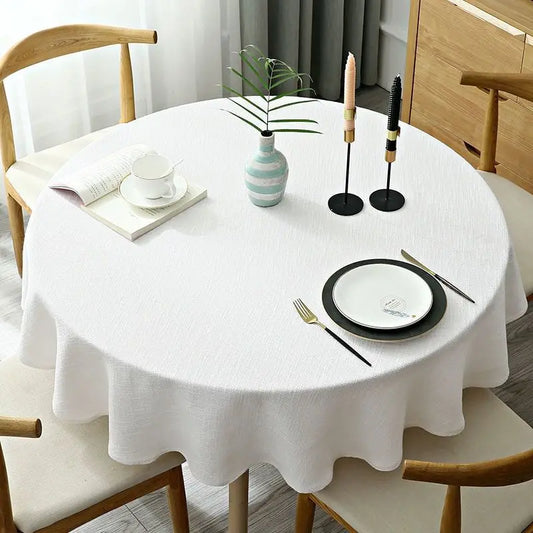
A white round tablecloths creates a luminous base and makes it easy to pair with colorful tableware. Beige and natural tones soften the contrast with a wooden tabletop. Black gives a very graphic result, especially with light tableware or metallic accessories.
The pattern also influences the perception of the circle. A design spread over the entire surface draws the eye more to the tablecloth, while a solid hue lets the shape of the table and the central objects play the leading role.
The shape does not change the maintenance rules: follow the material. Read the label before washing, stain removal, drying, or ironing. An oilcloth, a coated textile, cotton, and lace do not support the same treatments.
After a meal, quickly remove crumbs and treat stains without spreading them. For a wipeable surface, use a non-abrasive cloth or sponge according to the instructions. For a washable textile, avoid overloading the machine and dry completely before storage.
To limit creases, fold the clean tablecloth regularly. Large diameters can be bulky: provide enough space so as not to compress them excessively.
With a 25 cm drop, look for a diameter of about 170 cm. With a 20 cm drop, about 160 cm is enough.
With a 25 cm drop, a tablecloth about 200 cm in diameter gives a balanced result.
Subtract the table diameter from the tablecloth diameter, then divide the result by two.
Yes, if you are intentionally looking for four points. For a regular drop all around, the round shape remains more suitable.
Choose mainly according to your maintenance schedule. Easy-to-wipe surfaces are practical for frequent meals; soft textiles prioritize look and feel.

Keep your tablecloth in place with the right size, a non-slip protector, clips or weights. Useful solutions for indoor and outdoor tables.
Keep your tablecloth in place with the right size, a non-slip protector, clips or weights. Useful solutions for indoor and outdoor tables.

Prepare a cosy autumn bedroom with textiles, lighting and colours. Simple layers and decorating ideas that keep the room uncluttered.
Prepare a cosy autumn bedroom with textiles, lighting and colours. Simple layers and decorating ideas that keep the room uncluttered.

Find the right tablecloth size for round, rectangular, square or oval tables. Use our simple drop formula, size charts and measuring tips.
Find the right tablecloth size for round, rectangular, square or oval tables. Use our simple drop formula, size charts and measuring tips.
