
Summer Home Textiles: Light Fabrics & Fresh Style
Louis MikolajczakSummer textiles: cool down your home without redoing everything by lightening up materials
Transitioning your home to summer mode doesn't require replacing all your decor. Often, it's enough to identify textiles that create a heavy impression—dense throws, very opaque curtains, multiple layers on the bed, slow-drying towels—then lighten them or store them temporarily.
The goal isn't to make the house cold or entirely white. A successful summer ambiance remains warm, but it allows more light, space, and breathability around the materials.
This page serves as a cross-cutting guide: for the bedroom, living room, dining table, and bathroom, it indicates what to lighten first and refers to more detailed guides when a room requires a specific solution.
Table of Contents
The principle: remove a layer before buying another
The most visible change often comes from what you remove. A very thick throw, several cushions, or a superposition of textiles can be pleasant in winter but can make a room feel heavy when the light and temperature change.
- Remove unnecessary layers before looking for new decor.
- Keep materials you love if they remain comfortable in the room.
- Lighten large surfaces first: bed, sofa, windows, and dining table.
- Maintain a cohesive palette rather than switching everything to white.
Bedroom: lighten up without sacrificing comfort
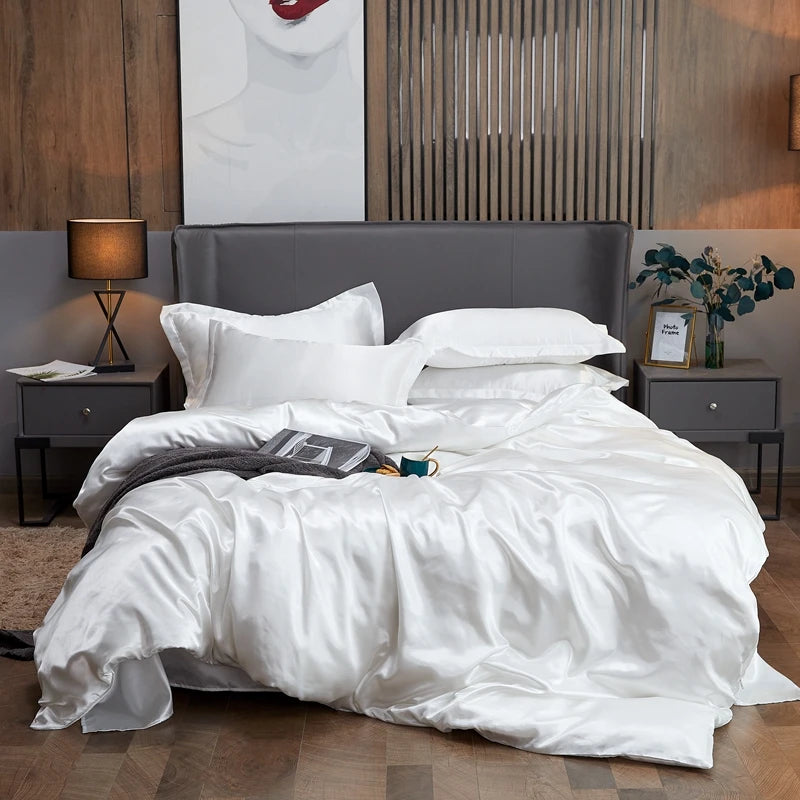
In the bedroom, start with the layers. A lightweight duvet cover, truly used pillows, and possibly a thin throw can be enough. Thermal comfort mainly depends on the material, the duvet, and the room temperature, not on the number of visible accessories.
For a complete seasonal method, consult how to choose your bed linen according to the seasons. During hot weather, our article summer bed linen: sleep cool without a cold room goes further into materials and bed composition.

Living room: maintain texture with less volume
The sofa doesn't need to be bare. Keep a few coherent cushions and possibly replace a dense throw with a less voluminous material if the season and your use justify it. Texture can remain present without multiplying layers.
To style your sofa without overloading it, consult cozy living room: combining sofa throws and cushion covers. If you simply prefer to rotate a few covers, the guide switch your covers without buying everything new offers a capsule wardrobe approach.
Dining table: choose easy-care textiles
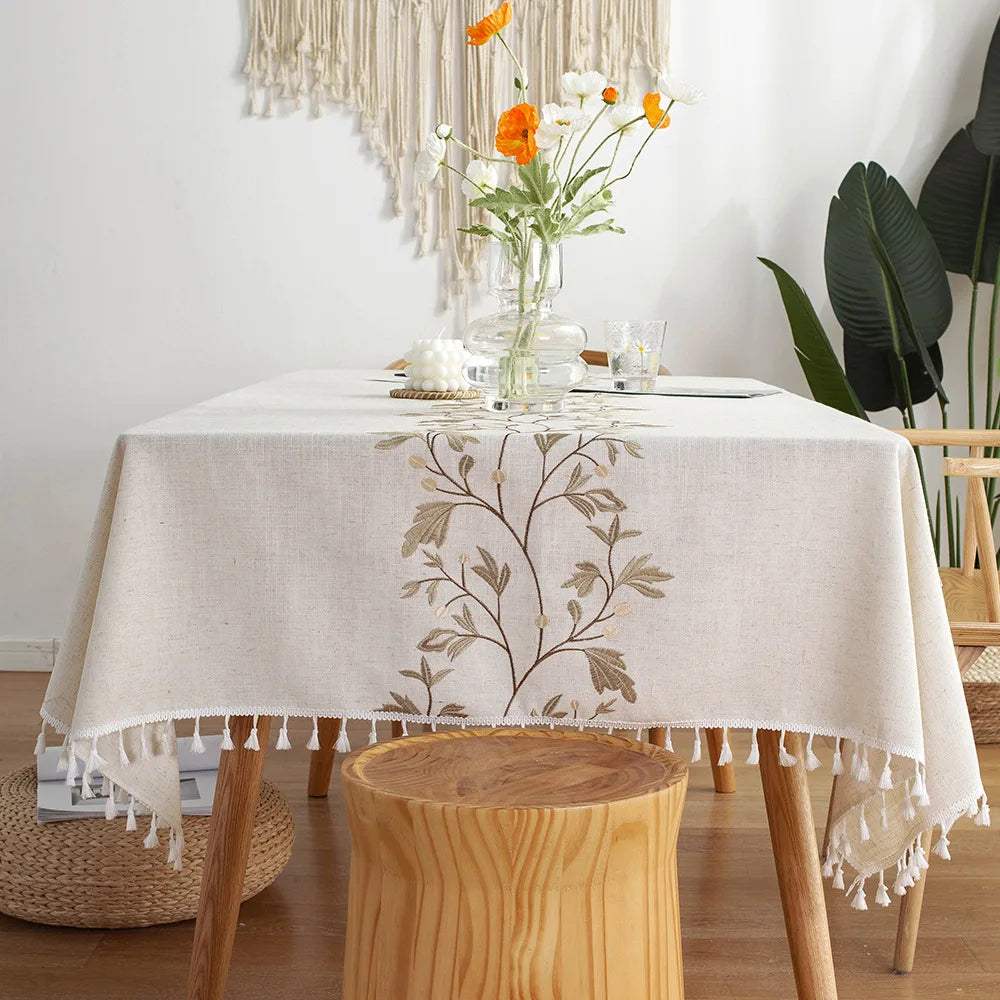
In summer, the dining table is often more spontaneous: outdoor meals, open doors, frequent comings and goings. Textiles must therefore remain compatible with use. A light tablecloth, a table runner, or a few placemats can suffice depending on the surface and desired style.
For an outdoor table, our guide outdoor table: practical setup helps you choose a setting that is easy to clean and store.
| Room | To lighten first | What you can keep | Objective |
|---|---|---|---|
| Bedroom | Heavy throws, accumulation of cushions | Suitable bedding set + light layer if needed | Visually airier bed |
| Living room | Very voluminous textiles | A few cushions + useful throw | Legible and comfortable sofa |
| Dining table | Overly formal textile decor | Tablecloth, runner or placemats depending on use | More spontaneous meals |
| Bathroom | Piles of linen and slow-drying textiles | Towels adapted to the room | Drying and freshness |
Bathroom: think about drying
In the bathroom, the right summer textile is primarily one that dries properly between uses. A very dense towel isn't a problem if the room is well-ventilated; it can become less practical in a humid or poorly ventilated space.
Our guide summer bathroom: creating a fresh spa sensation details the choice of textiles, palette, and storage for this period.

Store off-season textiles
Before storing a throw, bedspread, or covers that you won't use for several weeks, clean them according to their label and make sure they are perfectly dry. Store them away from humidity and direct light.
Avoid unnecessarily compressing fragile or highly textured materials. Storage should allow you to find the textile clean and usable for the next season.
Conclusion
Refreshing your home with textiles first involves reducing unnecessary layers, then making a few adjustments tailored to each room. Bedroom, living room, dining table, and bathroom don't have the same constraints, but the principle remains the same: less volume when it no longer provides comfort.