
Trendy home linens for 2026
Louis MikolajczakHome linens 2026: when textiles become intelligent again
Home linens in 2026 mark a return to common sense . After years of buying textiles that didn't live up to their promises, we're finally going back to basics: tablecloths we can actually use without stress , throws that protect as much as they decorate , and cushion covers that withstand everyday wear and tear . It's not an aesthetic revolution, but a revolution in functionality . Fabrics are finally delivering on their promises, treatments are truly effective, and colors transcend seasons. This guide explores in depth what's changing in our homes: why stain-resistant tablecloths are becoming essential, how throws are replacing bedspreads, and why we're investing in covers rather than entire cushions. The goal: to make the right choices, the ones that last .
- The turning point of 2026: from decorative to functional
- Tablecloths: finally, textiles we dare to use
- Bedspreads: the centerpiece of the bedroom
- Cushion covers: a smart investment
- Colors 2026: the soothing palette
- Materials: what really stands out
- Coordinating your laundry: the method that works
- Maintenance: gestures that prolong
- Frequently Asked Questions
The turning point of 2026: from decorative to functional
For too long, linens have been sold as purely decorative items. We bought a beautiful tablecloth and kept it in its packaging for fear of staining it. We invested in decorative cushions that we removed every night because they were uncomfortable to sleep on. We changed our linens every six months because the colors faded or the fabrics pilled. This absurd logic is coming to an end .
2026 marks the return of a sensible approach: linens should be both beautiful AND functional . Manufacturers have finally understood this. Tablecloths are receiving stain-resistant treatments that actually work without making the fabric stiff. Bedspreads are designed to stay in place and protect the duvet, not just for show. Cushion covers can be washed without shrinking and retain their colors.
This shift also stems from consumers who are tired of throwing things away. They prefer to invest 80 euros in a tablecloth that will last seven years rather than 25 euros in one that will be ruined after a year. The calculation is simple: the cost per use of a quality textile is always more advantageous . And beyond the financial aspect, there's the satisfaction of having things that last, that age well, that become part of everyday life without requiring any thought.

Tablecloths: finally, textiles we dare to use
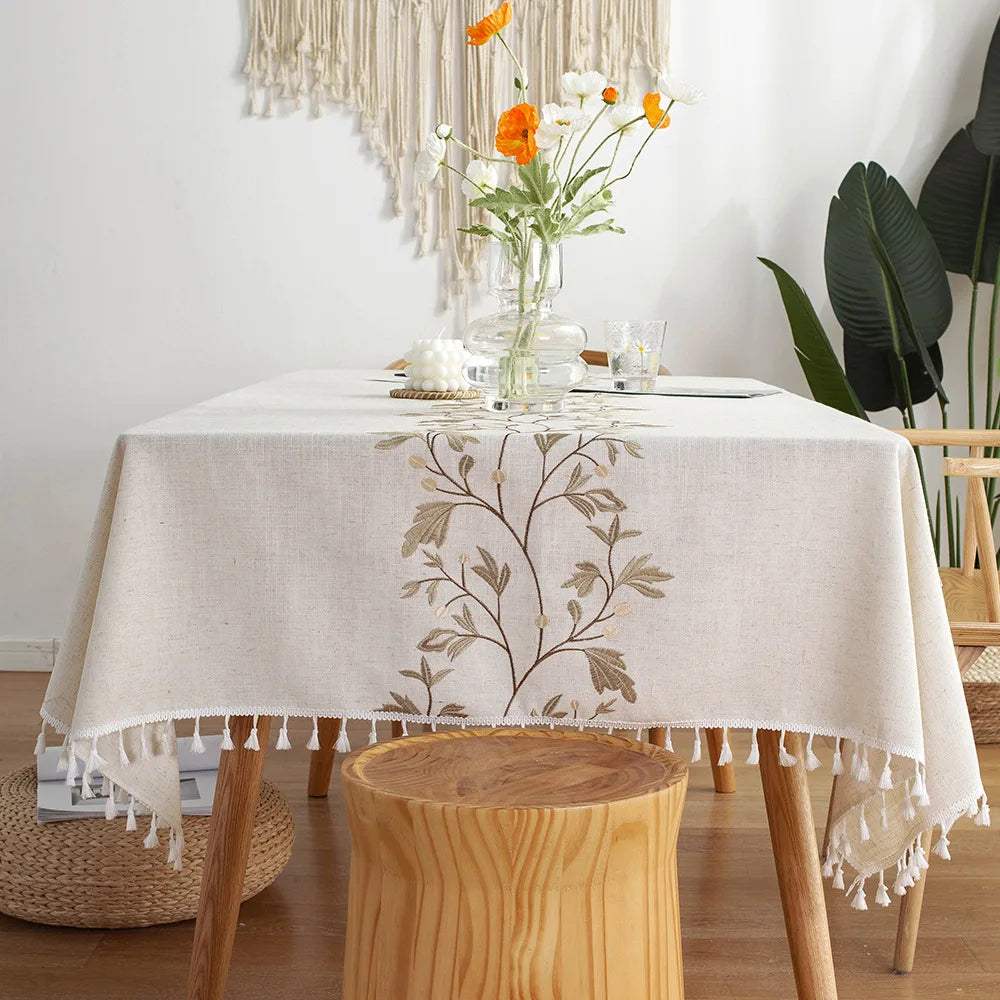
The 2026 tablecloth solves a problem as old as time: how to have a beautiful table without spending all your time removing stains or washing . These new stain-resistant tablecloths are a complete game changer, but not in the way you might expect.
Modern treatments are nothing like those old, cheap-looking plastic tablecloths. We're talking about cotton or linen textiles treated with a water-based, water-repellent finish . The fabric retains its natural feel, suppleness, and breathability. When you spill wine, the liquid forms tiny beads on the surface instead of soaking in immediately. You have time to react. A quick wipe with a damp sponge and it's done. No panic, no rush to the washing machine.
Of course, it's not magic. If you let a tomato sauce stain dry for two days, it will set. But for normal use, with a little common sense, these tablecloths live up to their promises . A well-maintained tablecloth lasts for years without showing any signs of wear. The colors remain vibrant, the fabric retains its shape, and the seams don't come undone.
Bedspreads: the centerpiece of the bedroom
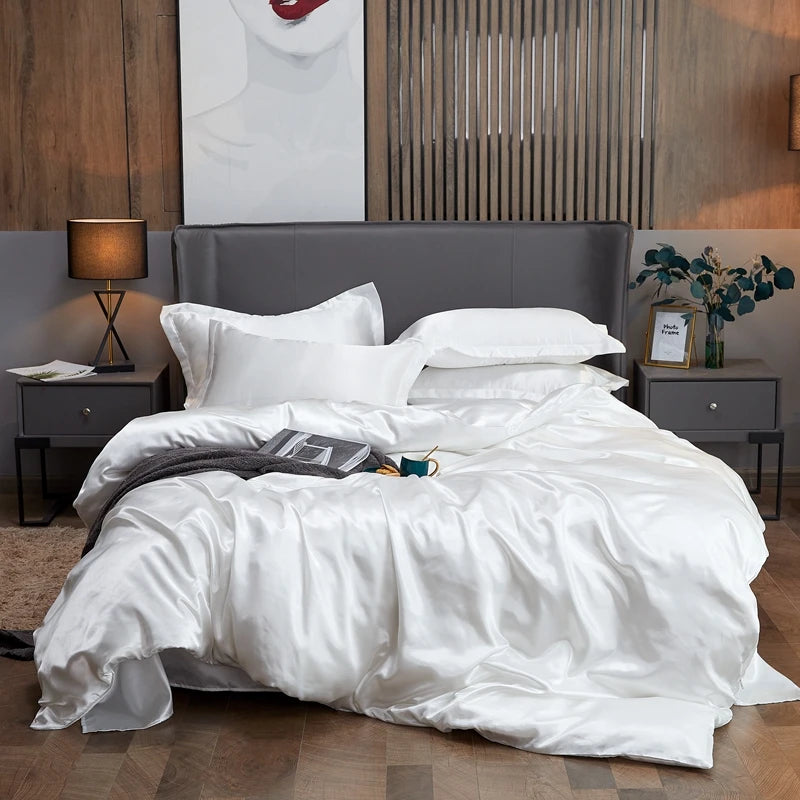
The 2026 bedspread is no longer just a decorative item that you carefully fold at the foot of the bed to make it look pretty. It's becoming the centerpiece of the bedroom , the one that defines the atmosphere and truly protects your bedding.

In practical terms, a good bedspread does three things. It protects your duvet from dust and stains (especially if you're used to sleeping fully clothed). It adds a layer of warmth in winter without having to change all your bedding. And it instantly gives your bedroom character . You can keep the same white bed linen for years and completely change the atmosphere simply by changing the throw.
The fabrics of 2026 favor natural and textured materials. Washed linen is by far the most popular. It has that naturally crinkled look that gives it its charm, it regulates temperature (cool in summer, insulating in winter), and it ages beautifully. The more you wash it, the softer it becomes . A cotton throw remains a reliable choice for those who prefer a cleaner look and easier care.
Cotton gauze is making a remarkable breakthrough. This light and airy fabric offers a unique softness. Its crinkled texture adds visual interest without feeling heavy. Perfect for between seasons or for those who tend to get hot at night. It washes easily, dries quickly, and requires no ironing.
Cushion covers: a smart investment
Cushion covers in 2026 mark the end of an economic and ecological absurdity: throwing away entire cushions to change your decor . The modern approach is to invest once in good quality filled cushions and simply change the covers.

The math is simple. A good quality cushion costs between 40 and 60 euros. A cover alone costs between 15 and 30 euros. If you want to change your decor twice a year, the traditional approach would cost you 240 euros per year for three cushions. With the cover approach, you invest 150 euros once in three good quality filled cushions, then 90 euros for a second set of covers. After one year, you've already made a profit . After three years, you've saved over 500 euros.
Beyond the financial aspect, there's the practical side. Having two sets of covers that you rotate guarantees you always have clean cushions . While one set is in the wash, the other is ready to use. The covers are easy to wash, dry quickly, and don't take up much storage space. The cushion inserts, meanwhile, retain their shape and last for years.
The materials of 2026 emphasize texture rather than color . Instead of seeking out complicated prints that quickly become dated, the focus is on interesting weaves. A thick linen cover has a natural texture that adds visual interest. A corduroy cover plays with lines and depth. A cotton gauze cover brings a sense of lightness.
Colors 2026: the soothing palette
Home linen colours in 2026 mark a radical return to natural tones . After years of flashy colours and overloaded prints, we are returning to shades that truly exist in nature, which soothe rather than stimulate.

Beige and its variations reign supreme . But we're not talking about bland, dreary beige. Beige in 2026 encompasses a whole palette ranging from natural linen (almost white with a warm undertone) to camel (almost brown), including sand, greige, and taupe. These shades have one thing in common: they create a neutral base that accepts any accent color . You can update your decor without a complete overhaul.
Terracotta and earth tones bring warmth without being harsh . Terracotta is that softened brick red found in fired clay. Ochre is that earthy yellow with brownish undertones. Rust is that muted orange reminiscent of patinated metal. These colors work particularly well in autumn and winter but remain soft enough to last throughout the year. A terracotta throw adds character without becoming tiresome.
Gray is evolving towards warmer shades. Cool, almost bluish gray is giving way to grays that lean towards taupe or greige (a blend of gray and beige). These warm grays integrate better into interiors; they don't give the impression of coldness that was often criticized in pure grays. They add structure without weighing down the space, bringing a sense of understated elegance without creating a somber atmosphere.
Materials: what really stands out
Home linens in 2026 must prove their durability . The days of selling anything by promising the moon and the stars are over. Consumers check, compare, and read reviews. The materials that stand out are those that truly deliver on their promises .
Washed linen is becoming the gold standard for all things high-end home linens. Raw linen, straight from the loom, is stiff and uncomfortable. Washed linen has undergone several industrial washings that soften the fibers. The result: a fabric that has all the qualities of linen (thermoregulation, moisture wicking, durability) with a pleasant feel from day one .

Linen ages beautifully . The more you wash it, the softer it becomes, the more it develops a patina. A 10-year-old linen throw is more beautiful than a brand-new one. It has that lived-in texture, that acquired softness, that presence that only time can bestow. It's the opposite of synthetics, which degrade with washing.
Treated organic cotton combines ecology and practicality . Organic cotton is cotton grown without pesticides, with responsible water management. But organic cotton alone stains just as easily as conventional cotton. New water-based stain-resistant treatments (without PFAS, those problematic chemicals) make organic cotton as effective as synthetics. It remains breathable, soft, and pleasant while repelling liquids.
Coordinating your laundry: the method that works
Coordinating your home linens in 2026 no longer means buying a complete set where everything matches perfectly. This approach creates a showroom feel, not a living home. The new approach is to create coherence without uniformity .
The rule of limiting materials to a maximum of three in a single room prevents visual confusion. In your dining room, for example: a treated cotton tablecloth, a jute table runner , and linen napkins. Three different materials that work well together because they are all natural. If you add a fourth material, it becomes too much. The eye no longer knows where to rest.
A limited palette creates depth without looking patchwork. Choose two or three colors and use different shades of each. For example: light beige for the tablecloth, medium beige for the table runner, and dark beige with camel undertones for the napkins. You stay within the same color family but create dimension. This is much more interesting than a uniform, all-beige look.

Maintenance: gestures that prolong
Household linen care in 2026 is becoming simpler thanks to modern materials and a shift in mindset. We're no longer washing everything after every use . We're adopting regular care routines that extend its lifespan.
For stain-resistant tablecloths, the key is to treat spills immediately . As soon as liquid is spilled, blot with a damp cloth. Most stains will disappear without a trace if you act within minutes. For thorough washing, every 3-4 uses is sufficient . Machine wash at 30-40°C, never use fabric softener, and air dry if possible.
Bedspreads require minimal maintenance. Shake them regularly to remove dust . Air your bedroom for 10 minutes each morning to prevent moisture buildup. Wash them thoroughly every 3-4 weeks, depending on usage. Linen can be washed at 30-40°C and ironed while damp for a crisp finish. However, slightly wrinkled linen is perfectly acceptable for everyday use .
The cushion covers withstand regular vacuuming. Once a week, vacuum them with the fabric brush attachment. For washing, wash every 4-6 weeks. Turn the covers inside out before washing to protect the colors . Dry flat to prevent deformation. Velvet covers should be brushed in the direction of the pile after drying.
Frequently Asked Questions
Do stain-resistant tablecloths lose their effectiveness over time?
If you care for them properly (no fabric softener, wash at 30-40°C max), they retain their effectiveness for 5-7 years . The treatment gradually degrades but remains functional much longer than a regular tablecloth stays presentable.
Can linen and cotton be mixed in the same room?
Absolutely. It's even recommended to create textural richness. A cotton tablecloth with a linen table runner, or a linen throw with cotton cushion covers. Stick to the same color palette and it will work perfectly .
How can you tell if a textile is truly made of natural materials?
Read the composition label: 100% linen, 100% cotton, etc. Check for certifications (GOTS for organic, Oeko-Tex for the absence of harmful substances). Beware of vague terms like "linen look" or "cotton feel," which often conceal synthetic fibers.
Is crinkled linen really trendy or just marketing hype?
This is a real underlying trend that reflects a shift in mentality. We're no longer striving for perfection and smoothness . Crinkled linen has character and ages beautifully. If it really bothers you, switch to cotton, but don't fight against the inherent nature of linen.
Want to embrace the 2026 trends? Discover our selection of home linens that last: cotton and linen throws, natural table runners, textured cushion covers. Pieces designed for everyday use, not just for photos .