
An Echoing Home: How Textiles Improve Comfort
Louis MikolajczakEchoing Home: How Textiles Improve Comfort Without Replacing Insulation
An echoing home is more tiring than one might think. Conversations sound harsher, footsteps take up more space, and the television seems more aggressive. This problem often appears in rooms with tile, large windows, bare walls, and few textiles.
Textiles do not replace insulation work. They won't block noise from neighbors. However, they can reduce some interior reverberation, make the room feel softer, and improve daily comfort. This makes a real difference in a living room, bedroom, or entryway.
This topic relates to curtains, rugs, and home linen, but from a very practical angle: sound comfort. The advice for changing covers and textiles without buying everything new also applies when you want to add useful layers without overdoing it.
Summary
Why a Room Echoes
A room echoes when sound bounces off hard surfaces: tiled floors, bay windows, bare walls, smooth ceilings, closed furniture. The more such surfaces there are, the more noticeable the reverberation can be. A very minimalist decor can therefore appear beautiful, but less comfortable to live in.
Textiles provide more absorbent surfaces. A rug, curtains, or a sofa with cushions do not create silence, but they can dampen some sound reflections in the room.
- Hard floors: tiles, polished concrete, very bare parquet.
- Large windows: glass surfaces that reflect sound.
- Empty walls: few elements to break reflections.
- Few textiles: fewer absorbent surfaces.
Rugs, the Primary Sound Dampener
A rug is often one of the first simple corrections to consider for a hard floor. It dampens footsteps and adds a textile surface that can reduce some reflections. The effect depends on the covered area, the material, and the room's configuration.
The material matters, but the rug must above all be compatible with use and maintenance. A very thick model is not automatically the best choice if the room has high traffic or if cleaning becomes difficult.
For placement around the sofa and coffee table, see our guide how to choose a rug to connect the sofa and coffee table.

Curtains Soften Glass Surfaces
Windows and bay windows are large hard surfaces. Soft curtains can add absorption in front of this area. A very thin sheer curtain will generally have a limited effect; a denser textile can have more impact, with a potential trade-off in light.
The choice must therefore remain a compromise between acoustic comfort, light, maintenance, and aesthetics. There is no ideal thickness valid for all rooms.
| Hard Zone | Useful Textile | Expected Effect | Limitation |
|---|---|---|---|
| Bare floor | Well-sized rug | Less reverberation and footsteps noise | Does not insulate from neighbors |
| Bay window | Curtains | Adds an absorbent surface | Variable effect depending on fabric and surface |
| Sofa area | Cushions, throw, textile seating | Complements large textile surfaces | Remains an accessory |
In the Bedroom, Linen Also Helps
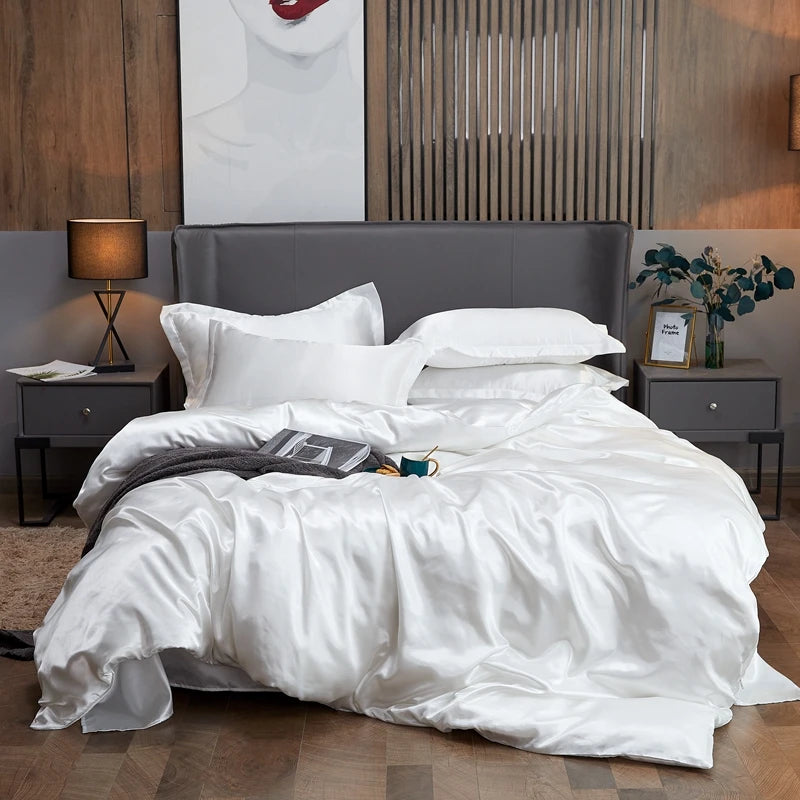
A very empty bedroom can echo, especially if it contains little furniture and a hard floor. The bed already represents a large soft surface; bed linen, curtains, and possibly a rug further add surfaces likely to dampen some reflections.
This is one more reason to look at large textile surfaces before accumulating small accessories. Visual comfort and acoustic comfort can thus go in the same direction.

A Simple Method to Improve Without Overloading
Start by identifying the large hard surfaces: floor, glass, or very bare wall. Then add a solution suitable for the room. It is generally better to act on a large surface than to multiply small decorative objects with no measurable effect on the volume.
In the sofa area, the article on matching cushion covers with your sofa can help combine comfort and visual balance.
Conclusion
An echoing home can gain comfort through better distributed textile surfaces. Rugs, curtains, cushions, and home linen can soften interior reverberation without transforming the room.
Their role remains different from that of sound insulation: they primarily improve acoustics within the volume, not the transmission of noise between two dwellings or two rooms.