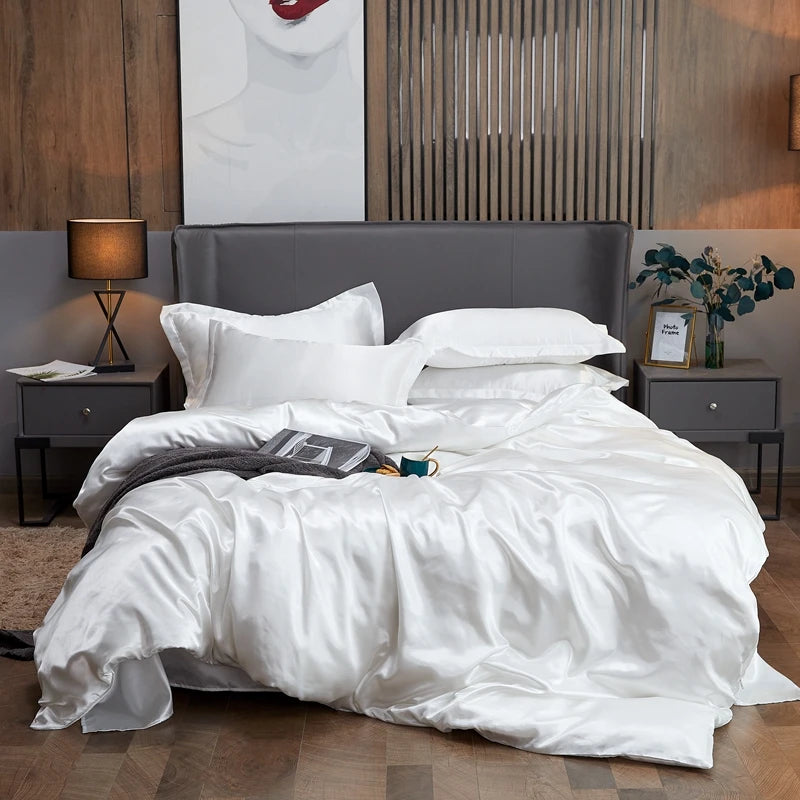

Cold room: why does it still feel cold, even when well-decorated?
Louis MikolajczakCold Bedroom: Textile Details That Really Change the Ambiance
A bedroom can be clean, tidy, even pretty, yet still feel cold. This discomfort isn't always due to wall color. It often comes from a combination of details: light that's too white, overly smooth bed linen, flat materials, a bed that seems to sit without connecting to the rest of the room.
This topic is important because a bedroom isn't just a room to look at. It's a room where you should be able to relax. If it feels cold, you might sleep in a decent setting but without a welcoming sensation. The goal isn't to add many objects, but to understand what is truly missing.
Following up on the article about bed linen colors for a soothing bedroom, we will look here at the concrete causes of a cold bedroom and simple corrections to make with household linen, lighting, and textures.
Table of Contents
Understanding why the bedroom feels cold
The first cause is often a lack of material. A very white bedroom with smooth surfaces might look bright in photos but feel poor in sensation in real life. The eye has nothing to latch onto. It glides over the walls, the duvet cover, the furniture, without perceiving any depth.
The second cause is the light temperature. A bulb that's too cold can harden whites, make beiges appear grayish, and make linen look flatter. Even a beautiful bed loses a lot of softness if the light gives it a clinical tint. Before changing all the decor, it's important to look at the evening lighting.
- Too uniform a white can give an impression of an empty room.
- Very smooth bed linen reduces the feeling of visual comfort.
- Cold light hardens colors and materials.
- Absent or too thin curtains sometimes leave the bedroom without an enveloping feel.
Bed linen as the primary lever for warmth
The bed occupies a large part of the visual field. It is therefore the best place to correct a cold impression. Slightly textured bed linen, in an off-white, sand, or warm beige, can be enough to transform the perception of the room. The difference is especially noticeable in the evening, when the light becomes lower.
It's not necessarily about choosing dark colors. A room can remain bright and become much more welcoming. The secret lies in muted shades, visible fibers, natural folds, and small textile layers. This is exactly what a well-chosen sheet, a soft throw, or a more matte pillowcase allows.

Textures, curtains, and rugs: often overlooked areas
A bedroom can remain cold because the bed is working alone. If the curtains are absent, very stiff, or too sheer, the room lacks an enveloping feel. A soft sheer or a heavier curtain can change the acoustics, soften the lines, and give the bedroom a more finished feel.
The floor also plays a role. Without a rug, especially with light tiles or wooden flooring, the bed can seem isolated. A discreet rug at the foot of the bed or on the side not only serves for comfort. It visually connects volumes, provides a transition, and makes the bedroom feel less harsh.
| Perceived Problem | Probable Cause | Textile Correction | Desired Effect |
|---|---|---|---|
| White room too cold | Very smooth surfaces | Ecru linen, textured throw | More relief without losing light |
| Isolated bed | Bare floor or distant furniture | Soft rug near the bed | Better visual continuity |
| Dry ambiance | Absent or stiff curtains | Soft sheer or flowing curtain | More enveloping room |
Mistakes that make the room even colder
The first mistake is to respond to visual coldness with accumulation. Adding five cushions, two throws, and objects everywhere does not necessarily make the bedroom warmer. It can even create visual fatigue. Warmth comes more from the coherence between a few well-chosen materials.
The second mistake is to choose too harsh a contrast. Pure black, a very graphic pattern, or a very bright color can add character, but not necessarily comfort. In a bedroom that already lacks softness, it is better to establish a warm base before adding a more assertive touch.

A simple method to test without error
Start by observing the bedroom at three times: in the morning, late afternoon, and in the evening with the lamp on. If it seems cold especially in the evening, light is probably the cause. If it seems cold all day, it's more likely the palette and materials that lack depth.
Next, change just one large textile surface. For example, replace a cold white duvet cover with an off-white one, or add a more textured throw. The advice on how to place a bed throw without making the decor rigid is useful here, as it shows how to add a visible layer without weighing down the bedroom.
Conclusion
A cold bedroom doesn't necessarily need renovation. It often needs more visible materials, better chosen lighting, and more appropriate bed linen. By working on these elements, the room becomes softer without losing its simplicity.
The good benchmark is simple: if the eye perceives relief, if the light softens the whites, and if the bed seems connected to the rest of the room, the bedroom immediately becomes more welcoming.