
Sober dining room: how to warm it up without changing the furniture
Louis MikolajczakMinimalist dining room: how to warm it up with textiles and materials
A minimalist dining room can be very beautiful. But the line between minimalist and cold is sometimes thin. A bare table, simple chairs, a light-colored wall, and a few carefully chosen objects can quickly make a room seem impeccable on paper, but a bit distant in reality.
The good news is that this feeling doesn't necessarily need to be corrected with new furniture. Very often, it's textiles that shift the room to the warm side. A well-draped tablecloth, a light table runner, matte materials, and well-balanced contrasts can change the perception of the room in just a few minutes.
The goal isn't to decorate the table for every meal. Rather, it's about making the dining room feel more lived-in. The basics seen in the use of table runners are useful, but it's also important to understand when a textile truly warms up a room and when it just adds another layer.
Table of Contents
The direct answer: warming up the room with light layers
To warm up a minimalist dining room, you first need to work on the sensation of texture. A completely bare table can be beautiful, but it can sometimes feel a bit too visually stark. Adding a textile, even a simple one, absorbs this harshness and makes the room more inviting.
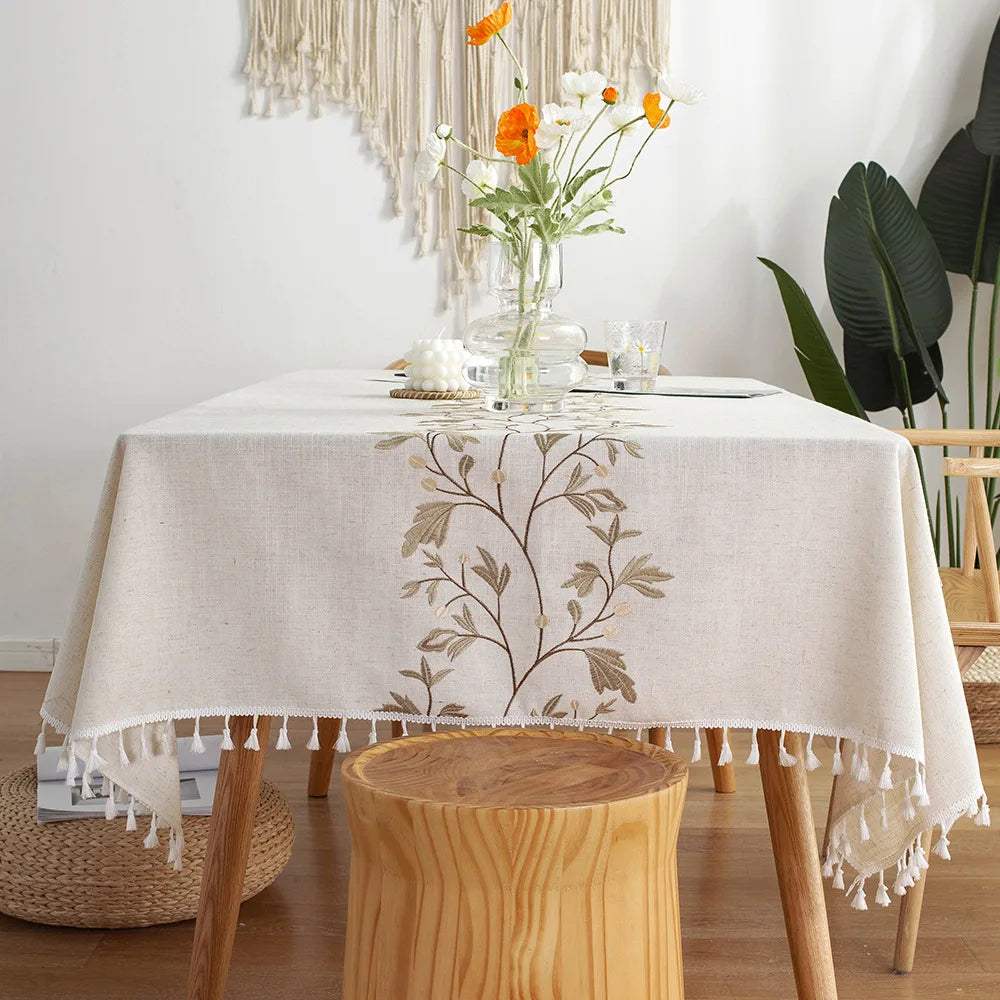
The most effective solution isn't necessarily a large, formal tablecloth. It could be a soft table runner, a crisp, light tablecloth, or a very subtle mix of natural fibers and simple tableware. The important thing is for the table to appear lived-in without looking prepared for a special occasion.
- Visible texture to break up the overly smooth effect.
- Just the right drape to add presence.
- A limited palette to maintain minimalism.
- Warmer lighting to complement the textile.
Choosing between a tablecloth, runner, or an almost bare table
A tablecloth works well if the room needs to be softened overall. It establishes a real presence and frames the dining area. A table runner, on the other hand, acts more subtly. It structures without covering, which can be ideal if a beautiful wooden table already exists but appears a bit stark.
There's also a third option: leaving the table almost bare, but adding a temporary textile only at key moments. This solution works well in small spaces, provided you don't fall into austerity. In this case, the chosen material must be just right; otherwise, the room will appear unfinished.
| Solution | When it works well | Achieved effect | Point of attention |
|---|---|---|---|
| Tablecloth | Slightly cold or formal room | More enveloping atmosphere | Pay attention to the drape |
| Table runner | Beautiful visible table to preserve | Light but real presence | Avoid it looking too narrow |
| Almost bare table | Small, already warm space | Simpler lines | Rely on light and surrounding materials |

Materials that warm without weighing down
The textiles that warm best are often those that maintain a matte or vibrant appearance. A material that is too shiny can make the room more sophisticated, but not necessarily more inviting. Conversely, linen, thick cotton, or a natural-looking blend gives a simpler and more welcoming impression.
This point is particularly important for everyday use. If the room is used daily, you need a material that is pleasant to live with and not just photogenic. The guidelines given in the Orea article on what tablecloth material to choose for daily use remain very helpful when you want to warm things up without overcomplicating your life.

Creating warmth without overloading the table
The common pitfall is wanting to compensate for simplicity with too many objects. A warm dining room doesn't need five layers of decor. A textile, beautiful lighting, a natural material, and one or two useful pieces are often more than enough.
If the table still feels cold despite a tablecloth or runner, look at the overall context. An overly white light fixture, very bare walls, or visually harsh chairs can prevent the textile from doing its job. The warmth of a room rarely comes from a single element.
Think about real use before the photo op
A dining room is not just a stage. It's a place for meals, for passing through, sometimes for impromptu work. If the chosen textile is too restrictive, you'll end up removing it, and the room will revert to its initial coldness. The right choice is therefore one that you want to keep in your daily life.
This question of real use changes a lot of things. A simple, well-draped, and easy-to-live-with material will often yield a more lasting result than a very spectacular textile reserved for special occasions. Visual comfort must be able to survive the normal life of the house.
Conclusion
Warming up a minimalist dining room doesn't necessarily require new furniture. It's often textiles that give the table the presence it lacks, provided you choose the right material, the right drape, and the right level of simplicity.
If you want a clear guideline, start by making the table softer to the eye. As soon as the material feels just right, the room appears less distant and much more inviting.