
SOS tablecloth after crepes: removing stains from batter, butter, chocolate and caramel
Louis MikolajczakFixing a stained tablecloth after Candlemas: the simple method that really works
A crêpe party is supposed to be fun… until you look at the tablecloth. Batter, melted butter, chocolate, caramel: these are “trap” stains because they often combine fat, sugar, and protein . The good news is that with the right techniques (and especially the right order), you can save most tablecloths, even linen, even light-colored ones. In this guide, I'll give you a clear method, simple protocols for each type of stain, and the mistakes to absolutely avoid so you don't leave a permanent mark.
- The 5 minutes that save a tablecloth
- Before we begin: materials, colors, "things to never do"
- The small anti-stain kit (without complicated products)
- Pancake batter stain: what to do (and what to avoid)
- Butter stain: remove the grease without leaving a ring
- Chocolate stain removal: the method depending on whether it's dark chocolate, milk chocolate, or chocolate spread
- Caramel stain: sugar, butter, "sticky" caramel
- Summary table: stain → water → product → action
- Machine washing: program, temperature, drying (without making a mistake)
- Difficult cases: dried stain, white tablecloth, linen tablecloth, coated tablecloth
- Frequently Asked Questions
- Quick memo
The 5 minutes that save a tablecloth
If you take these steps right away , you increase your chances. The goal isn't to "wash away" the stain, but to prevent it from setting in. 
1) Remove the excess (without spreading)
Using a spoon or the edge of a card, gently scrape off the paste, chocolate, or caramel. Then, blot with absorbent paper. Do not rub : you will only set the stain deeper into the fibers.
2) Start with the cold (yes, even if it “seems greasy”)
Heat can set a paste (egg, milk) or chocolate stain. Rinse with cold water from the reverse side of the fabric (the underside) to push the stain outwards.
3) Absorb the fat before adding water (if butter/spread)
If you see a shiny area (melted butter, spread), sprinkle on some Fuller's earth or talcum powder (or, failing that, a little baking soda). Leave it on for 10–20 minutes, then brush/vacuum. This prevents the dreaded halo effect .
4) Do not use the tumble dryer until the stain has disappeared
It seems obvious, but it's the most common mistake: if the stain is still there (even light), the heat finishes the job... and sets it.
Before we begin: materials, colors, "things to never do"
Two tablecloths can react very differently. Before reaching for the miracle product, take 30 seconds to observe:
- Material : linen, cotton, polyester, coated tablecloth (plasticized surface), blend.
- The color : white, light, tinted, printed.
- The type of stain : rather “sticky” (caramel), rather greasy (butter), mixed (chocolate), rather protein-based (paste).
Mistakes that make the situation worse
- Rubbing dry : you'll set it in.
- Putting hot water on the paste/chocolate from the start : you can fix it.
- Pouring too much product : you create a halo and make rinsing more difficult.
- Ironing or drying before total disappearance: you are "cooking" the stain.
- Random bleach/chlorine : it weakens the fabric, sometimes yellows, and doesn't fix grease.
A useful little test: if your tablecloth is fragile or colored, always test your product on a discreet corner (hem) and wait 2 minutes.
The small anti-stain kit (without complicated products)
You don't need a laboratory cabinet. For most tablecloths, this is sufficient:
- Dishwashing liquid (the simplest and often the most effective against grease)
- Marseille soap or mild soap
- Sommières clay (or talc) to absorb grease
- Bicarbonate (as a temporary solution, especially to help loosen)
- White vinegar (useful mainly for rinsing/odors, not for grease)
- A soft brush (or an old toothbrush)
- Two clean cloths + absorbent paper
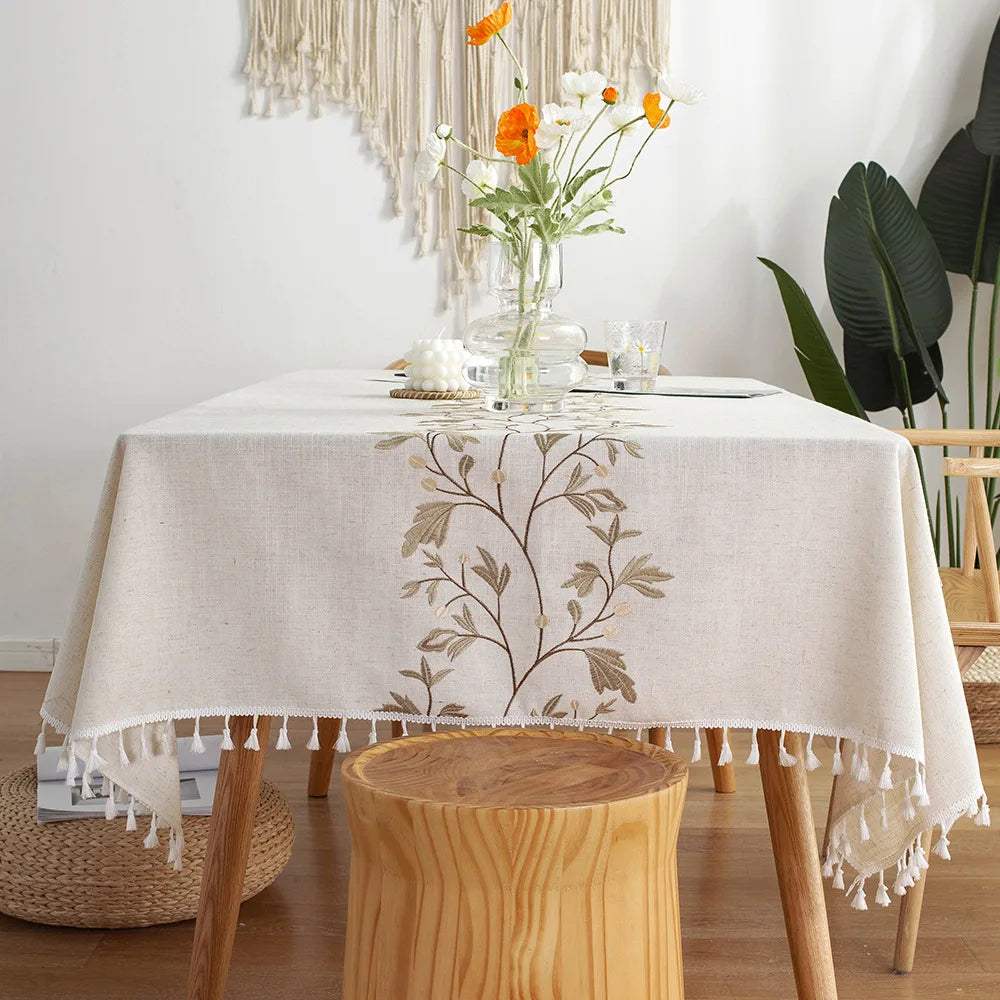
If you want an easy-care tablecloth for festive meals (including Candlemas), you can find suitable models here: Tablecloth .
Pancake batter stain: what to do (and what to avoid)
Pancake batter often contains eggs and milk : it's the kind of stain that doesn't react well to hot water to begin with. The goal is to loosen it without cooking the protein within the fibers.
Quick method (fresh stain)
- Scrape off the excess with a spoon.
- Rinse with cold water through the reverse side of the fabric (important).
- Gently rub the area with a little Marseille soap (or mild soap), then leave it on for 5 minutes.
- Rinse with cold water. Repeat once if necessary.
If the stain has already dried
- Lightly moisten with cold water, then apply a little dish soap (yes, even for the dough: it also helps because there is often a little grease).
- Leave on for 10 minutes.
- Brush gently (no harsh rubbing).
- Rinse cold, then machine wash (see Machine Wash section).
Tip: If you're worried about damaging the fabric, use your fingers and a little water, rather than a brush.
Butter stain: remove the grease without leaving a ring
Butter is pure fat . If you add water too quickly, you risk a spreading ring. The key: absorb first , then clean.
The “clean” method (which avoids halos)
- Dab off the excess with absorbent paper.
- Sprinkle Sommières clay (or talc) over the area.
- Leave on for 20 to 40 minutes (the greasier it is, the longer you leave it).
- Brush/vacuum the powder.
- Place a small amount of dishwashing liquid , add a few drops of lukewarm (not hot) water and gently emulsify.
- Rinse, then machine wash.
If the stain is small
Dishwashing liquid alone may suffice: apply, massage gently, rinse. But on a light-colored tablecloth, the "absorption" step is often what makes the difference between "disappeared" and "staining."
Chocolate stain removal: the method depending on whether it's dark chocolate, milk chocolate, or chocolate spread
Chocolate is deceptive: it contains fat, pigments , and sometimes milk. So avoid the "hot water and scrub" reflex.
“Simple” chocolate (melted bar, hot chocolate)
- Scrape off the excess (once cooled).
- Rinse with cold water from the inside out.
- Apply a little dishwashing liquid for 10 minutes (it breaks down the grease).
- Rinse, then use Marseille soap if a stain persists.
- Machine washable.
Spreadable paste (higher fat content)
- First absorb with Sommières clay for 20–40 minutes.
- Only then: dishwashing liquid + rinse.
- If the stain is still there: repeat a micro-application of dishes and wash again.
Good tip: when you think it's gone, let it air dry. A "shadow" that reappears as it dries often indicates that there's still grease left.
Caramel stain: sugar, butter, "sticky" caramel
Pure caramel (sugar) dissolves… but be careful: crepe caramel is often caramel + butter + cream . So adjust the recipe according to the desired consistency.
- Hard/sticky caramel (more like sugar): we are trying to dissolve it.
- Shiny/greasy caramel : treat it first like a butter stain.
Caramel, mostly sweet (without a thick, greasy film)
- Scrape away the excess.
- Place a cloth soaked in lukewarm water on the stain for 2–3 minutes to soften it.
- Stamp, repeat if necessary.
- Finish with a little mild soap, rinse, then machine wash.
Butterscotch (or “caramel + chocolate”)
- Absorption: Sommières clay 20–40 minutes.
- Dishwashing liquid, 10 minutes.
- Only then: warm water to dissolve what remains sticky.
- Machine.
The correct order is often: fat first , sugar second .
Summary table: stain → water → product → action
| Type of stain | First gesture | Water | Simple product | Classic mistake | If it resists |
|---|---|---|---|---|---|
| Pancake batter | Scrape and rinse from the reverse side | Cold | Gentle soap / Marseille | Hot water too early | Dishwashing liquid + soft brush |
| Butter | Absorb | Warm (after absorption) | Sommières clay + tableware | Wet before absorbing | Place Sommières back down and then wash again |
| Chocolate | Scrape and rinse from the reverse side | Cold | Dishwashing liquid | Rub hard / hot water | Sommières (if greasy) + rewash |
| Caramel (sweet) | Soften + dab | Lukewarm | Mild soap | Scratch aggressively | Place warm cloth + washing machine |
| Toffee | Absorb the fat | Warm (after washing up) | Bed tins + dishes | Direct lukewarm water (halo) | Repeat the order: fat → sugar |
Simple tip: if you're unsure about the nature of the stain, start as if it were a "mix": cold + dab + dishwashing (and Sommières if it's shiny).
Machine washing: program, temperature, drying (without making a mistake)
Once the task is treated “locally”, the machine finishes the job. But here too, a few adjustments make all the difference.
Temperature
- 40°C : a good compromise for most cotton/linen tablecloths if the stain has been pre-treated.
- 30°C : if the tablecloth is coloured, delicate, or if you are not sure about colour fastness.
- 60°C : only if the tablecloth can withstand it and if you're using a robust white/off-white fabric… and only after pretreatment. Otherwise, you risk setting any residue.
Laundry detergent: a detail that matters
Regular laundry detergent is sufficient, but avoid using too much (it can leave a film). For light-colored tablecloths, a little extra help can be provided: an oxygen-based stain remover (not chlorine-based) if you already have some at home. There's no need to overdo it: the method and the order of the steps are more important than the product itself.
Drying
Ideally, air dry after a visual check. If you use a tumble dryer, only do so when you are sure everything is gone.
Difficult cases: dried stain, white tablecloth, linen tablecloth, coated tablecloth
Stain dried for 24–48 hours
Don't panic. What works well: rehydrate without soaking. Lightly dampen (with cold water), let a little dish soap sit for 10 minutes, then rinse. Then machine wash. For greasy items, go back to the Sommières method.
White or very light tablecloth
The number one risk is watermarks . To avoid them: absorb the grease + rinse from the inside out + avoid vigorous rubbing. And above all, avoid splashing water on a greasy area without first absorbing it.
Linen tablecloth
Linen stains more easily, but it often recovers very well if you're gentle. Use a mild soap, a very soft brush (or your fingers), and minimize rubbing. Linen prefers simple, regular methods to aggressive "attacks."
Coated tablecloth
Good news: on a coated tablecloth, many stains remain on the surface. The trap is to scrub with an abrasive sponge. Instead, use a soft cloth, warm water, and a tiny drop of dish soap. For sticky caramel: leave a warm compress on for 2 minutes, then wipe it off.
Frequently Asked Questions
Does white vinegar remove butter or spread?
White vinegar is useful for rinsing, deodorizing, and dissolving some residues, but it's not the best for grease . For butter and spreads, the most effective combination remains absorbent material (Sommières clay) and dish soap .
I don't have any Sommières clay, what do I do?
Use talcum powder if you have some; otherwise, a little baking soda can help in a pinch. The idea is to absorb the grease before wetting. Even a paper towel squeezed several times is better than nothing.
Why is cold water recommended for pancake batter?
Because the batter often contains eggs and milk, too rapid a heating can set the proteins in the fiber. Cold helps to loosen it without "cooking" the stain.
I washed it and there's still a shadow... am I doomed?
No. A shadow after washing is often leftover grease. Go back to the method: Sommières (if it's shiny), then dish soap , then wash again. And above all: avoid tumble drying/ironing while the shadow is still there.
What is the most important action to take to save a tablecloth?
Do not rub and follow the order: remove excess → rinse from the inside (cold if paste/chocolate) → absorb grease → clean → machine.
Quick memo
- Scrape + pad : never rub dry.
- Paste/chocolate : start with cold water, from the back.
- Butter / spread : absorption (Sommières/talc) before water.
- Caramel : sugar = lukewarm to dissolve, but fat first if butter caramel.
- Do not use a tumble dryer until the stain has disappeared 100%.
If you want a tablecloth that is beautiful, easy to match and simpler to live with on a daily basis, you can take a look at the collection: Tablecloth .