
Bedding size: how to choose without making a mistake
OreaHow to choose the right bedding size for everyday use
When looking for a bedding set size, you'll quickly come across dimension charts. They are useful, but they don't always explain why one size works better than another in a real bedroom. The right choice depends on the mattress, bed height, desired drape, and how you make your bed each morning.
At Orea™, the idea is not to instinctively choose the largest bedding set, nor the smallest to save time. You need to find the format that creates a neat, comfortable, and cohesive bed with the room. A well-proportioned duvet immediately changes the perception of the bedroom.
In this guide, we'll look at dimensions without jargon, with concrete advice to avoid common mistakes and achieve a more harmonious bed every day.
Table of Contents
The direct answer: start with the mattress, not the photo
When choosing a bedding set, the most frequent mistake is to only look at the style. A beautiful color or an elegant pattern is not enough if the duvet cover hangs poorly, if the pillowcases don't match the pillows, or if the drape gives too short an impression. The first question should always be the actual size of the bed.
For a single bed, a double bed, or a large bed, the logic is not the same. You need to consider the width of the mattress, its height, the type of bed base, and the desired effect on the sides. A successful bedding set should cover the bed correctly while remaining simple to put back in place.
If you want to go fast, start with a clear principle: the higher the mattress or the more enveloping you want the look to be, the more generous the duvet should be. A duvet that is too tight gives a visually flat and less comfortable bed. A duvet that is too large can become heavy to handle, especially in a small bedroom.
- measure the width and length of the mattress before choosing
- consider the height of the mattress for the drape
- check the number and format of included pillowcases
- choose a more generous size for a hotel look
- avoid sizes that are too tight on a double bed
Understanding the most common formats
Bedding set dimensions may seem technical, but they respond to very simple uses. For a 90 cm single bed, a 140 × 200 cm duvet cover is a common reference. On a 140 cm double bed, a 220 × 240 cm duvet generally offers a comfortable drape. For a 160 cm bed, the 240 × 260 cm format allows for a more generous drape. Always check the dimension of the duvet actually used: it's the one the cover should fit.
The bedding set collection allows you to compare styles. For double beds, you can also directly consult the 220 × 240 cm bedding sets or the 240 × 260 cm bedding sets depending on the width of the bed and the desired drape.
| Bed Width | Duvet Size to Consider | Desired Effect | Point to Check |
|---|---|---|---|
| 90 cm | 140 × 200 cm | Single bed, easy to make | Mattress length and pillowcase format |
| 140 cm | 220 × 240 cm | Comfortable drape on both sides | Mattress height |
| 160 cm | 240 × 260 cm | More enveloping look | Space available on each side |
| Hotel-style look | Opt for a generous drape adapted to the mattress | Ample and regular silhouette | Weight and ease of washing |

The drape changes the entire perception of the bed
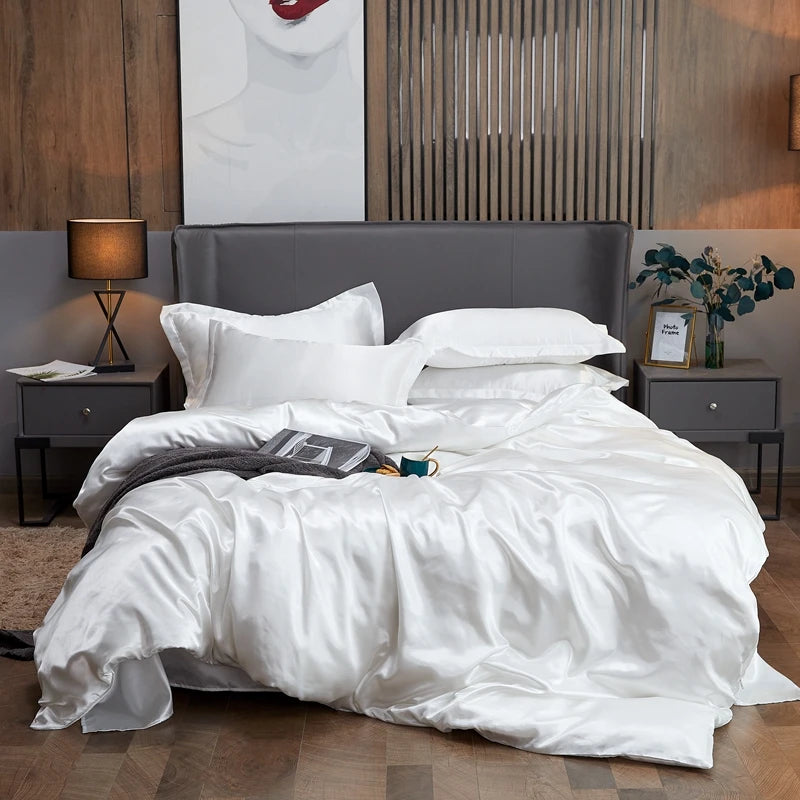
The drape is the part of the duvet visible on the sides of the mattress. Too short, it gives the impression of a poorly dressed bed. Too long, it can completely hide the bed base and become less practical. The right balance depends on the room's style: neat and contemporary, soft and cocooning, or more elaborate.
In a modern bedroom, a regular drape on each side is often sufficient. In a softer room, you can accept a slightly ampler effect, especially if you add a throw at the foot of the bed. For a more structured look, our guide hotel-style bed shows how the drape integrates with all the layers of linen.
Choose the color after the size
Once the size is set, color becomes easier. If the room is small, light tones visually enlarge the bed and avoid the block effect. If the room is very bright, deeper colors can work, provided soft materials are kept around.
The right approach is to choose a calm base, then add character with pillowcases, a throw, or a cushion. This method prevents getting tired of it too quickly and allows you to change the atmosphere with the seasons without buying all new bedding.

The final check before ordering
Before confirming your choice, do a very simple final check. Measure the mattress, look at the total height with the mattress topper if there is one, then imagine the drape on each side. This step avoids surprises upon unpacking, especially if the bed is against a wall or in a small bedroom.
Also check the pillowcases. A bedding set might be perfect for the duvet but less suitable for the pillows you actually use. If you have two pillow formats at home, choose a set that matches the main use, then supplement with separate pillowcases if necessary. Once the right format is chosen, our guide how to put on a bedding set then details the simplest order for installing the whole.
- measure the mattress with its actual height
- check the format of the included pillowcases
- consider the available space on the sides
- choose a material compatible with your washing frequency
Conclusion
The right bedding set size depends on the mattress, height, desired drape, and everyday comfort. Style matters, but it comes after these practical criteria.
A well-chosen bedding set makes the bed more beautiful, more comfortable, and simpler to make. This is exactly what makes the difference between a decent bed and a truly neat bedroom.