
Warm Up a Dining Room with Textiles & Colour
Louis MikolajczakUnderstated Dining Room: How to Warm it Up Without Changing Furniture, Using Textiles
An understated dining room can be very beautiful. But the line between understated and cold can sometimes be thin. A bare table, simple chairs, a light-colored wall, and a few carefully chosen objects can quickly make a room seem impeccable on paper, but a little distant in reality.
The good news is that this feeling doesn't necessarily require new furniture to correct. Very often, it's textiles that tip the room toward warmth. A well-draped tablecloth, a light table runner, matte materials, and a few well-balanced contrasts can change the perception of the room in minutes.
To choose the right solution for your table, start with our guides how to set a table runner and how to choose a tablecloth. The goal here is different: to understand when textiles truly warm up a room and when they merely add another layer.
Contents
The direct answer: warm up the room with light layers
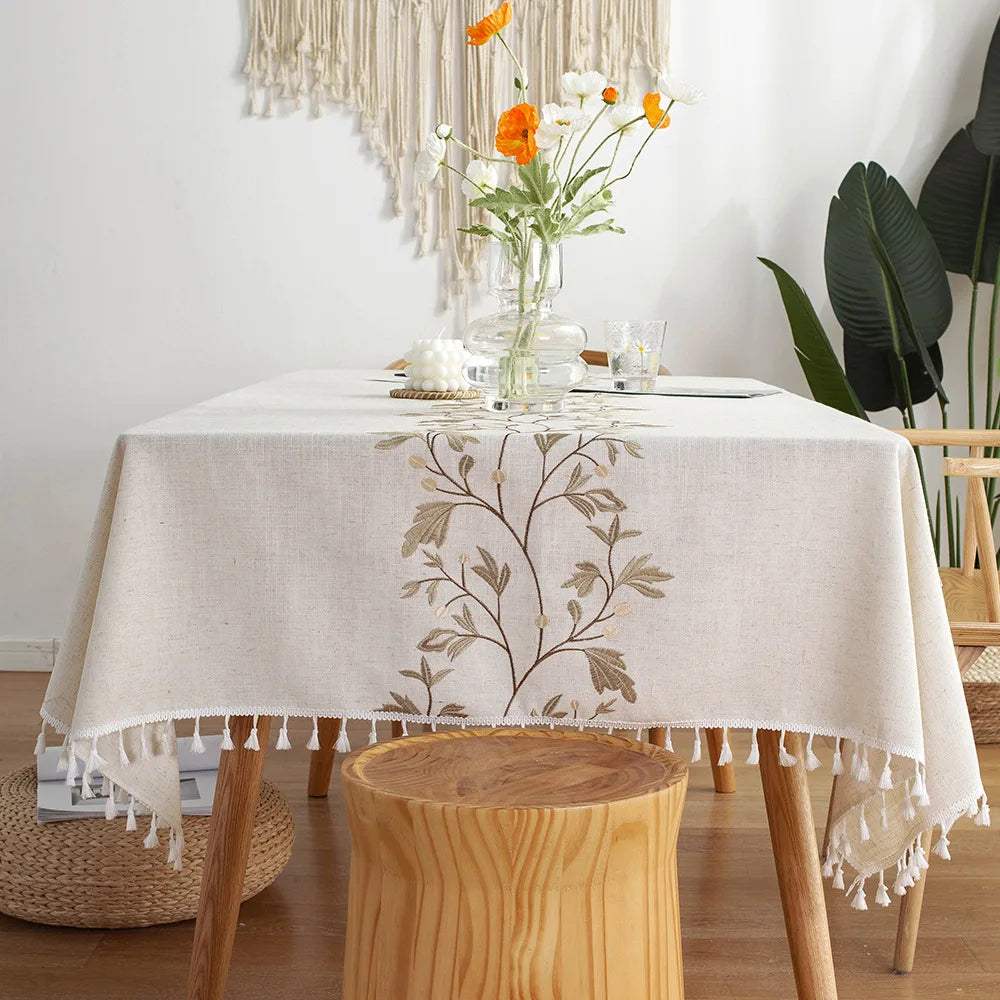
To warm up an understated dining room, you must first work on the sense of material. A completely bare table can be beautiful, but it can also seem very stark depending on the wood, the floor, and the light. Adding a textile, even a simple one, softens the look and makes the room more inviting.
The most effective solution isn't necessarily a large, formal tablecloth. It could be a soft table runner, a light-colored tablecloth with a clean drape, or an almost bare table accompanied by a few placemats. The important thing is for the table to feel lived-in without looking like it's prepared for a special occasion.
- A visible texture to break up an overly smooth effect.
- A just-right drape to add presence.
- A limited palette to maintain sobriety.
- Consistent lighting with the colors of the textile.
Choosing between a tablecloth, runner, or almost bare table
A tablecloth works well if the room needs to be softened overall. It establishes a real presence and frames the dining area. A table runner has a lighter effect: it structures without covering, which can be ideal if the wooden table is already beautiful but seems a little stark.
There's also a third option: leave the table almost bare and add textiles only during meals. This solution works well in small spaces or on a very expressive table.
| Solution | When it works well | Effect achieved | Point of attention |
|---|---|---|---|
| Tablecloth | Room a bit cold or formal | More enveloping ambiance | Pay attention to the drape |
| Table runner | Beautiful, visible table to preserve | Light presence | Adapt width and length to the tabletop |
| Placemats / almost bare table | Small space or very daily use | Simpler line | Keep enough material around to avoid austerity |

Materials that warm without weighing down
Matte or lightly textured textiles often give a softer feel than a very smooth surface. Linen, cotton, mixed weaves, or coated materials can all work depending on the use: the choice must remain compatible with meals, cleaning, and the style of the tabletop.
To compare uses, consult our guide what tablecloth material to choose for daily use. You can also browse our tablecloth collection or our table runners.

Creating warmth without overloading the table
A common trap is trying to compensate for sobriety with too many objects. A warm dining room doesn't need many decorative layers. A textile, beautiful lighting, and a few useful pieces can be enough.
If the table still seems cold despite a tablecloth or runner, look at the context: very white lighting, bare walls, very graphic chairs, or a lack of contrast. The warmth of a room rarely comes from a single element. The principles in our guide natural decor: combining linen, cotton, and wood without a rustic effect can help balance the whole.
Think about real use before the photo op
A dining room is a place for meals, passage, and sometimes improvised work. If the chosen textile is too restrictive, it will end up being put away. A simple, well-proportioned, and easy-to-maintain material will often yield a more lasting result than a spectacular piece reserved for special occasions.
Conclusion
Warming up an understated dining room doesn't necessarily require new furniture. A tablecloth, table runner, or placemats can add just enough material to make the room more inviting without losing its simplicity.