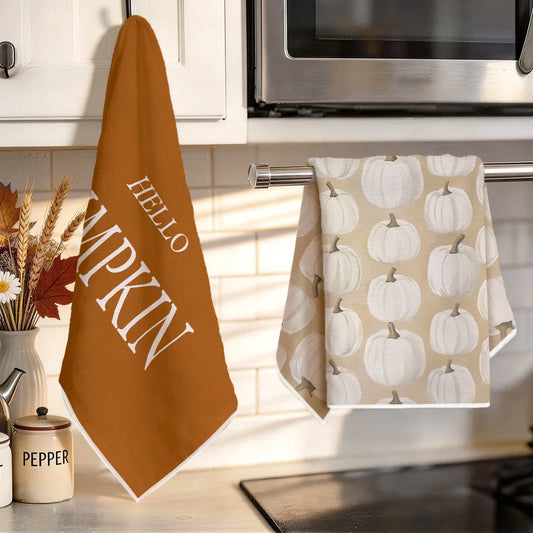
Kitchen tea towels: the practical essential that also enhances the decor
Kitchen tea towels are among those textiles we use several times a day without even thinking about it. They are used to wipe dishes, dry hands, soak up a few drops on the countertop, protect a dish occasionally, or assist in meal preparation. Because they are constantly in demand, choosing them deserves a little attention. A suitable material, an effective weave, a practical size, and a good rotation between several pieces can make your kitchen more pleasant on a daily basis.
Maison Orea has brought together a selection designed to combine function, comfort, and aesthetics. Whether plain, striped, checkered, graphic, or more decorative, a tea towel can remain discreet or become a true visual accent near the sink, oven, or kitchen cabinet. This collection was designed to help you choose models that are consistent with your habits, your interior, and the way you use your kitchen linens.
Daily useWiping, drying, protecting, and keeping a countertop neat.
Reasoned choiceMaterial, absorption, drying, and maintenance over simple visual appeal.
Kitchen styleTones and patterns that are easy to coordinate with table linens.
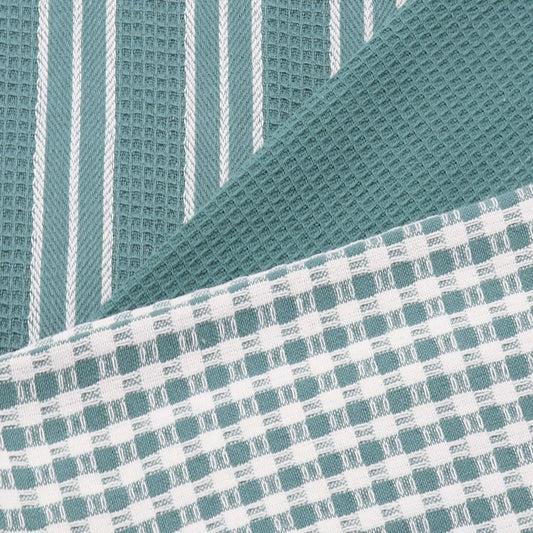
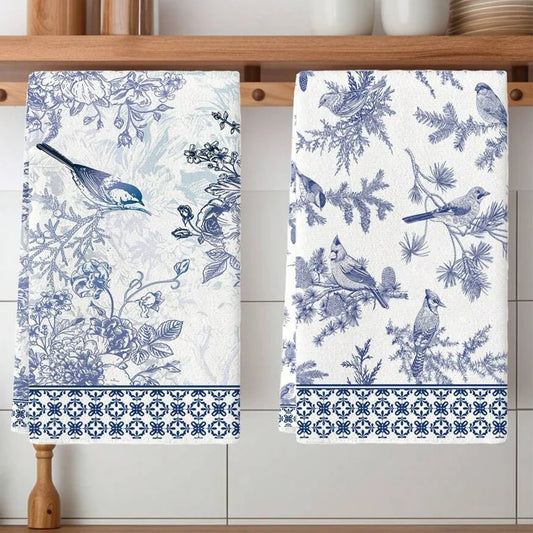
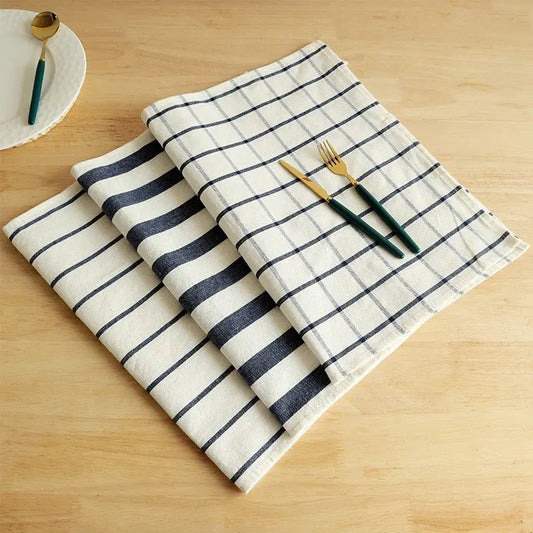
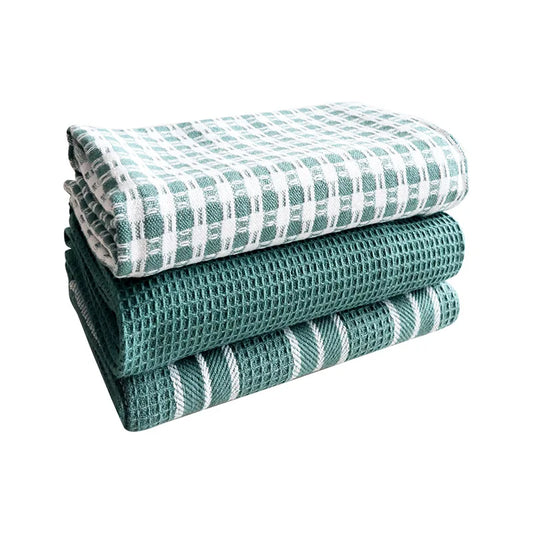
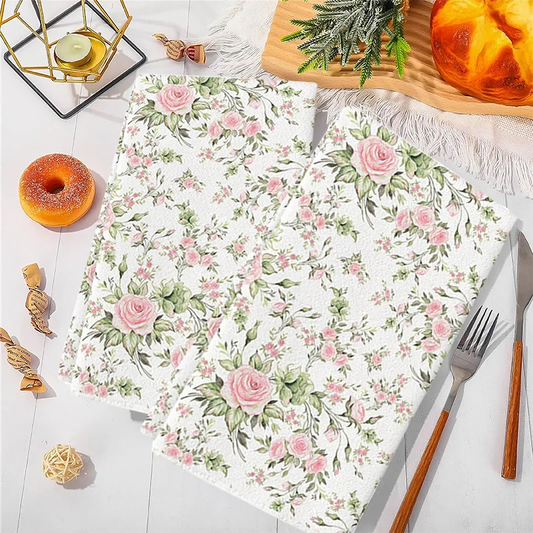
Well-chosen tea towels can combine pleasant textures, complementary uses, and a palette consistent with the kitchen.
Choosing well
How do you recognize good kitchen tea towels?
A good tea towel must first serve its purpose. For drying glasses or dishes, you generally look for a surface that absorbs properly without leaving too much lint behind. For hands or small spills, a softer and more generous material may be preferable. In any case, the textile must remain easy to handle when wet and be able to dry quickly enough between uses.
The consistency of the weave, the strength of the seams, and the stability of the textile after washing count just as much as the feel to the touch. A very soft towel is not automatically the most efficient for every task. The ideal approach is often to have several complementary models: some dedicated to dishes, others to hands or surfaces, to avoid using a single towel for everything.
Organization
Why should you have several tea towels in your kitchen?
A little rotation is more practical and hygienic than using one textile for too long. By keeping several kitchen tea towels available, you can quickly change the one that is wet, stained, or reserved for a different function. This also makes laundry easier: some of your linens can be in the washing machine while the rest remain available.
For example, you can differentiate usage through colors or patterns. One model for dishes, another for hands, and a third for common tasks help create simple benchmarks. This organization also avoids constantly using the same piece and helps preserve the look of your linens for longer.
Materials
Cotton, blends, or synthetic fibers: what to choose?
Cotton remains a very widespread material for tea towels due to its familiar feel and ability to absorb moisture. Depending on the thread, weave, and thickness, however, its performance can vary significantly. A tight and relatively smooth fabric can be pleasant for dishes and glasses, while a softer and textured structure is well-suited for versatile use. Some models also combine cotton with other fibers to alter drying speed, durability, or ease of care.
Synthetic fibers and certain blends can be interesting when you are looking for quick drying or a lightweight textile. Once again, there is no one perfect material for everyone. If your priority is absorption, look at the composition as well as the fabric construction. If you wash your tea towels very often, dimensional stability, colorfastness, and resistance to repeated cycles become particularly important.
Maison Orea tip: do not choose based on the material name alone. Care instructions and the description of each model provide useful information on the intended use. For a specific need, also check the pages for our future cotton kitchen tea towels or our quality kitchen tea towel.
Which towel for drying dishes?
For plates, cutlery, pots, or dishes, the main criterion is the ability to capture water without saturating too quickly. A sufficiently large format ensures you always have a dry section in hand. For glasses, many people prefer a relatively smooth surface that limits visible fibers and makes wiping the sides easier.
When you host often or cook a lot, having several tea towels dedicated to dishes prevents you from reusing a textile that is already damp. Models sold in sets can be particularly practical for this rotation. The future page tea towels that wipe well will allow you to compare a model designed around this search for efficiency.
Which towel for hands and countertops?
A towel used for hands must be pleasant to the touch and easily accessible. It can be hung on an oven handle, a hook, or a dedicated bar, provided it can remain unfolded enough to dry. For small spills, it is better to have another textile on hand so you do not constantly dampen the one reserved for your hands.
This distinction is simple to implement with different colors. It also contributes to a visually organized kitchen: the linen becomes a functional landmark rather than a textile left randomly on the countertop.
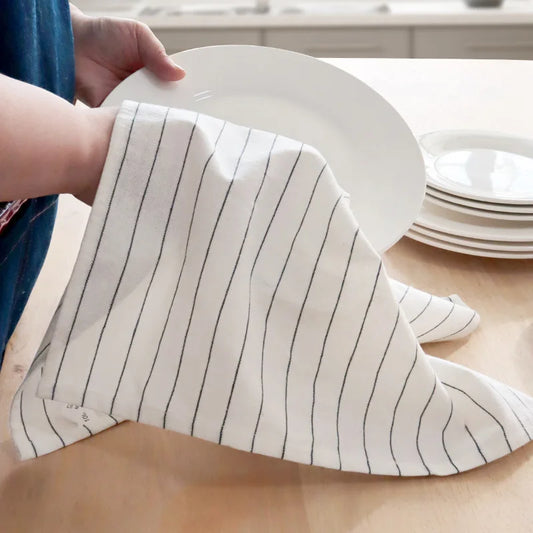
For dishes, a tea towel that is easy to handle and capable of absorbing moisture without saturating too quickly provides more daily comfort.Absorption & drying
Is a very thick tea towel necessarily more absorbent?
Not necessarily. Thickness may give an impression of capacity, but absorption also depends on the fiber, the weave, and the available surface area. A thick textile can hold a lot of water while taking longer to dry. Conversely, a lighter towel can be very practical if it quickly picks up moisture and returns to a dry state between uses.
In a poorly ventilated kitchen, drying speed is particularly important. A linen that stays damp for too long becomes less pleasant to use and must be replaced more quickly. Therefore, consider the real-life context: frequency of use, number of people in the household, location of the towel, and frequency of washing. The best choice is one that remains comfortable in your routine, not the one that simply looks the thickest in a photo.
Style
Transforming tea towels into a decorative kitchen detail
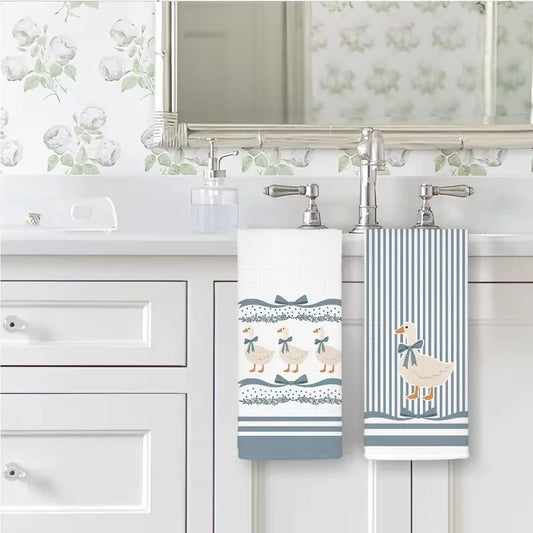
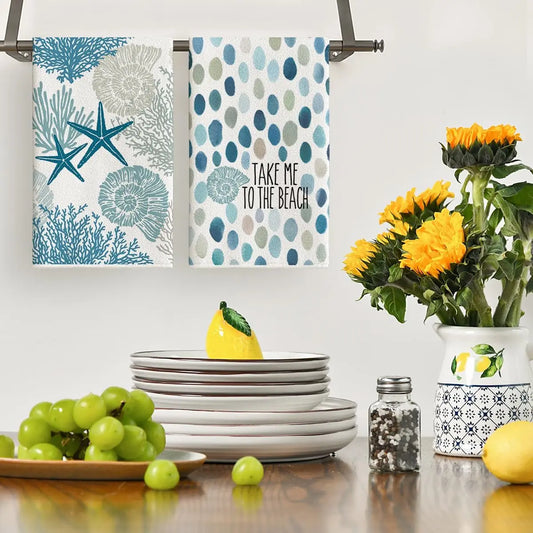
Kitchen linens remain visible throughout much of the day. Therefore, they can contribute to the general atmosphere of the room. In a light or minimalist kitchen, white, beige, gray, black, or fine-striped kitchen tea towels easily extend the existing aesthetic. In a warmer interior, patterns, checks, or deep shades add depth without requiring you to change the decor.
To create a coherent set, pick up a color already present on the cabinets, the backsplash, the accessories, or the table linens. A table runner and a tablecloth can thus share the same family of tones without being perfectly identical. The whole look appears more natural when it plays on two or three compatible shades rather than a strict repetition of the same pattern.
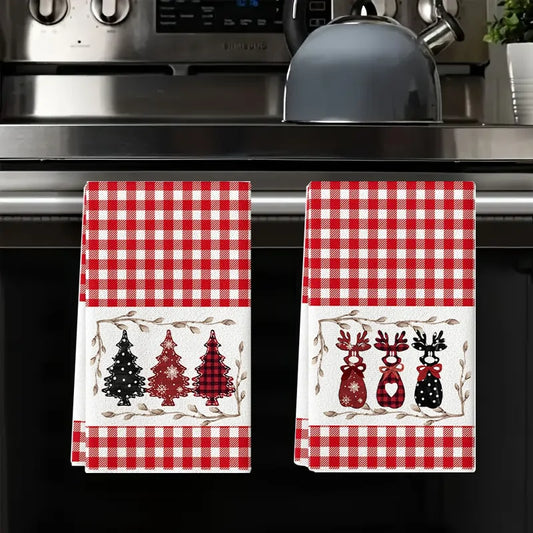
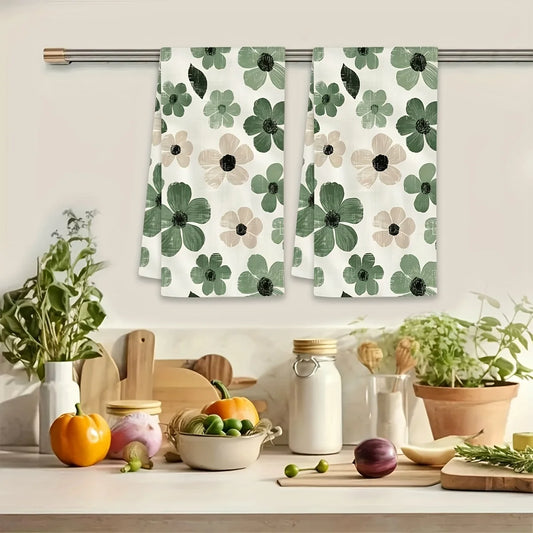
Hung on a bar or a hook, tea towels remain accessible while naturally participating in the kitchen's decoration.Care
How do you wash your kitchen tea towels properly?
Tea towels are exposed to moisture, splashes, and repeated contact with hands or surfaces. They therefore deserve regular maintenance. The safest rule is to follow the manufacturer's label, especially for temperature, drying, and any ironing. If a tea towel is very damp or stained, avoid leaving it in a ball in a closed basket before washing.
Do not overload the drum unnecessarily: the linens must be able to circulate to be washed and rinsed correctly. An excessive amount of detergent can leave residue in the fibers, which improves neither the feel nor the absorption. After the cycle, dry the towels completely before folding and storing them. If you use a tumble dryer, follow the model's indications, as some materials or prints require more precautions.
Rotation
How often should you change your tea towel?
There is no universal frequency, as everything depends on usage. A lightly used and perfectly dried towel between uses can remain pleasant longer than a model used for several tasks and kept constantly damp. As soon as it becomes frankly wet, stained, smelly, or has come into contact with a surface requiring more precautions, replace it with a clean one.
In an active kitchen, keeping a supply accessible greatly simplifies this habit. A few pieces folded in a drawer or a basket allow you to change the textile without waiting for the next laundry load.
Storage
How do you store tea towels without piling them up?
Clean tea towels can be folded vertically in a drawer, stored flat by use, or rolled in a basket. The key is to keep them dry and easily identify which ones are available. Avoid storing a textile that is still slightly damp: even if it is clean, it must be completely dry before being placed with the rest of the linens.
For models currently in use, provide a space that allows the fabric to breathe. A sufficiently wide bar is often more effective than a tight hook when the towel is damp. Simple storage also encourages more regular rotation.
Choosing based on your needs
Which kitchen tea towels for which profile?
For family use
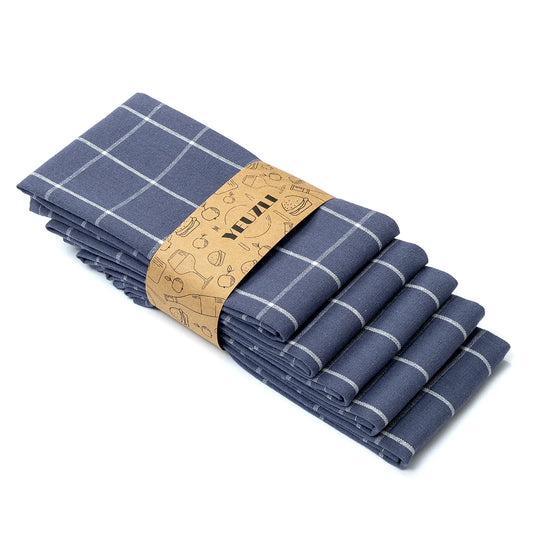
Prioritize several pieces that are easy to wash and differentiate. Sets simplify rotation and allow you to assign a function to each pattern.
Look primarily at resistance to washing, handling, and drying speed. The future professional kitchen tea towel will be designed with this frequent use in mind.
For a understated palette
Black, white, and stripes are easy to integrate. The future black kitchen tea towel page will help you explore this aesthetic.
Good habits
Common mistakes to avoid with kitchen linens
The first mistake is using the same towel for everything. Wiping hands, dishes, and countertops with one piece quickly reduces its comfort. The second is leaving it crumpled or folded over on itself while damp. Even a high-performance textile dries poorly if air cannot circulate.
FAQ
Frequently asked questions about kitchen tea towels
Which material should I choose for a tea towel?
Cotton is a common option for its absorption capacity and feel. Blends and synthetic fibers can also be interesting for quick drying or lightness. The right choice depends primarily on the intended use and the product's specifications.
How many tea towels should I have at home?
There is no mandatory number. The ideal is to have enough to distinguish between several uses and ensure rotation during laundry. In an active kitchen, having several clean pieces in reserve is particularly practical.
Can I use the same tea towel for hands and dishes?
It is possible occasionally, but separating the functions is generally more comfortable and facilitates rotation. Different patterns or colors allow you to recognize each use immediately.
Why doesn't my tea towel wipe as well as it used to?
Several causes are possible: saturation with moisture, washing product residues, fiber aging, or material unsuitable for the task. Start by replacing it with a dry textile and check the care recommendations.
How do I prevent a tea towel from smelling like dampness?
Unfold it after use, dry it in a well-ventilated area, and change it when it stays damp for too long. Never store a tea towel before it is completely dry.
Maison Orea
Kitchen tea towels chosen to simplify daily tasks
Kitchen tea towels are small essentials, but their effectiveness truly influences the comfort of the room. A suitable material, good rotation, proper drying, and well-separated functions are often enough to make daily life smoother. At the same time, colors and patterns allow you to connect this functional linen to the rest of your decor.
Gradually browse the Maison Orea selection and choose your models according to what matters to you: absorption, maintenance, sobriety, patterns, sets, or style. The goal is not to accumulate tea towels, but to have the right pieces in the right place, ready to accompany every gesture in the kitchen.