

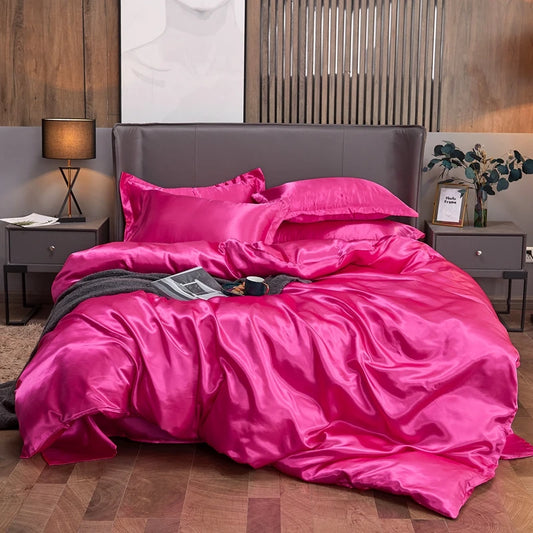

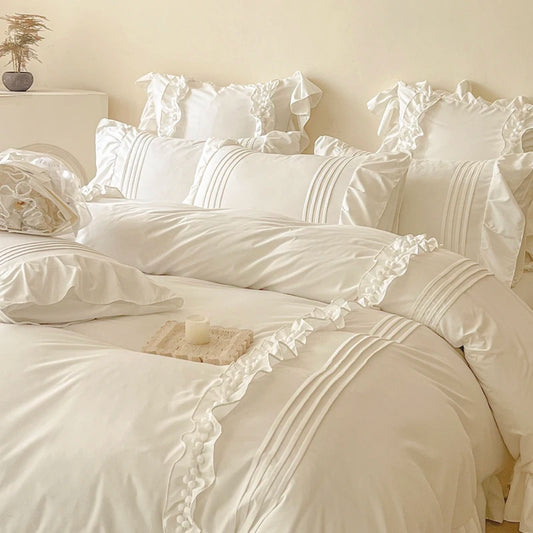

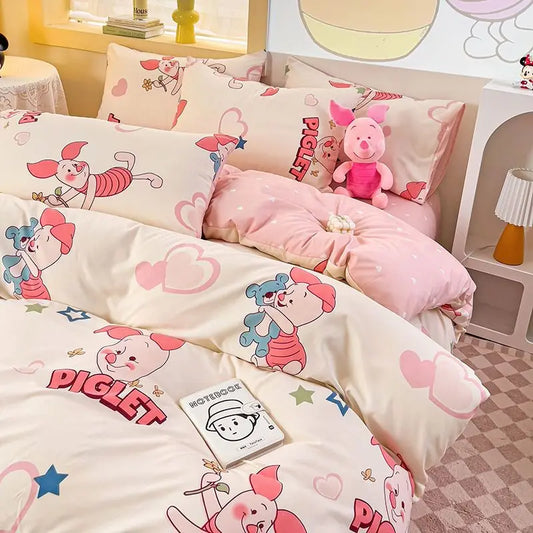

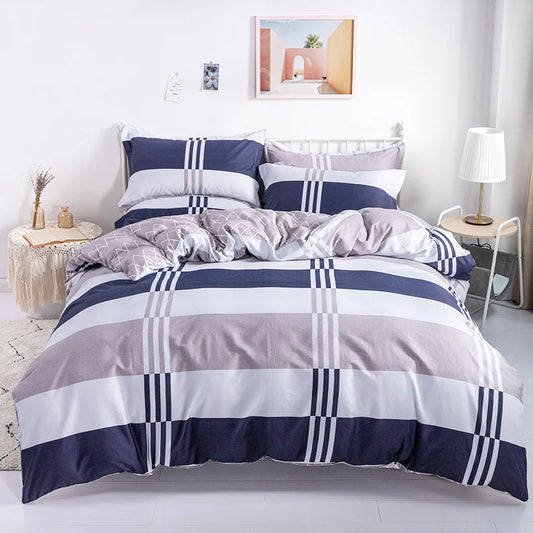

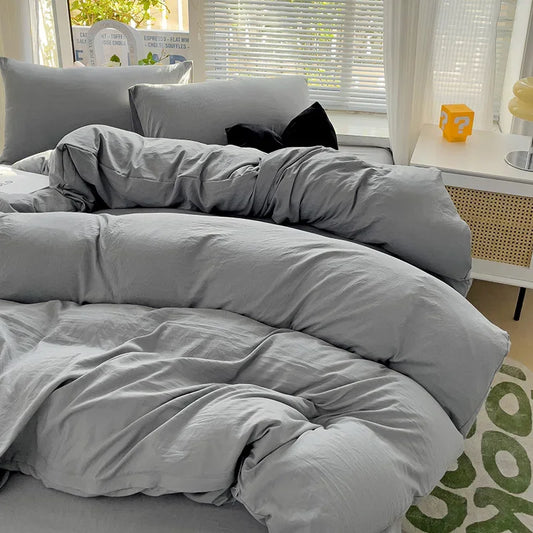

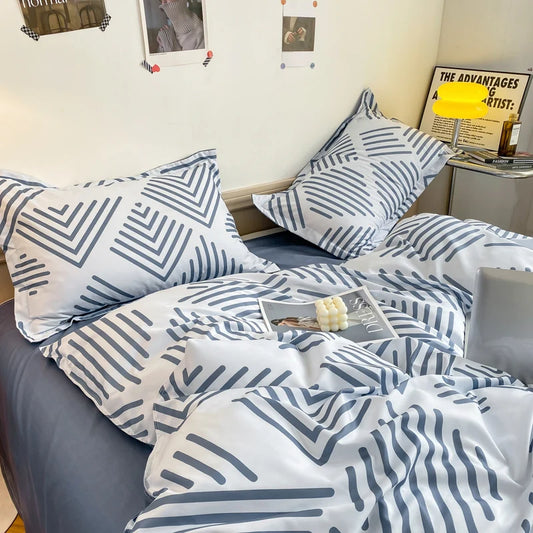

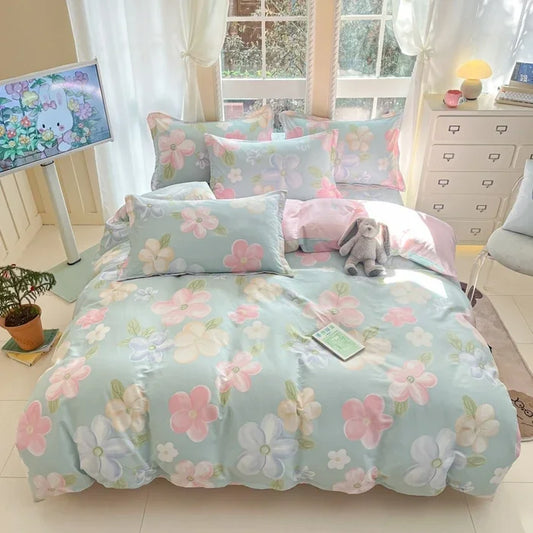

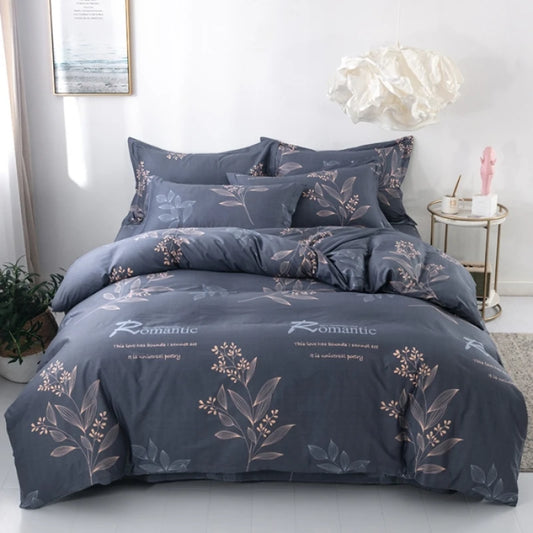

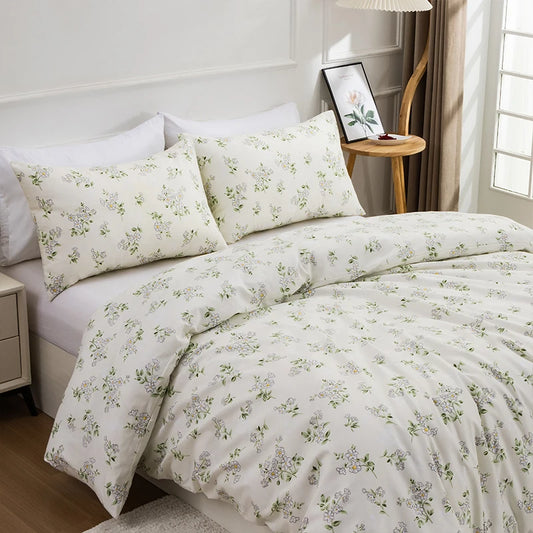


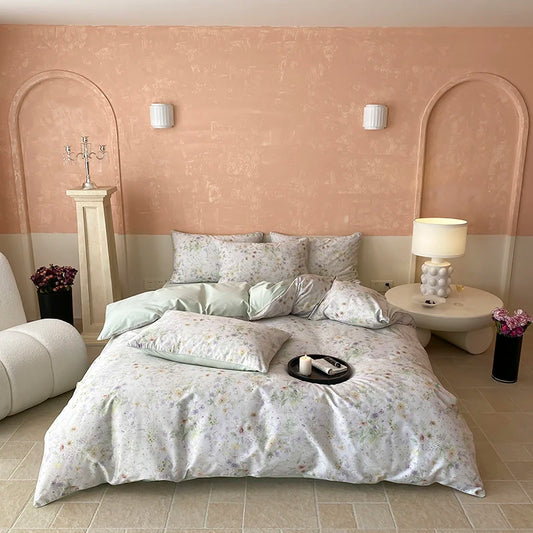

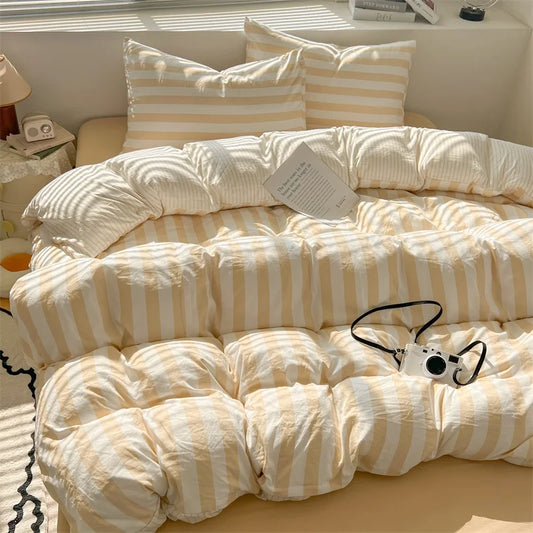

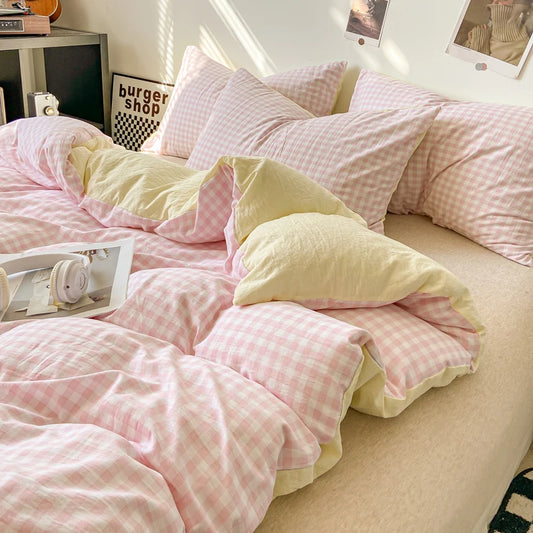


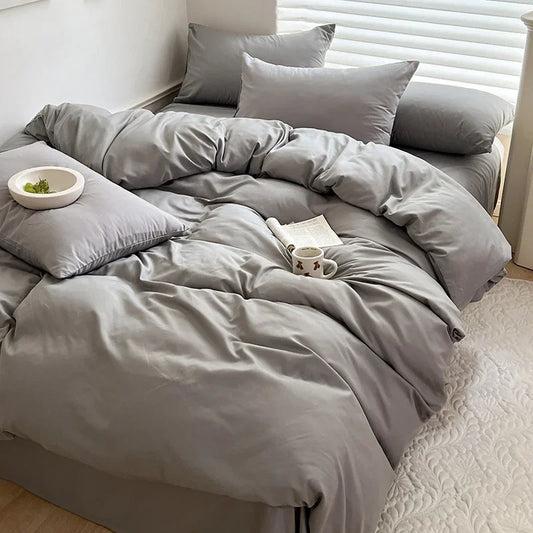
240 × 260 cm
Measure your duvet lying flat. A 240 × 260 cm cover must correspond to a duvet of the same dimension.
A 240x260 bedding set corresponds to the search for a cover suited to a 240 × 260 cm duvet. This is a large bedding format, but that does not mean it is reserved for a single mattress width or a specific type of bed. The same duvet can provide a very generous drape on one bed and a more fitted look on another.
Maison Orea gathers references associated with large formats here. However, some product pages may offer multiple dimensions in their variants: before ordering, please check that 240 × 260 cm is indeed available and selected if that is the size of your duvet. This step comes before considering color, material, or the number of pieces, and helps to avoid receiving a cover that is too small or too large.
No. In this collection, 240 × 260 cm corresponds to the dimension requested for the duvet or duvet cover. The mattress has its own dimensions. A bed can measure 140, 160, 180 cm in width or more and use a 240 × 260 cm duvet depending on the desired level of coverage.
If you are looking for your bedding based on a 140 cm mattress, the 140x190 bedding set and 140x200 bedding set pages address this logic. If your priority is simply a shared bed, the 2-person bedding set collection is more helpful for comparing formats according to use by two people.
Measure your duvet lying flat. A 240 × 260 cm cover must correspond to a duvet of the same dimension.
The greater the difference between the width of the duvet and that of the mattress, the more generous the theoretical drape can be.
A single product page may offer several sizes. The collection title does not replace the need to verify the variant actually selected.

You can estimate the side drape by comparing the width of the duvet to that of the mattress. Subtract the width of the bed from the width of the duvet, then divide by two. Considering a 260 cm duvet width, a 160 cm mattress theoretically leaves a 50 cm difference on each side. On a 180 cm bed, this theoretical difference drops to approximately 40 cm per side.
This calculation is only a guide. Mattress thickness, the loft of the duvet, and how it is positioned reduce the visible drape. Preferences also change from one couple to another: some people like very wide coverage, while others prefer a format that is easier to handle.
If you are looking for a more compact solution, the 220x240 bedding set collection allows you to compare the smaller format without mixing the two intentions.
The 240 × 260 cm offers more surface area than a 220 × 240 cm. This difference is felt in the drape, but also in the weight and volume of the linen. A large cover requires more space to be changed, washed, dried, and stored.
The 220 × 240 cm may be easier to manage if its coverage is already sufficient for you. The 240 × 260 cm becomes interesting when you want more material on the sides or when your duvet already has this dimension. The best choice is therefore not automatically the largest, but the one that corresponds to your duvet and your daily routine.
It is best to avoid this automatic association. Bed names can vary and do not always describe the same dimensions depending on the country or brand. A 240x260 bedding set must therefore be chosen based on the duvet, not a commercial name like "king size".
One person can use this format on a more compact bed to obtain a very generous drape. A couple on a wider bed can use it to have more coverage on each side. The only essential compatibility is between the duvet and the cover.
If your set includes a fitted sheet, the logic changes for this piece: the fitted sheet must correspond to the mattress and its thickness. Therefore, check each element of the set separately.
Cotton, synthetic fibers, blends, and different weaves exist in large formats. At 240 × 260 cm, weight and drying time become particularly important. A heavy material can be visually pleasant but harder to handle when wet.
Do not assume that a word like cotton, flannel, or satin alone guarantees a specific property. The feel and care depend on the weave, the grammage, the blend of fibers, and the finishes. Consult the full composition of the chosen variant.
For frequent use, choose a material compatible with your machine, your drying space, and your tolerance for wrinkling. The large format amplifies practical constraints: an easy-care cover is often more pleasant to live with over the long term.
The large format can offer more side margin when two people share the bed. This can reduce the feeling of running out of duvet during the night, but the result depends on the width of the mattress and the habits of the sleepers.
The 2-person bedding set collection complements this page with an approach centered on shared sleeping rather than just one cover dimension.
The 240 × 260 cm is not just for couples. A single person can choose this format for a generously dressed bed or to keep plenty of coverage on the sides.
The downside is bulkier linen. Before changing sizes, make sure you are comfortable with handling the cover and its care.
A large cover can be harder to put on simply because it contains a lot of fabric. Work on the bed rather than standing up. Turn the cover inside out, grab the top corners from the inside, and catch the corresponding corners of the duvet. Then gradually pull the cover down around the filling.
Another method is to lay the cover and duvet flat and roll them together before turning the ends inside out, when the shape and closure of the cover allow. Regardless of the method, align the four corners first before distributing the volume.
An accurately sized cover is easier to put on than an approximate size. If it is too large, the duvet can shift inside; if it is too small, it compresses and forms thick areas.
A 240 × 260 cm cover occupies a large visual surface. If the pattern is bold, simplify the rest of the bedroom. Neutral walls, a few solid-colored cushion covers, and understated furniture are generally sufficient.
If the set is solid-colored, you can add texture with a bed throw placed at the foot of the bed. The throw does not need to cover the entire bed: a contrasting strip can be enough to structure the large surface of the duvet.
For a more general approach to colors, patterns, and materials, the bedding set collection completes this guide specifically dedicated to the 240 × 260 cm size.

In a collection by size, it is tempting to think that every product displayed is automatically offered in 240 × 260 cm. This is not always the case: some Shopify product pages group multiple variants, and a reference may also belong to several size categories.
Before adding to your cart, check three elements: the selected dimension, the color, and the number of pieces. If 240 × 260 cm does not appear in the available variants of the chosen model, do not consider a similar size to be equivalent.
This verification is particularly important when the product title mentions a different dimension. The selected variant and the features displayed on the product page must always take precedence.
Volume is the main issue. A 240 × 260 cm cover needs space in the drum to be properly tumbled and rinsed. Check the capacity of your machine and avoid filling it with many other textiles at the same time.
Temperature, spin speed, and drying mode depend entirely on the material. Follow the label rather than a generic rule. Turning the cover inside out and closing its closure before washing can reduce friction if the manufacturer allows it.
For drying, spread the linen out sufficiently so that corners and folds do not remain damp. A large cover may require more time in the open air. Do not store anything until it is completely dry.
In the closet, fold the cover with its pillowcases or place the entire set inside a pillowcase. This avoids searching for pieces separately and keeps large sets better organized.
It is not mandatory, but rotating two sets can be practical if you use the same large duvet all year round. While one is drying, the second allows you to remake the bed immediately. This is particularly useful if your home has few options for quick drying.
You can choose two different styles: one neutral set and one more colorful, or two materials adapted to different habits. The essential thing is to maintain compatibility with the duvet and pillows.
If you do not need a second complete set, changing just the throw or the cushion covers also allows you to renew the look of the bed with little effort.
Not necessarily. 240x260 refers here to the duvet or its cover. The format can be used on several bed widths depending on the desired drape.
The 240x260 offers more surface area. It can provide more drape, but it is also bulkier to handle, wash, and dry.
Subtract the width of the mattress from that of the duvet, then divide by two to obtain a theoretical estimate per side. The thickness of the bed and the loft reduce the visible drape.
Some product pages group multiple variants or size categories. The dimension actually selected on the product page remains the reference before ordering.
No. Check the capacity of your machine and the manufacturer's instructions. A bulky cover must have enough space to be properly tumbled and rinsed.

Keep your tablecloth in place with the right size, a non-slip protector, clips or weights. Useful solutions for indoor and outdoor tables.
Keep your tablecloth in place with the right size, a non-slip protector, clips or weights. Useful solutions for indoor and outdoor tables.

Prepare a cosy autumn bedroom with textiles, lighting and colours. Simple layers and decorating ideas that keep the room uncluttered.
Prepare a cosy autumn bedroom with textiles, lighting and colours. Simple layers and decorating ideas that keep the room uncluttered.

Find the right tablecloth size for round, rectangular, square or oval tables. Use our simple drop formula, size charts and measuring tips.
Find the right tablecloth size for round, rectangular, square or oval tables. Use our simple drop formula, size charts and measuring tips.
