





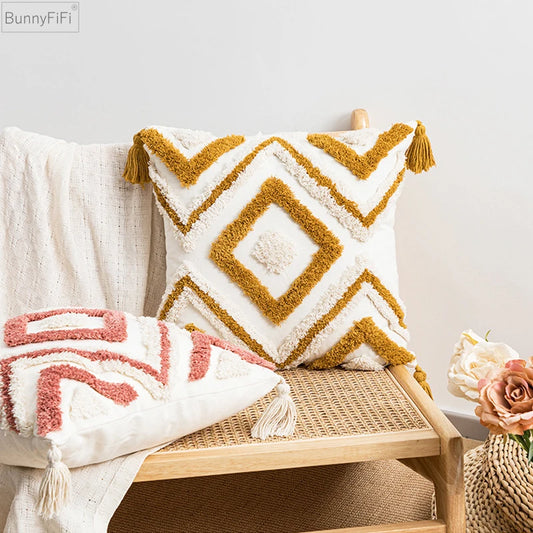





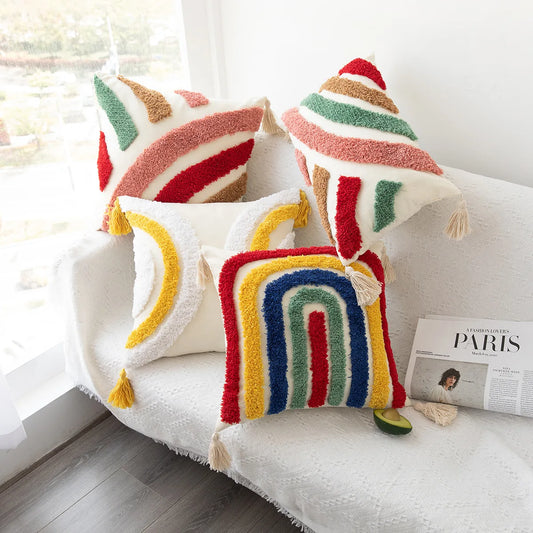







40 × 40 and 45 × 45 cm
These compact formats are easy to use on an armchair, a small sofa, or in the second row in front of large cushions.
Changing a cushion covers is one of the easiest ways to alter the mood of a sofa, armchair, or bed without replacing the furniture. A warmer color is enough to make a living room more inviting; a different texture adds depth; a well-chosen pattern can create the accent piece that a very neutral room was missing.
But the result depends first on the size and the filling. A cover that is too large looks empty; a cover that is too small closes with difficulty and pulls at the seams. Maison Orea brings together square and rectangular formats, smooth or textured materials, and varied styles. This guide helps you choose a cushion covers based on the cushion you already own and the effect you are looking for.
Remove the old cover if possible and measure the filling or the cover lying flat, from seam to seam. For a square cushion, note the width and height. For a rectangle, measure the two sides separately. Avoid measuring the cushion by following its fluffiness: this gives a dimension larger than the actual size of the cover.
As a general rule, a cover of the same dimension as the filling offers a simple and balanced result. Some people choose a slightly larger filling to obtain a fuller effect, but the gap must remain reasonable so as not to force the zipper or distort the seams.
These compact formats are easy to use on an armchair, a small sofa, or in the second row in front of large cushions.
Large squares add more presence to a deep sofa or a bed. They can serve as a base for a composition with smaller formats.
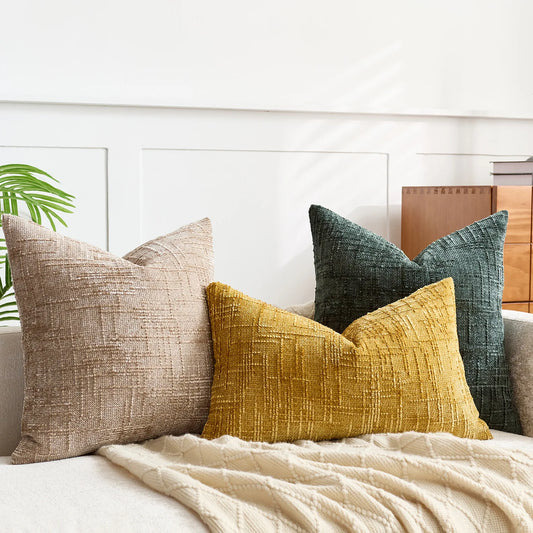
A rectangular cushion placed in front of two squares breaks the repetition and creates a more natural composition, especially on a bed or in the center of a sofa.

The right dimension is one that corresponds to the filling you wish to use. A 40x40 cushion covers fits a similar format cushion, while a 45x45 cushion covers offers a few extra centimeters that are visually noticeable on the sofa.
Large models, such as a 60x60 cushion covers, create a generous base. On a wide sofa, two large squares placed at the ends can be complemented by a 45 × 45 cm and a rectangle. For a bench or an armchair, a single compact format is often enough.
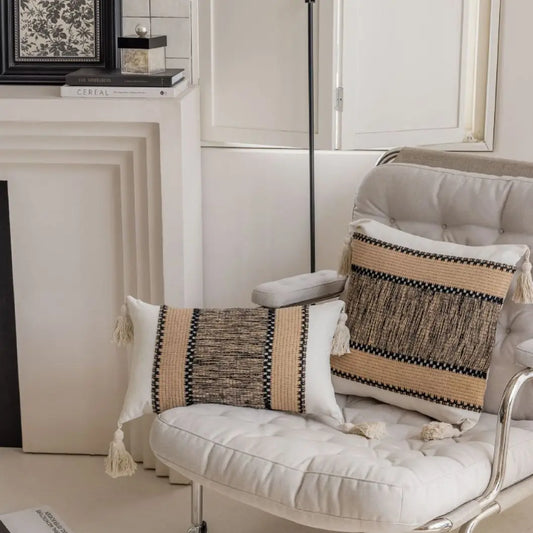
For long lumbar shapes, the rectangular cushion covers allows you to visually support the center of a composition and avoid an alignment composed solely of squares.
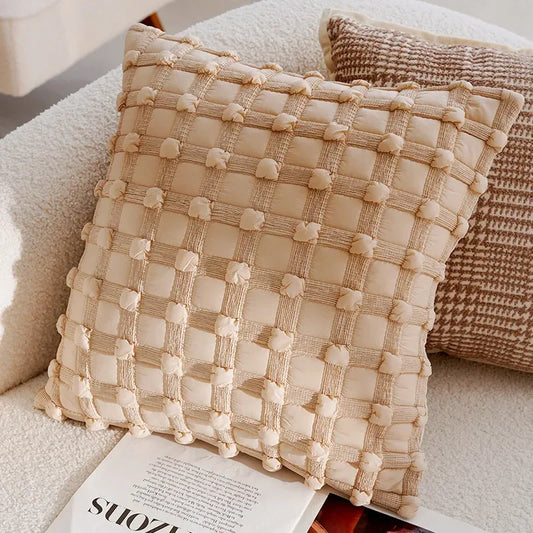
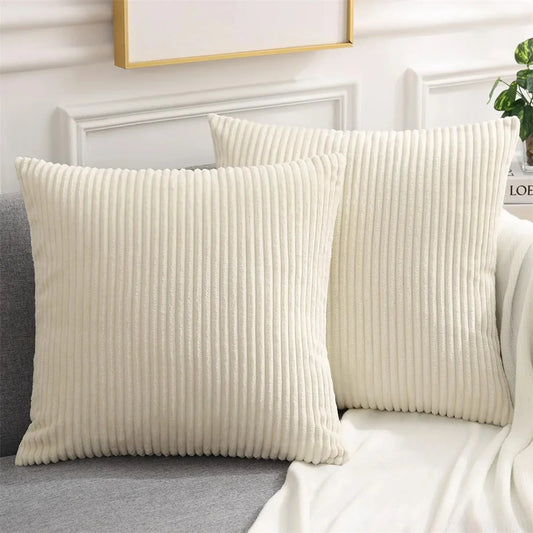
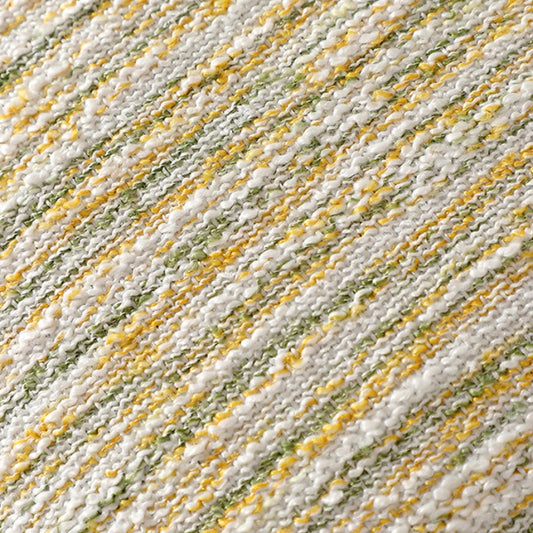
Velvet provides a dense appearance and changes slightly depending on the light. A velvet cushion covers works particularly well when you want to add depth to a plain sofa. Corduroy adds even more texture thanks to its regular lines.
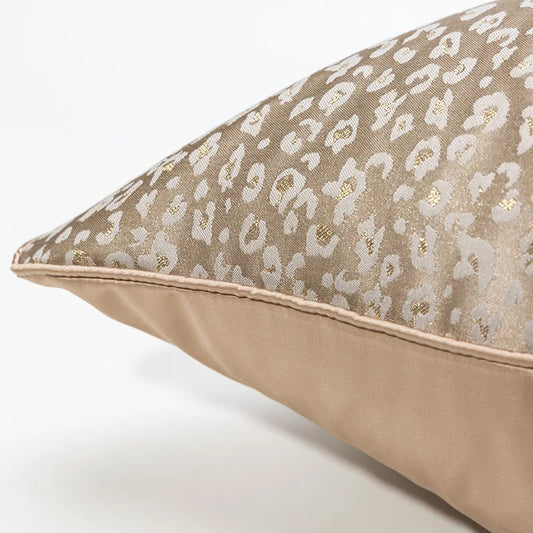
Cotton and textiles with a natural look provide a flatter finish that is easy to integrate. Linen or materials that mimic its appearance create a relaxed atmosphere thanks to their visible texture. Satin and smooth surfaces reflect more light and are better suited when looking for a dressier finish.
Synthetic fibers can offer very varied textures and practical maintenance. The exact composition remains the most useful piece of information: two visually similar covers may require different care.
A zipper generally helps keep the filling firmly in place and makes it easy to remove the cover for washing. A discreet zipper is particularly attractive on a cushion used on both sides. Check that it opens wide enough to insert the cushion without pulling hard on the edges.
Covers with a flap or envelope opening do not use a metal zipper and provide a softer finish. Their retention depends on the fabric overlap. Other models may have different systems. Check the product page to know how the cushion covers opens and closes before choosing.
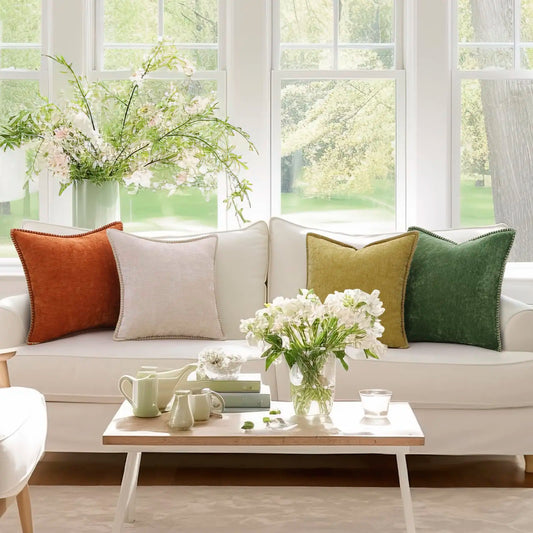
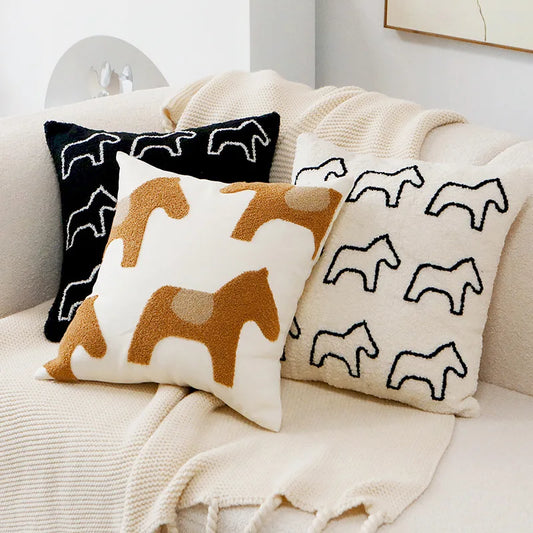
A successful composition does not need to be perfectly symmetrical. Choose a palette of two or three colors, then vary the sizes and textures. For example, two large beige or ecru cushions in the background, a terracotta velvet, and a small patterned rectangle create more depth than four identical cushions.
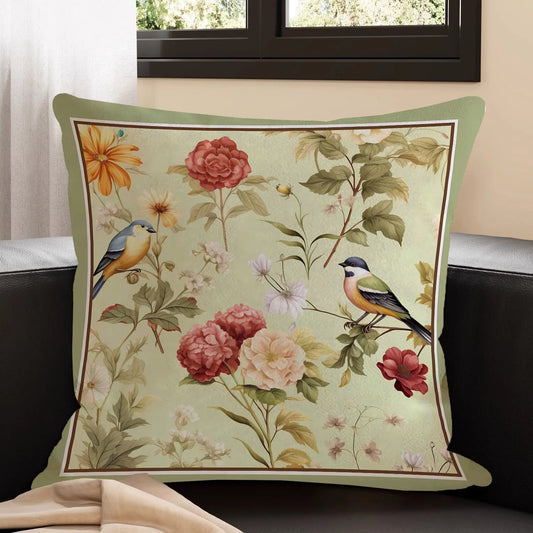
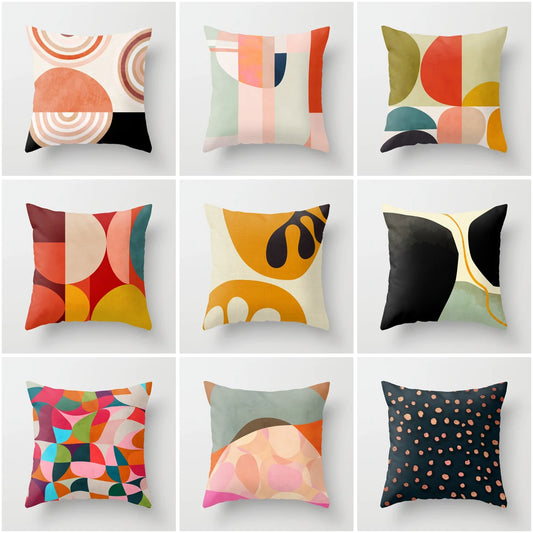
You can also start from an element already present: rug, curtains, painting, or sofa color. A black and white cushion covers easily echoes a graphic decor; a floral cushion covers can introduce several colors on its own.
If the sofa already has a strong pattern, prefer plain or lightly textured covers. On a plain sofa, you can conversely combine a pattern and two different materials. The contrast then comes from the texture rather than an accumulation of colors.
Start with the largest cushions near the armrests, then move toward the center with smaller formats. On a three-seater sofa, three to five cushions may be enough depending on their volume. Always leave enough room to actually sit down.
A 60x60 cushion covers for sofa can serve as a voluminous base if the seat is deep. Complement with smaller formats rather than repeating several large squares.
Decorative cushions should complement the pillows without complicating every bedtime. Two large squares and one rectangle are often enough to give a neat effect. A coordinated bed throw allows you to visually connect the cushions to the rest of the bedding.
In a very colorful room, keep the covers more understated so that the bed remains visually restful.

For a terrace or balcony, a classic cover is not necessarily suitable. Look for a model explicitly intended for the intended use. A waterproof cushion covers can limit the penetration of certain liquids, but this does not necessarily mean that the cushion can stay outside in the rain permanently.
Sun, humidity, pollen, and dust put more strain on textiles. To extend the appearance of the covers, bring the cushions inside when you are not using them for a long period and let them dry completely if they have become damp. Always follow the instructions specific to the product.
Always start with the label. Remove the filling and, if the model has a zipper, close it before washing when the instructions allow it. This precaution can limit snags with other textiles. Sort the colors and use a program compatible with the material.
Velvet, satin, embroidery, or special textures may require more precautions than simple cotton. Avoid generalizing a wash temperature to the entire collection. Some models must be washed at low temperatures, others by hand, or simply spot cleaned.
Replace the cover only when it is completely dry. If it needs to be ironed, do so at the permitted temperature and preferably inside out for printed or delicate surfaces.
The filling can remain the same all year round. Only the covers change. In autumn and winter, velvet, brown, terracotta, and thick textures create a more enveloping feeling. In spring, light tones, greens, blues, or floral patterns lighten the whole.
This rotation takes up little space: empty covers fold easily into a drawer or a box. You can keep a neutral base all year round and only replace one or two accents. This allows you to renew the living room without completely transforming the decor.
A 45 × 45 cm cover is the simplest choice. You can use a slightly more generous filling for a plump effect, provided it can be inserted without forcing the zipper.
Lay it flat without stretching it and measure from one seam to the other. For a rectangular cushion, record width and length separately.
There is no mandatory number. The goal is to keep enough space to sit down. On a three-seater sofa, three to five cushions often make an easy base to balance depending on their size.
Limit yourself to two or three main shades. Repeat a color from the rug, curtains, or a painting and use a second color as an accent.
It depends on the material and construction. Consult the label before any washing, especially for velvet, satin, embroidery, and models intended for outdoors.

Keep your tablecloth in place with the right size, a non-slip protector, clips or weights. Useful solutions for indoor and outdoor tables.
Keep your tablecloth in place with the right size, a non-slip protector, clips or weights. Useful solutions for indoor and outdoor tables.

Prepare a cosy autumn bedroom with textiles, lighting and colours. Simple layers and decorating ideas that keep the room uncluttered.
Prepare a cosy autumn bedroom with textiles, lighting and colours. Simple layers and decorating ideas that keep the room uncluttered.

Find the right tablecloth size for round, rectangular, square or oval tables. Use our simple drop formula, size charts and measuring tips.
Find the right tablecloth size for round, rectangular, square or oval tables. Use our simple drop formula, size charts and measuring tips.
