

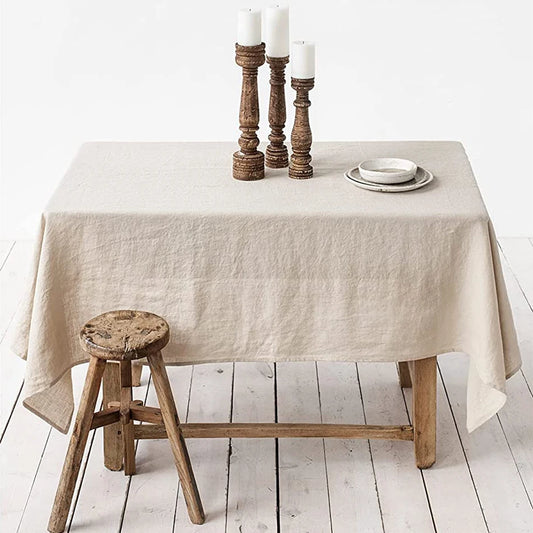

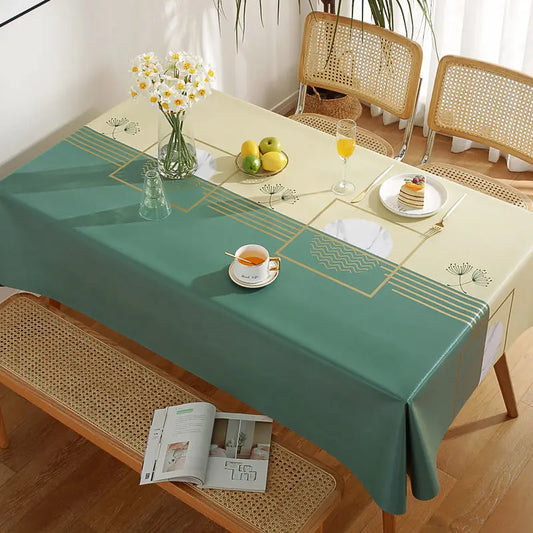

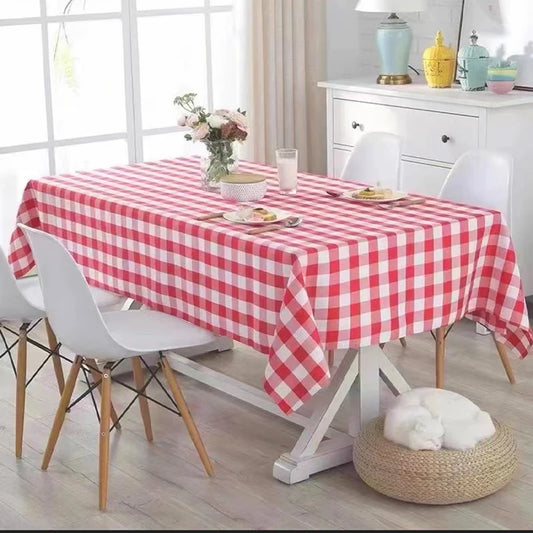

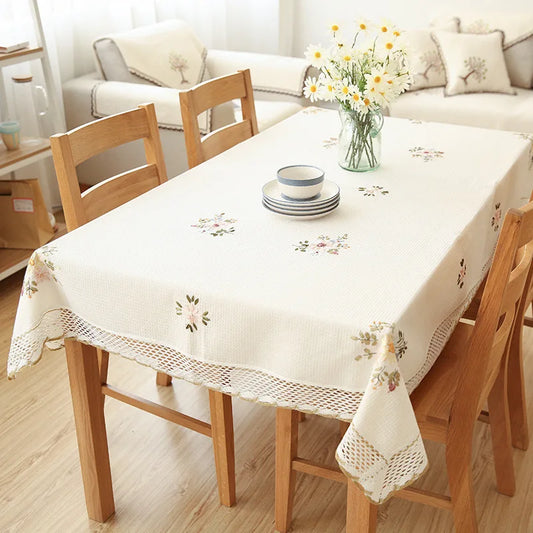






Measure the tabletop
Measure only the table surface, without including the chairs. If it has an extension, note the dimensions for both closed and open configurations.
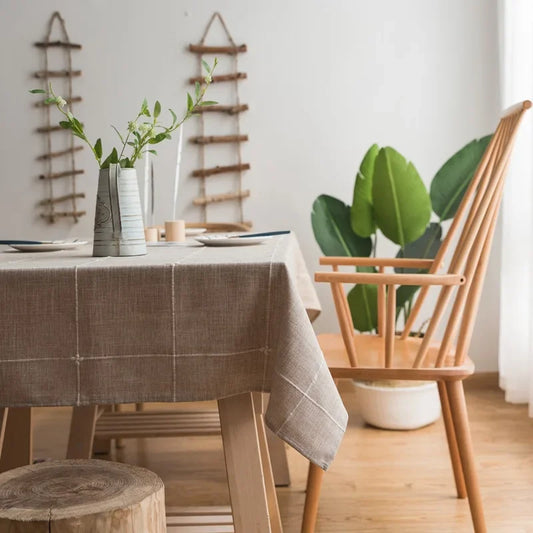
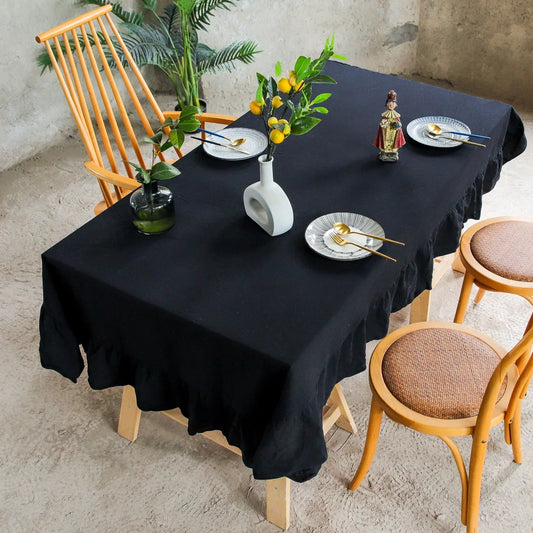
The rectangular tablecloths is the natural shape for dressing a long table, a classic dining table, or an extendable tabletop. Choosing one seems simple, but a few centimeters can completely change the look: too short, and it looks poorly sized; too long, and it gets in the way of legs and chairs. The first step is therefore to measure the tabletop before choosing the material or pattern.
Maison Orea brings together models for everyday life, family meals, and large gatherings. This page provides a clear method for calculating dimensions, choosing a comfortable drop, and comparing textiles. The goal is to find a rectangular tablecloths that is truly suited to your table, rather than just one that "should fit."
Measure the length and width of the tabletop. Then, choose the desired drop for each side. For a table used every day, a drop of about 20 to 30 cm on each side is often practical and harmonious.
The formula is simple: tablecloth dimension = table dimension + twice the drop. For a 160 × 90 cm table with a 25 cm drop, look for roughly 210 × 140 cm. This method works regardless of the tabletop size.
Measure only the table surface, without including the chairs. If it has an extension, note the dimensions for both closed and open configurations.
A short drop is practical for daily use. A more generous drop provides a dressier look for hosting, as long as it does not get in the way of legs.
Compare your dimensions to the exact format indicated on the product sheet. Do not rely solely on terms like "large" or "6-person table."

For a daily meal, a moderate drop makes seating easier and prevents the fabric from being pulled by knees. At around 20 cm, the look remains simple. Between 25 and 30 cm, the table generally appears more dressed up while remaining comfortable. For a very formal reception, a longer drop may be desired, but it requires more attention regarding chairs.
Table height and the layout of the legs also count. A tablecloth that falls in front of a central leg does not pose the same constraints as fabric that passes near four corner legs. If possible, do a test with a sheet or a piece of fabric to visualize the drop before buying a large format.
A well-proportioned rectangular tablecloths should create an even appearance on all four sides. If your table is placed against a wall, you can tolerate a slightly different drop at the back, but for a table visible from all sides, it is best to center the textile precisely.
These values are calculation examples, not mandatory sizes. Adapt the drop to your furniture and the formats available in the collection.
A cotton or textile-look tablecloth offers a soft drape and a warm presence. It is well-suited for meals where touch and aesthetics are priorities. Its care depends on the weave, color, and manufacturer's instructions.
Polyester is often appreciated for its ease of drying and durability. Some models may also be designed to resist stains or wrinkling, but these properties should be verified on each product sheet rather than assumed based on the material alone.
For particularly fast maintenance, an oilcloth tablecloth or a waterproof tablecloth might be more suitable. These collections meet a different intent: here, the priority remains above all the rectangular format and its adjustment to the tabletop.
The term "stain-resistant" can refer to different treatments or textile constructions. It does not necessarily mean that no substance can mark the fabric. Look at the care recommendations and intervene quickly after a spill, especially with colored sauces, wine, coffee, or fats.
A surface that lets liquids bead up can simplify daily life, but it remains important to dab rather than spread the stain. Avoid aggressive products that are not recommended. The best stain-resistant rectangular tablecloths is one where the level of protection matches your usage and whose maintenance remains simple for your household.
If you often use the table with its extension, measure both configurations. A single large tablecloth can work when the table is open, but look very long when it is closed. Two dedicated formats generally offer a better look.
Keep the large tablecloth stored with hosting accessories and use a shorter format for daily life. This organization avoids permanent compromises.
The measurement logic remains the same, but the drop must often be shorter. A very long tablecloth on a coffee table quickly touches the floor and can become bothersome in a passageway.
For a purely decorative use, test a small drop or a table runner to leave more of the tabletop visible.

The length of the tabletop naturally creates an axis. You can take advantage of this with a table runner, a succession of small vases, or some low candles. On a white tablecloth, the colors of the centerpiece stand out strongly. Conversely, on a printed tablecloth, keep the accessories simpler.
The placemats help structure the place settings when the tablecloth is plain. For a large party, repeat the same elements at regular intervals rather than concentrating all the decoration in the middle.
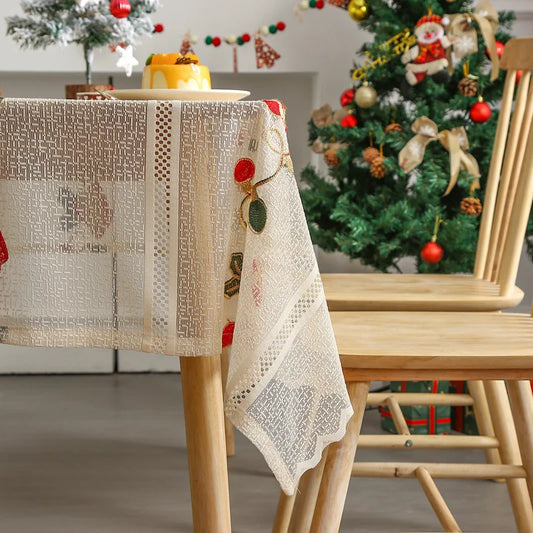
At Christmas or for a seasonal reception, the Christmas Table collection provides ideas for coordinating tablecloths, runners, and napkins while leaving room for serving dishes.
The product label remains the reference for washing temperature, drying, and ironing. A large tablecloth needs space in the drum to be properly washed and rinsed. Avoid compressing it with too many other textiles.
After washing, unfold it quickly to limit deep creases. Depending on the material, line drying, flat drying, or machine drying may be recommended. Never iron a coated or plasticized surface without explicitly verifying that it is allowed.
For storage, always fold the tablecloth when it is clean and perfectly dry. Very large formats can be rolled on a wide support if you wish to limit fold lines and have the necessary space.
Measure length and width then add twice the desired drop. With a 25 cm drop, add 50 cm to each dimension of the tabletop.
A drop of about 20 to 30 cm on each side is suitable for many daily meals and family receptions. Adjust according to table height and the desired look.
If you regularly use both configurations, two dedicated sizes often give a better result than a single, very large format.
Measure the tabletop precisely, check the width available in large formats, and consider the weight of the textile, washing, and storage. The larger the tablecloth, the more important these criteria become.
It is possible, but the drop will be less even at the ends. If you want to follow the shape of the tabletop, an oval tablecloth will generally be more harmonious.

Keep your tablecloth in place with the right size, a non-slip protector, clips or weights. Useful solutions for indoor and outdoor tables.
Keep your tablecloth in place with the right size, a non-slip protector, clips or weights. Useful solutions for indoor and outdoor tables.

Prepare a cosy autumn bedroom with textiles, lighting and colours. Simple layers and decorating ideas that keep the room uncluttered.
Prepare a cosy autumn bedroom with textiles, lighting and colours. Simple layers and decorating ideas that keep the room uncluttered.

Find the right tablecloth size for round, rectangular, square or oval tables. Use our simple drop formula, size charts and measuring tips.
Find the right tablecloth size for round, rectangular, square or oval tables. Use our simple drop formula, size charts and measuring tips.
