
Natural Home Decor: Pair Linen, Cotton & Wood
Louis MikolajczakNatural Decor: Blending Linen, Cotton, and Wood Without a Rustic Feel in a Modern Interior
The word "natural" often sounds appealing, but it can also be a trap. In many interiors, the desire for simple materials turns into an accumulation of beige, fibers, wood, and artisanal details. Instead of a calming space, you end up with a somewhat forced decor, sometimes more rustic than intended.
However, natural decor can be very modern. It doesn't rely on a country or seaside cliché. It's mainly about balance: enough material to warm, enough space to remain contemporary, enough contrast to avoid the impression of a themed decor.
The main trends in home textiles lean in this direction: the most successful natural look is not the one that does the most. It's the one that feels obvious, almost calm, because the materials are well articulated with each other. This logic also aligns with slow living decor, where material serves comfort rather than accumulation.
Table of Contents
The Direct Answer: Vary Materials, Limit Effects
To avoid a rustic effect, you must first avoid excessive repetition. Linen on linen, wood on wood, beige on beige: if everything speaks at the same volume, the room loses subtlety. Elegant natural decor works best when one material dominates, a second adds texture, and a third stabilizes the whole.
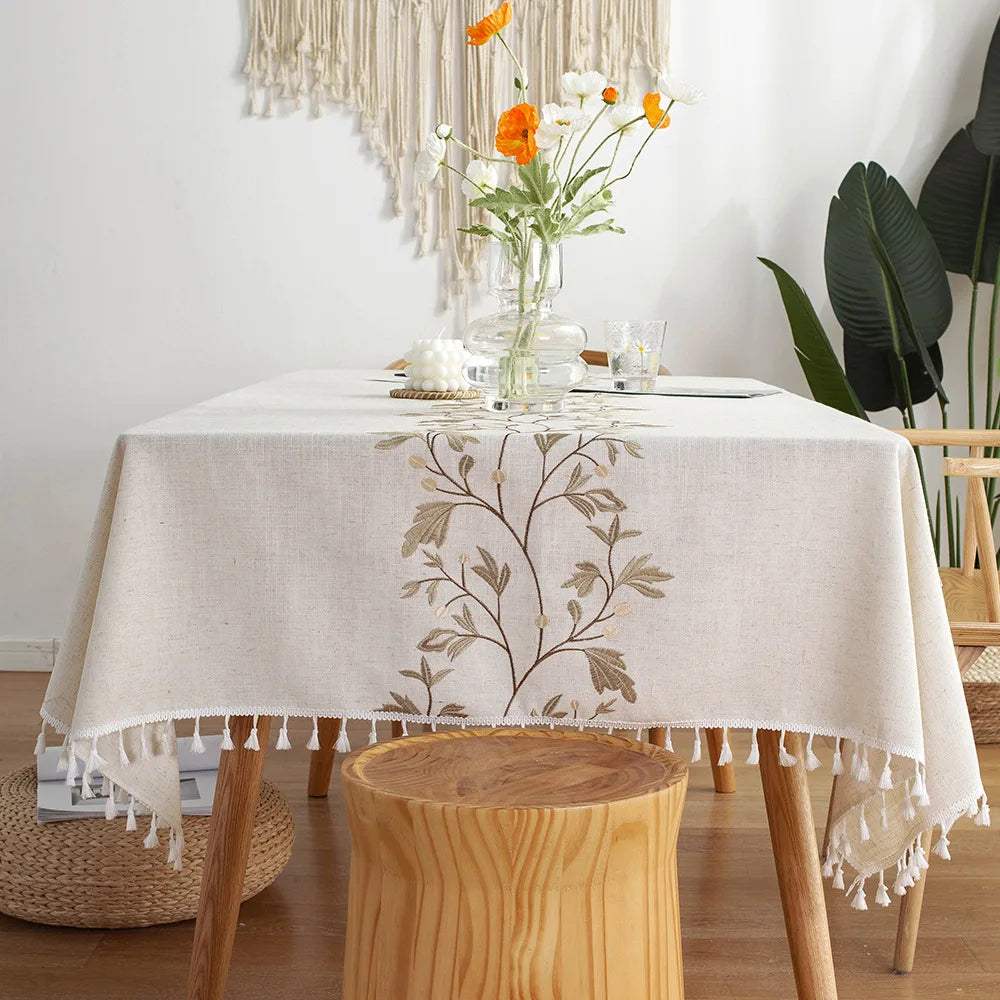
Linen, for example, brings character and history. Cotton clarifies and simplifies the visual. Wood provides the framework. When these three elements are balanced, the interior appears more refined than merely decorated.
- One main wood rather than several competing species.
- Matte textiles for a natural finish.
- Subtle contrast to avoid a uniform effect.
- Some empty space so the material remains legible.
Wood Should Structure, Not Dominate the Scene
In successful natural decor, wood serves as a base. It provides visual weight, stability, and a sense of genuine material. But as soon as it becomes omnipresent, the room feels closed in. Too much wood, especially if it's medium-toned or orange, can quickly shift the ambiance towards rustic.
The ideal is often to keep wood for the main lines: table, headboard, legs, small furniture. Textiles then soften this structure. They are what make the room lighter, more liveable, and less ostentatious.

The Right Role for Linen and Cotton in the Room
Linen immediately brings a natural element, but it shouldn't be everywhere. Used on a curtain, a throw, a cover, or a tablecloth, it provides beautiful texture. Repeated on too many surfaces, it can make the whole look too wrinkled or too narrative. Cotton, on the other hand, often serves to rebalance. It smooths things out a bit, calms, and restores visual order.
It's this blend that avoids caricature. A convincing natural interior isn't solely made of raw materials. It also uses cleaner, simpler surfaces that prevent the decor from becoming too busy. The same principle often applies when trying to match bedding with wall paint: softness comes from the dialogue between textures and calm surfaces.
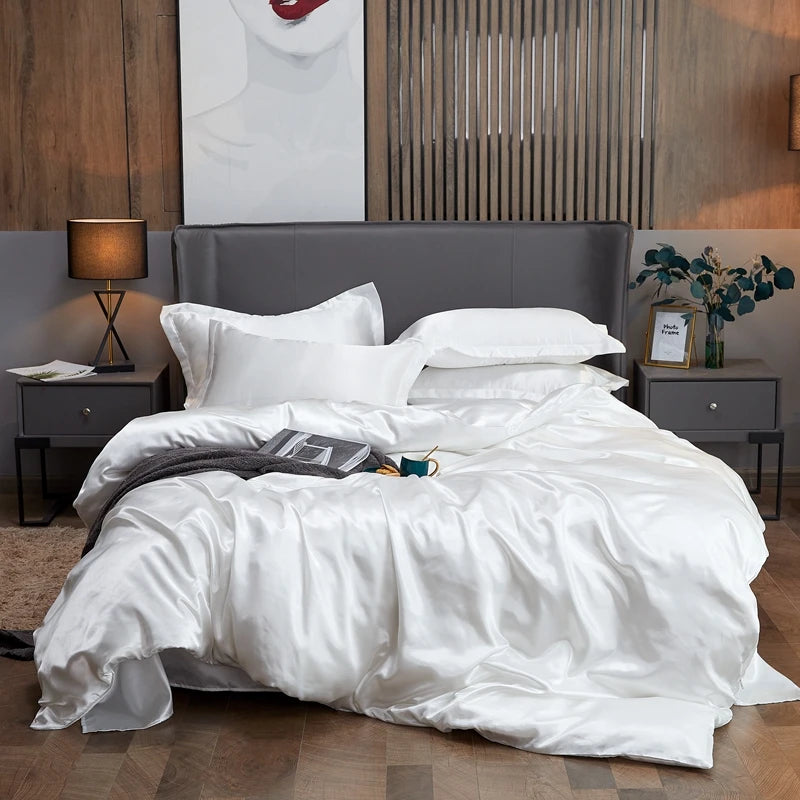
For the bedroom, the guide washed linen, percale, or satin: which material for which bedroom allows for a more precise comparison of bedding finishes.
| Element | What it provides | How to dose it | Common mistake |
|---|---|---|---|
| Linen | Texture, natural feel, warmth | On a few key pieces | Repeating it everywhere |
| Cotton | Legibility, softness, simplicity | As a base or counterpoint | Choosing it too flat throughout the room |
| Wood | Structure, anchoring, depth | On furniture and strong lines | Multiplying shades illogically |
Subtle Contrast Modernizes the Overall Look
Natural decor becomes contemporary as soon as you give it a little visual tension. This can be a denser brown, a matte black line, a muted green, stone ceramic, or a cleaner textile amidst very supple materials. This contrast should remain light, but it prevents the room from sliding into overly prim decor.
Conversely, if you remove all contrast, the decor can seem a bit blurry. The goal is not to add color everywhere, but to give the eye some clearer landmarks.

What Tips the Scale Towards Rustic
What ages poorly in natural decor is not the material itself. It's the accumulation of expected signs: too many artisanal objects side by side, too many identical fibers, too much medium-toned wood, too many rural references in the same room. At that point, the interior tells a theme instead of telling a story or evoking an atmosphere.
To remain current, you need to maintain some crispness. A simpler line, a calmer textile, a more understated ceramic, or well-preserved empty space often suffice to reset the whole. Natural decor gains elegance as soon as it breathes a little more.
Conclusion
Blending linen, cotton, and wood without a rustic effect primarily requires restraint. One strong material, one calm material, a clear structure, and a little contrast are enough to create a true natural and modern ambiance.