





Daily meals
Choose a tablecloth that is simple to set, clean, and replace. A surface that does not easily hold onto crumbs or small splashes reduces the time spent maintaining the table after each meal.
An outdoor tablecloths must do more than just dress up a table. It needs to remain pleasant to use outdoors, be easy to clean after a meal, withstand everyday minor accidents, and adapt to an environment where wind, dust, pollen, or humidity can complicate the use of standard linens. The right model therefore depends as much on your table as it does on how you experience your outdoor space.
On a covered terrace, an urban balcony, or an exposed garden table, the priorities are not the same. Some seek a surface that is easy to wipe down above all else. Others want a warmer textile look for entertaining. This Maison Orea collection helps you choose an outdoor tablecloths consistent with your furniture, your pace of dining, and the practical constraints of your space.
The difference does not come down to a single material. A tablecloth intended for outdoor use must above all be chosen based on its intended use. If you dine outdoors every day, ease of cleaning becomes the priority. If the table is mainly used on weekends or for meals with friends, the texture, color, and drape may take on more importance.
A waterproof tablecloth can be advantageous when spilled drinks and splashes are frequent. An oilcloth tablecloth generally favors a surface that is simple to wipe clean. A textile tablecloth can offer a softer appearance when the terrace is sheltered. The term outdoor tablecloths therefore refers primarily to an intended use, not a single composition.
Choose a tablecloth that is simple to set, clean, and replace. A surface that does not easily hold onto crumbs or small splashes reduces the time spent maintaining the table after each meal.
In a small space, the size must be precise. A drape that is too long gets in the way of legs and catches the wind; a tablecloth that is too short can easily shift. Measuring the tabletop is therefore essential.
For entertaining, a nice drape, a pleasant material, and a color that matches the tableware immediately create a more polished setting without needing to add extra accessories.

There is no ideal material for every situation. Coated or plasticized textiles are popular for their quick maintenance. A smooth surface often allows you to remove stains with a sponge or a damp cloth, depending on the product’s instructions. This is a practical solution for family meals, children, or tables used several times a day.
Textile-look tablecloths offer a softer aesthetic and can create an atmosphere closer to an indoor dining room. They are particularly suitable for covered terraces or meals where you want a more dressed-up look. In these cases, you must consider the frequency of washing, drying time, and potential food stains.
To choose, always check the exact composition and the care instructions provided on the product page. Avoid assuming that a tablecloth is suitable for permanent outdoor exposure simply because it is marketed for outdoor use. A tablecloth may be very well-suited for al fresco dining while still requiring storage after use.
In most cases, putting away linens after use is a good habit. Even a surface that is easy to wipe down can accumulate dust, pollen, and humidity if left on the table permanently. Prolonged sun exposure can also alter certain colors or finishes over time.
After a meal, remove crumbs, clean the surface according to recommendations, and let the tablecloth dry completely if it has become wet. Once dry, fold or roll it up in a clean place. This simple routine helps keep an outdoor tablecloths cleaner and ready to use for the next meal.
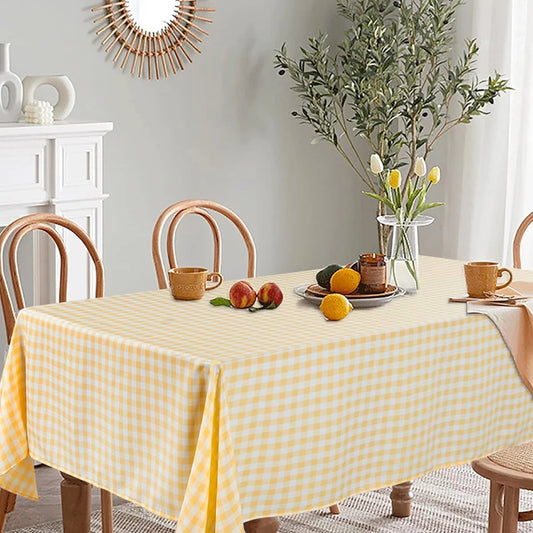
Start by measuring the length and width of the tabletop, or the diameter if it is a round table. Then, add the desired drape for each side. For daily use, a moderate drape is often the most practical: it dresses the table without descending too far onto laps or catching too much wind.
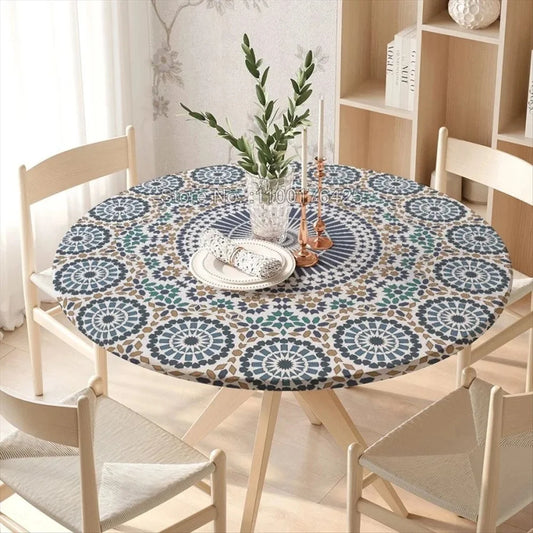
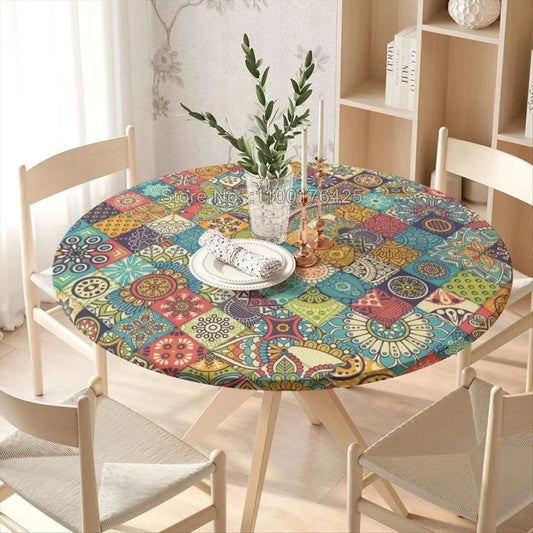
For a rectangular table, you can consult the rectangular tablecloth collection to compare sizes suited to long tabletops. For a circular table, a round tablecloth naturally follows the shape and creates an even drape.
Size should not be chosen for aesthetics alone. Outdoors, a very long tablecloth can lift more easily. Conversely, a tablecloth barely larger than the tabletop risks shifting as soon as guests sit down. The best compromise is one that looks good while remaining stable and comfortable.
Measure the diameter of the tabletop and add twice the desired drape. For example, if you want about 20 cm of drape all around, add about 40 cm to the diameter of the table. Always check the actual dimensions provided on the product page.
Since a round table is often placed on a central pedestal, an even drape provides a particularly harmonious look. Just avoid fabric that is too long if the chairs are close to the edge.
Measure the table in the configuration you use most. If it has an extension, you can plan for a second size or choose dimensions compatible with the open version when you are entertaining.
For daily use by four people and large occasional meals, two well-sized tablecloths are often more practical than a single very long model used permanently.

Wind is one of the main differences between an indoor table and an outdoor one. A lightweight tablecloth with a large drape can lift even in a moderate breeze. To limit this problem, choose an appropriate size and avoid excess fabric. Some users add clips or weights designed for tablecloths when the table is particularly exposed.
Accessories should be installed without damaging the material. On a coated finish, avoid overly aggressive clips or objects likely to mark the edge. You can also place placemats on service areas: they visually structure the settings and add a bit of weight, without replacing a fastener when the wind is strong.
A successful terrace does not need many objects. The tablecloth already creates a large visual surface. If it is patterned, keep the tableware and centerpiece fairly understated. If it is solid, you can add texture with placemats, a small vase, or a table runner used on a sheltered table.
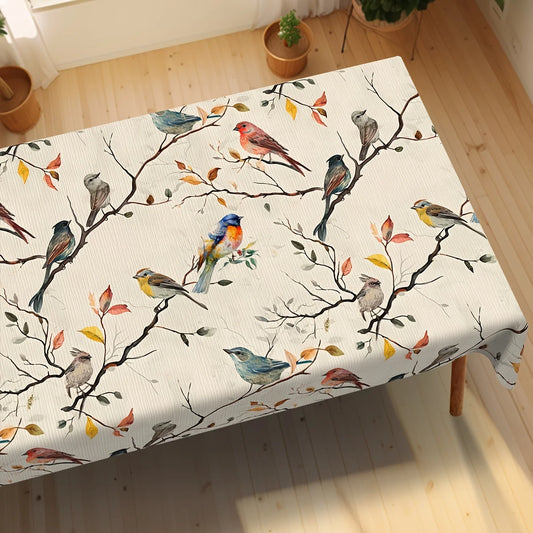
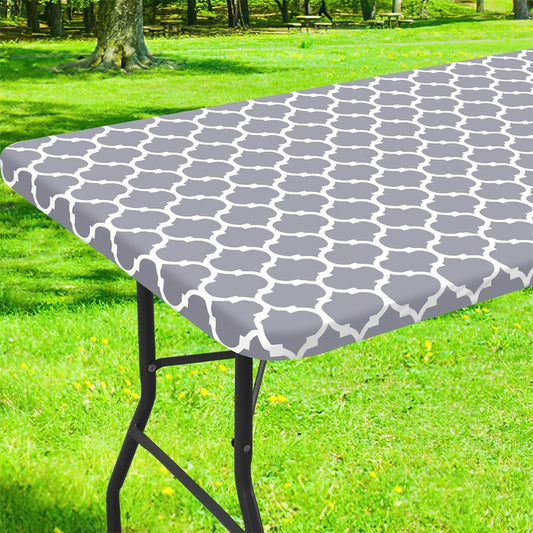
Natural tones work well with wood, black metal, stone, and woven fibers. Beige, ecru, soft green, or gray create an easy-living base. Botanical or geometric motifs allow for more personality on a simple terrace.
For a highly exposed garden table, also keep visual maintenance in mind: a mid-tone color or a subtle pattern can mask minor dust more easily than a perfectly white surface. The choice is therefore both decorative and practical.
Start by removing crumbs and dry residues. For a sponge-washable surface, use a soft cloth or non-abrasive sponge with water and, if necessary, a product suited to the manufacturer’s recommendations. Avoid harsh products that could dull a finish or alter a protective layer.
For a textile tablecloth, treat stains according to the composition and label. Quick action is generally easier than late cleaning, especially for colorful sauces, coffee, or fatty substances. Do not habitually wash at a high temperature: the right temperature depends on the specific fabric.
Before storing, make sure the tablecloth is completely dry. If it is folded while still damp, odors or marks may appear. For materials that crease easily, rolled storage can sometimes be more practical, provided you have the necessary space.
Choose first by the shape and dimensions of the table, then by your frequency of use. For daily use, ease of cleaning and drying are often the priorities. For a covered terrace used occasionally, the textile feel may take on more importance.
No. Protection against liquids can be very practical, but it is not the only solution. A textile tablecloth may be suitable for a sheltered terrace if its maintenance matches your habits.
Use a reasonable drape and, if necessary, clips or weights designed for this purpose. Avoid fasteners that could damage the edge or surface of the tablecloth.
This depends on the material and conditions. To make it easier to preserve the appearance and avoid humidity, pollen, or dirt, storing it after use generally remains the most prudent solution.
Follow the shape of the tabletop first. A round tablecloth provides an even drape on a circular table; a rectangular tablecloth naturally follows a long tabletop. The actual dimensions remain the main criterion.

Keep your tablecloth in place with the right size, a non-slip protector, clips or weights. Useful solutions for indoor and outdoor tables.
Keep your tablecloth in place with the right size, a non-slip protector, clips or weights. Useful solutions for indoor and outdoor tables.

Prepare a cosy autumn bedroom with textiles, lighting and colours. Simple layers and decorating ideas that keep the room uncluttered.
Prepare a cosy autumn bedroom with textiles, lighting and colours. Simple layers and decorating ideas that keep the room uncluttered.

Find the right tablecloth size for round, rectangular, square or oval tables. Use our simple drop formula, size charts and measuring tips.
Find the right tablecloth size for round, rectangular, square or oval tables. Use our simple drop formula, size charts and measuring tips.
