
How to choose your bed linen according to the seasons for better sleep?
Good sleep also means choosing the right bed linen. Throughout the seasons, our search for comfort evolves: we want more coolness in summer, more warmth in winter, and versatility during in-between periods. However, many households keep the same sheets all year round without adjusting the materials or layers to the room's climate.
Adapting your bed linen according to the seasons means meeting specific needs: better managing the sensation of heat, choosing a pleasant feel, and maintaining a beautiful and welcoming bedroom. Every detail counts: sheet material, weave, layering, and colors. This article guides you through choosing your bed linen throughout the year with simple tips adapted to real life.
Table of Contents
1. What material to choose for summer?
3. What about spring or autumn?
4. How to properly care for your linen according to the season?
1. What material to choose for summer?
When temperatures rise, bedding benefits from becoming more lightweight and more breathable. The main goal is to limit unnecessary layers and choose pleasant textiles when the room heats up.
Washed linen: a much-appreciated option in summer
Linen is valued for its feel and its ability to manage humidity. Its slightly wrinkled appearance also brings a natural touch that is easy to integrate into a summer bedroom.

Washed linen bed linen: a light and textured option for summer.
Percale cotton or cotton gauze
For those who prefer cotton, percale offers a crisp and fresh feel, while cotton gauze provides a softer and airier look. The choice depends as much on the desired sensation as on the desired maintenance.
For an even more targeted approach to high heat, our guide summer bed linen: sleeping cool without a cold room details the appropriate materials, layers, and colors.
2. What bed linen for winter?
When the cold sets in, the bed becomes a sanctuary. Bed linen should primarily provide a pleasant sensation upon first contact and allow for easy heat adjustment according to the room's temperature.
Flannel: a warm feel from the moment you lie down
This brushed cotton offers a warmer and softer feel than classic percale. It can be particularly pleasant in a cool bedroom or for people who don't like the cold sensation of sheets when they go to bed.

Flannel brings a more enveloping sensation during cool nights.
Cotton jersey or cotton sateen
Jersey, flexible and slightly stretchy, can suit those who like a more enveloping feel. Cotton sateen, on the other hand, gives a smoother feel and a visually more dressed-up look. The actual thickness of the textile and the room's temperature remain more important than the material name alone.
3. What about spring or autumn?
Between seasons, the key is to prioritize versatility. Temperatures can vary greatly from one night to the next: it's better to have an easy-to-live-with base and an extra layer that can be added or removed.
Cotton percale: a good compromise
Neither very thick nor particularly enveloping, it adapts well to moderate temperatures. Durable and breathable, it forms a base that is easy to complement depending on the night.

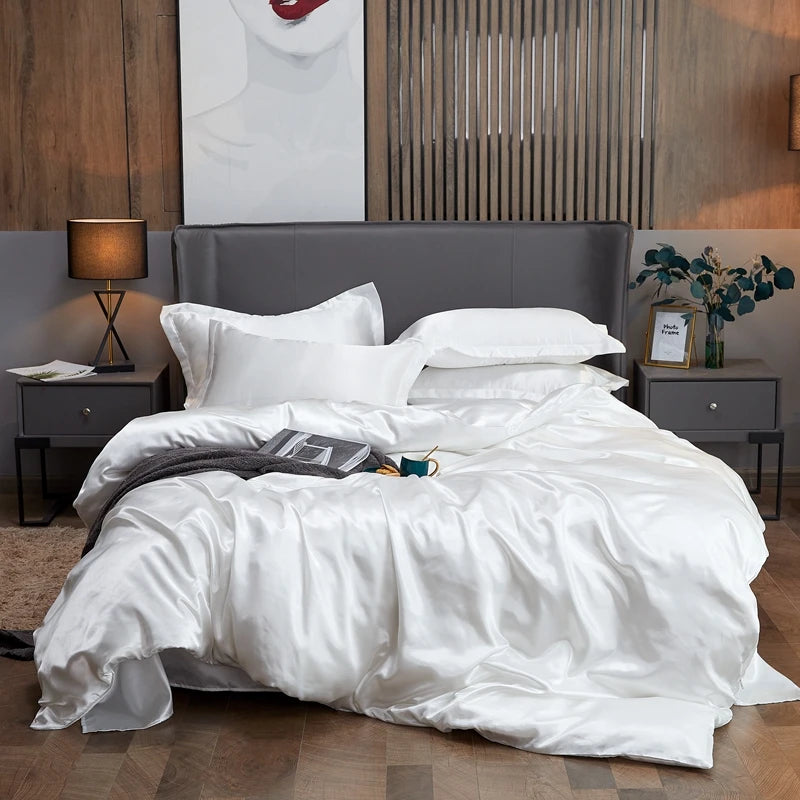
Soft hues and light percale for in-between seasons.
Easy-to-remove layers
Opt for a duvet cover suitable for the usual room temperature and keep an extra throw or blanket within reach. This allows you to react to cooler nights without redoing the entire bed composition.
4. How to properly care for your linen according to the season?
Washing frequency depends on habits, perspiration, environment, and bed usage. Rather than applying a different rule for each season, maintain a regular routine and adapt it when the linen is used more heavily. Our guide how often should you wash your sheets provides more detailed benchmarks.
Respect the care label
Instructions vary according to fiber, dye, and manufacturing. Prioritize the product label over a single temperature applied to all materials. Gentle drying and perfectly dry storage also help preserve textiles.
Adapted storage
Between each season, store rarely used items in a dry place, away from direct light. Fabric covers or well-ventilated spaces prevent moisture from being trapped around the linen.
5. Bonus: How to combine thermal comfort and aesthetics?
Choosing your bed linen according to the season does not mean sacrificing style. On the contrary, changes in materials and layers allow you to evolve textures, colors, and ambiance without replacing the entire bedroom.
Change your palette according to the seasons
In summer, light and mineral tones give a lighter impression. In winter, deeper or warmer shades can make the bed visually more enveloping. This is a decorative effect: color obviously does not replace the actual adaptation of materials and layers.
Opt for well-designed bedding sets
A well-sized 220 × 240 bedding set provides a consistent drape and an easy-to-complement base. If you are unsure about the size, also consult our guide bedding set size.
In conclusion, bed linen deserves to be adjusted throughout the seasons according to the actual room temperature and your comfort preferences. A versatile base, a few easy-to-remove layers, and adapted maintenance are often enough to get through the year without multiplying purchases.
Summary: what material for which season?
| Material | For which season? | Feel | Good use |
|---|---|---|---|
| Flannel | Autumn – Winter | Fuzzy, warm, soft | Cool room, people looking for a warm feel |
| Cotton gauze | Spring – Summer | Airy, supple, naturally wrinkled | Light bed and relaxed atmosphere |
| Cotton percale | All seasons | Smooth, fresh, slightly crisp | Versatile base and crisp finish |
| Cotton sateen | All seasons depending on weight | Smooth, supple, slightly luminous | More dressed-up look and soft feel |
| Washed linen | All seasons | Textured, lively | For those who appreciate its feel and wrinkled appearance |