







A pleasant touch
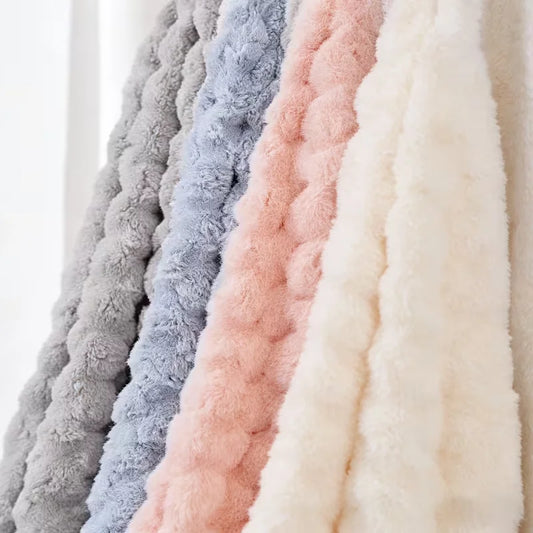
The face is an area often handled during a skincare routine. A soft texture allows for patting dry without having to apply strong pressure.
A face towel is a small format designed for a very specific use: to dry the face after cleansing, gently remove excess water, and keep a separate textile from the one used for hands or body. This simple separation makes the routine more organized and allows for changing the linen at a frequency suitable for its use.
To be pleasant, a face towel must above all offer a soft touch, effective absorption, and a format that is easy to wash frequently. Maison Orea brings together in this collection models designed to naturally find their place near the sink, alongside daily care products and accessories.

In many households, the same towel near the sink serves multiple purposes: hands, face, and sometimes cleaning small splashes. Using a dedicated face towel avoids this mixing and keeps a textile reserved for the end of the skincare routine.
The small size also facilitates frequent changes. A face towel takes up very little space in the laundry basket or washing machine; it's therefore possible to have several and rotate them easily. This approach is particularly useful if you cleanse your face morning and evening or if several people share the bathroom.
The face is an area often handled during a skincare routine. A soft texture allows for patting dry without having to apply strong pressure.
The more compact the towel, the easier it is to keep a small clean reserve and quickly replace the one that has just been used.
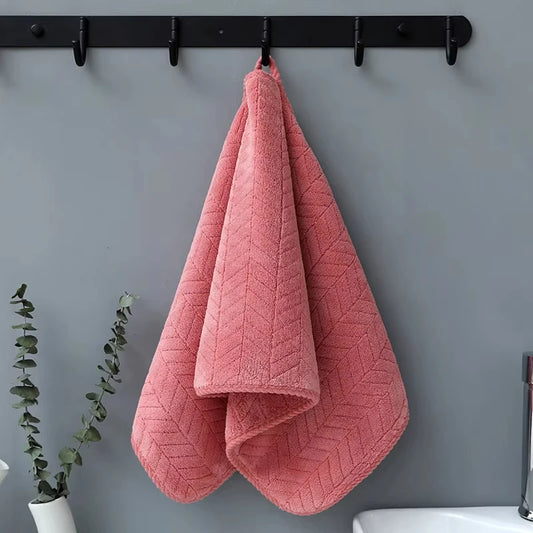
A distinct color, size, or location allows you to immediately recognize the face towel and avoid confusing it with the hand towel.
There's no need for a large format. A towel wide enough to cover the face and absorb cleansing water is generally more practical than a bath towel. It folds easily, dries faster, and can be replaced without significantly increasing the laundry volume.
Exact dimensions vary by product. Some models resemble small squares, others a mini-rectangular towel. The choice depends on your routine: if you just like to pat your face, a compact size is sufficient; if you also use the textile on your neck or to remove water around your hairline, a slightly larger model might be more comfortable.
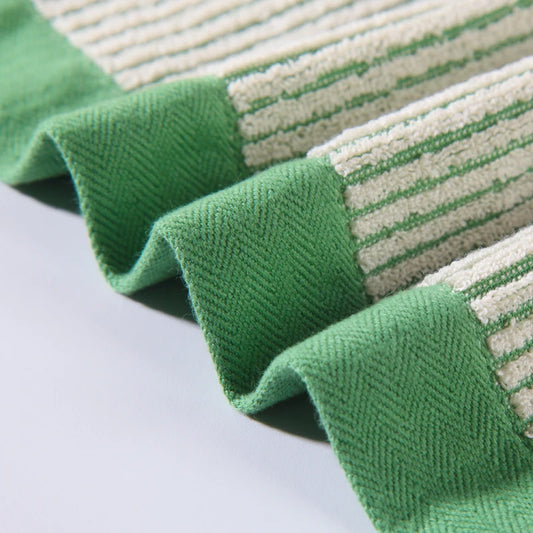
Cotton is frequently chosen for its softness and absorbency. A fine terry cloth effectively removes water without creating an overly bulky textile. The weave and thread quality are important: two towels of identical composition can offer very different feels.
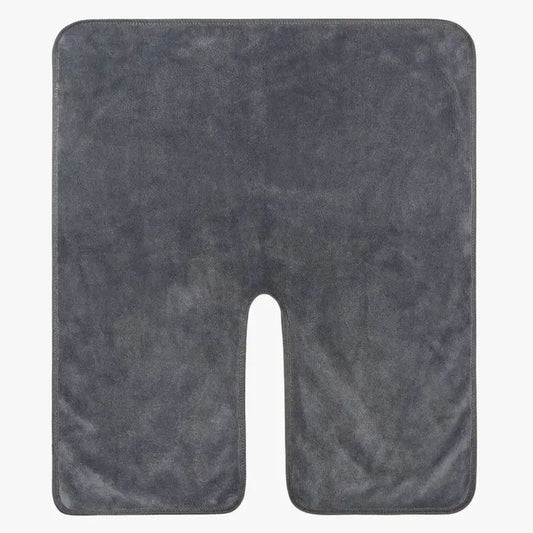
Microfiber and some very fine textiles can also be used, especially when seeking great lightness or quick drying. Their feel is not the same as that of terry cotton; therefore, you should choose based on the sensation you truly appreciate on your face.
After rinsing your cleansing product, let the excess water drain, then gently press the towel against your skin. Pat the different areas of your face until you achieve the desired level of dryness. There's no need to rub quickly from side to side.
This method is particularly logical with a small absorbent towel: each area of the fabric can be used successively to remove water. The goal is not to "polish" the skin with the textile, but simply to remove moisture with controlled contact before continuing your routine.
This organization keeps the linen separate from the rest of the bathroom. A hair towel can be used in parallel on shampoo days, while body linen remains reserved for showering or bathing.
The towel can be used after cleansing and rinsing to absorb residual water. If makeup residue regularly stains the textile, slightly darker shades may be easier to live with visually. Always follow the towel's washing instructions.
The textile does not replace a makeup remover when necessary: its role is mainly to finish drying or to complement an adapted routine.
It can be pleasant to keep a small towel near the sink even when you use a bath sheet for your body. The small format remains clean and available specifically for the face, without having to use an already damp area of the large towel.
This category lends itself very well to frequent rotation. Since the pieces are small, owning several does not require much space. The ideal number depends on your washing frequency and how often you want to change your towel.
You can store clean items in a small basket, an open box, or a drawer near the sink. When you take a towel, place it on a different hook than the one for hand towels. Simple visual organization prevents confusion, especially if several people use the bathroom.
In a household, a different color per person can be useful. Another option is to keep all face towels in the same shade, distinct from the rest of the bath linen, so that their use is immediately identifiable.
A face towel should be washed according to its material's specific instructions. Because it's small, it can easily join a regular load of bath linen. Use a suitable amount of detergent for the load, ensure proper rinsing, and avoid product buildup in the fibers.
After use, do not leave the damp towel rolled up on the edge of the sink. Unfold it or hang it so it can dry. If it needs to be washed immediately, let it dry before placing it in a closed basket to avoid unnecessarily retaining moisture with the rest of the laundry.
A small stock of towels simplifies this routine: you can take a clean one whenever necessary without having to extend the use of a still damp textile.
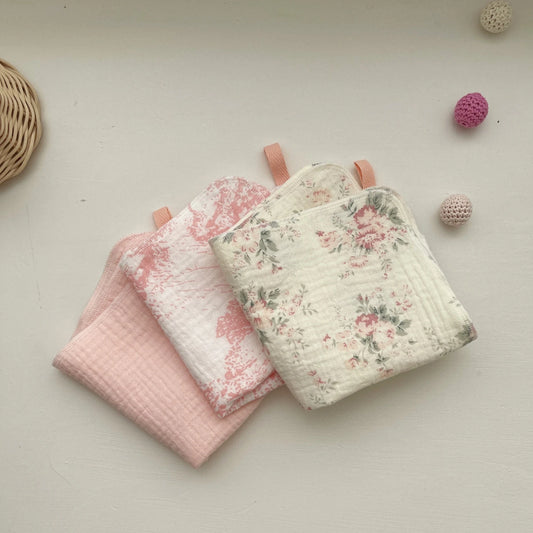
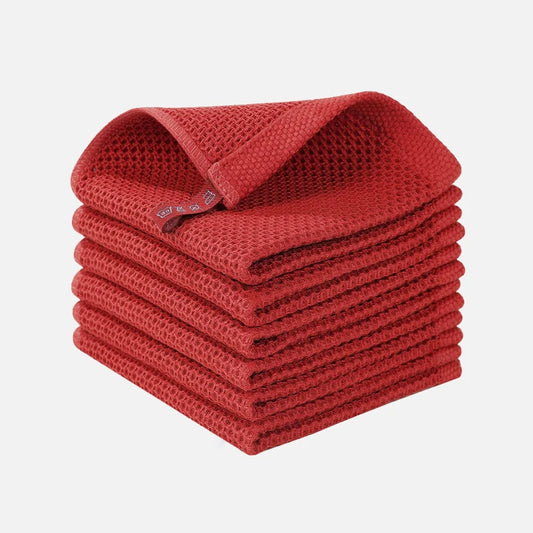
Their small size allows for a very organized presentation. Roll them in a shallow basket, fold them into squares in a drawer, or stack a few on a small shelf. The main thing is to protect clean linen from splashes while keeping it accessible.
In a small bathroom, use vertical space: a wall niche or a shelf above the sink can accommodate clean items. For used linen, a small separate hook is sufficient. Avoid visually mixing clean and damp towels.
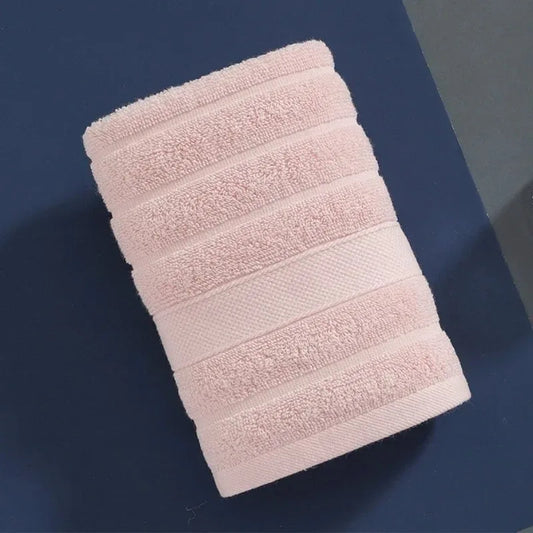
A collection of neatly folded small towels evokes the world of spas and hotels, without requiring significant bathroom renovations. Cream, sand, off-white, and powder pink tones bring softness; deeper colors like brown, forest green, or grey can create a more contemporary atmosphere.
For a harmonious presentation, pick up a shade already present in bottles, jars, mats, or decor. If the vanity top is very busy, opt for plain and simple linen. If the room is minimalist, a textured border or a small pattern can add just enough detail.
Small format dedicated to facial care routine, easy to change frequently.
Placed near the sink to absorb water after hand washing and potentially used several times a day.
More versatile and larger format, suitable for various personal care actions or as an extra linen.
These categories may seem similar, but their separation has a practical purpose: it allows for choosing the right format, defining an appropriate washing frequency, and preventing the same textile from being used for all actions.
It allows you to separate this use from that of the hands or body, while benefiting from a small format that is easy to change and wash regularly.
Above all, choose a soft and absorbent material whose feel suits you. Fine cotton and certain light textiles are common options, but you should always check the product's precise composition.
It's not necessary. An absorbent towel can remove water by gently patting the skin.
It can accompany rinsing after a cleansing or makeup removing product, but it doesn't necessarily replace the products included in your routine. Wash it according to instructions if it regularly comes into contact with pigments.
A face towel is easier to use when it has a clearly defined place near your skincare routine. A few small clean towels can be folded in a drawer, an open box, or a basket away from splashes. This makes it easy to grab a fresh one when cleansing your face without using the hand towel.
After use, hang the towel if it needs to dry or place it in the designated area for laundry. The small size of this format allows for regular rotation without quickly filling the washing machine. A separate organization for face, hands, and body also makes uses clearer in a shared bathroom.


Quelle taille de nappe choisir ? Formule, retombée idéale et tableaux pratiques pour table ronde, carrée, ovale ou rectangulaire.
Quelle taille de nappe choisir ? Formule, retombée idéale et tableaux pratiques pour table ronde, carrée, ovale ou rectangulaire.

Is a 220x240 bedding set suitable for your bed? Dimensions, drape, materials, and styling tips for a harmonious bed.
Is a 220x240 bedding set suitable for your bed? Dimensions, drape, materials, and styling tips for a harmonious bed.

Transform your back-to-school table into a practical and welcoming dining area. Tablecloth, storage, lighting, and tips to ease your days.
Transform your back-to-school table into a practical and welcoming dining area. Tablecloth, storage, lighting, and tips to ease your days.
