
Everyday table setting: creating a beautiful table without ceremony
Louis MikolajczakEveryday Table Decor: Tablecloth, Table Runner, and Simple Materials
Table decor isn't just for parties. An everyday table can be beautiful, soft, and pleasant without becoming ceremonial. In fact, it's often in these settings that linens truly shine: in repeated gestures, simple meals, and ordinary moments.
The risk is confusing a beautiful table with a complicated one. Too many elements, too many colors, or too many accessories make a meal less fluid. A successful everyday table should remain practical, easy to set up, and pleasant to look at.
This topic extends the reflections on the use of table runners, but focuses on the everyday table itself.
To build a simple foundation, you can first compare styles in our tablecloth collection. And if you choose a rectangular tablecloth, prioritize proportion over style: our guide what size tablecloth for a rectangular table helps ensure a pleasant overhang without hindering everyday meals.
Table of Contents
A beautiful everyday table must remain simple
The everyday table must withstand real life: quick meals, children, everyday dishes, crumbs, coffee, repeated gestures. Table linen must therefore be beautiful, but not so fragile as to create a constraint.
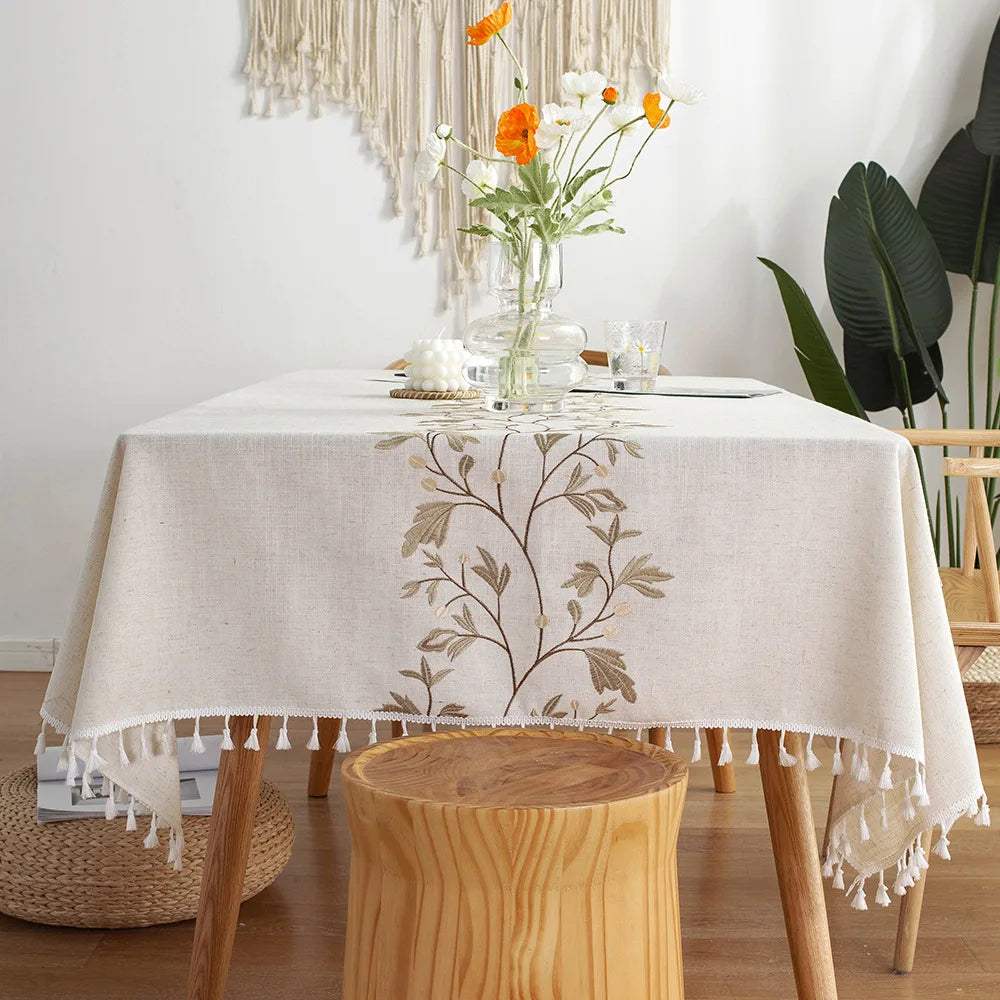
Simplicity comes from choosing large surfaces. A light tablecloth, a textured table runner, or fabric napkins can be enough. It is not necessary to multiply accessories if the material itself is interesting.
- A clear textile base to set the tone.
- Fabric napkins for a more refined feel.
- Simple tableware that allows the table to breathe.
- A living detail like a carafe, a fruit, or a small branch.
Tablecloth, placemats, or table runner?
A tablecloth immediately gives a softer, more enveloping impression. It works very well on a damaged, cold, or overly contrasting table. Placemats are more practical for daily use, but they sometimes fragment the table. A table runner creates a central line and keeps part of the tabletop visible.
The right choice depends on the table and its use. A beautiful wooden table might only need a runner. A very simple table often gains a lot with a tablecloth. A family that wants to eat quickly might choose easy-to-wash placemats, paired with more refined napkins.

Materials that really work for everyday use
Cotton, washed linen, easy-care blends, and slightly irregular textures work well. They give a warmer feeling than an entirely bare surface, while remaining compatible with frequent use.
Too precious a material can discourage use. Conversely, too poor a textile weakens the overall look. The right material is one that you dare to use often, wash easily, and put back without too much thought.
| Option | Effect | For what use | Weak point |
|---|---|---|---|
| Tablecloth | Softer table | Leisurely meals, cold table | More maintenance involved |
| Table runner | Elegant line | Wooden or plain table | Less protection |
| Placemats | Quick convenience | Family, quick meals | Can visually fragment |
Colors: keeping it appetizing and luminous
Table colors should make you want to sit down. Off-whites, beiges, soft clays, sage greens, and grayish blues work well because they complement tableware without dominating. Too vibrant colors can be interesting, but they require more skill.
The everyday table benefits from staying bright. A light base with a warmer shade on napkins or a runner is often enough. The ambiance appears refined without becoming too formal.

Creating a small ritual without losing naturalness
A beautiful everyday table can be based on a very simple ritual: placing fabric napkins, bringing out a carafe, keeping a table runner clean, adding a small plate for bread. These details don't take much time, but they change the perception of the meal.
The idea aligns with choosing a tablecloth material suitable for everyday use: beauty must remain usable.
Conclusion
Successful everyday table decor doesn't need ceremony. It needs pleasant materials, a simple palette, and a few easy-to-repeat gestures.
When the table remains practical while becoming softer, ordinary meals gain presence. This is precisely the role of good household linen.