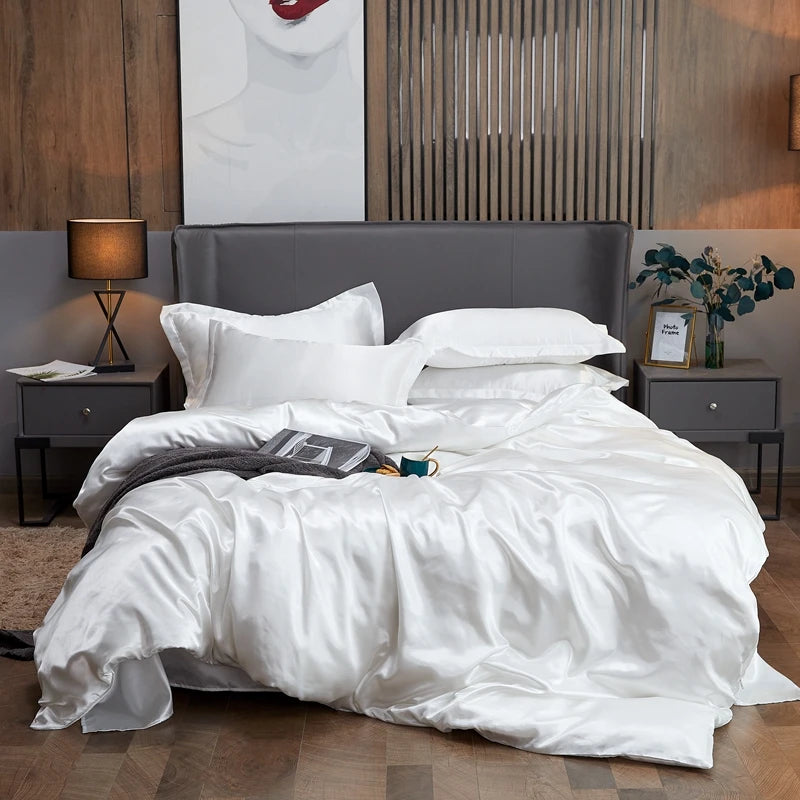

Summer bedding 2026: stay cool without a cold room
Louis MikolajczakShare
Summer Bedding 2026: Sleep Cool Without a Cold Room with a Lightweight Composition
When nights get warm, the first thing that comes to mind is a fan or air conditioning. However, the first thing we touch for eight hours is our bedding. An overly dense duvet cover, a poorly chosen waterproof mattress protector, or an unnecessary stack of layers can turn a pleasant room into a humid cocoon.
Summer bedding doesn't need to be spectacular. Above all, it must allow air to circulate, absorb moisture, and dry quickly. The desired sensation is simple: a cool surface when you lie down and a bed that remains comfortable even when you move a lot during the night.
This guide offers a practical method to lighten your bed, choose breathable materials, and keep your bedroom inviting without turning sleep into a technical experience. If you wish to directly compare available sets, you can also browse our bedding collection.
Table of Contents
Lighten the Layers Before Changing the Entire Bed
Before buying anything, look at what you already have. Some bedrooms are too hot simply because the bed is still configured as it is in winter: thick mattress pad, generous duvet, decorative throw, bedspread, and extra pillows. In summer, each layer retains a little heat.
Start by removing elements that are not used during the night. Decorative pillows can remain on a chair, the throw at the foot of the bed, and the blanket in a basket. Keep a simple surface: fitted sheet, light protection if necessary, then a sheet or thin duvet. This reduction often has an immediate effect.
The mattress itself should also be able to breathe. Avoid covering it permanently with heavy textiles when you are not using them. In the morning, open the bed for a few minutes before making it: night moisture evaporates more easily.
Truly Breathable Materials
Cotton remains a safe bet for summer, especially when it is lightly and evenly woven. A fine percale gives a crisper, cooler feel to the touch, while cotton gauze offers a soft, airy feel. Washed linen is also appreciated because it absorbs moisture well and dries quickly; its crumpled appearance is particularly suitable for summer bedrooms.
The choice is not limited to the fiber's name. A very dense fabric can retain more heat than a thin fabric, even if it is natural. Look at the weight, flexibility, and feel. If the cover feels heavy in your hand, it will rarely be pleasant on a 25°C night.
Synthetic materials are not necessarily to be banished, but they must be chosen for their breathability and quick drying. Some fine microfibers work well, especially in a guest room where you want to wash and dry quickly. If you sweat a lot, prefer fabrics that absorb and allow moisture to evaporate.
The Mattress Protector: Often Overlooked
The mattress protector can be the warmest layer of the bed without us realizing it. Completely waterproof models are useful in certain situations, but they sometimes limit air circulation. If your mattress does not need waterproof protection, a breathable cotton mattress pad or a thin protector is often sufficient.
If you need a waterproof membrane, choose a thin version and ensure it is designed to allow water vapor to pass through. The difference is especially noticeable in the second part of the night, when the body has accumulated heat.
Also consider washing. A clean protector absorbs better and retains fewer odors. In summer, a more frequent cycle can be useful if you sweat a lot, but always follow the manufacturer's label to avoid damaging the membrane or elastic.
Light Duvet, Sheet Only, or Bedspread?
There is no single solution. In a warm room, a simple sheet may suffice. If you like to feel a little weight, choose a light duvet with a breathable cover. Avoid overly voluminous duvets that force you to kick out a leg all night: this is often a sign that they are not suitable for the season.
A thin bedspread can serve as a transitional layer for cooler evenings. Leave it folded at the foot of the bed rather than keeping it over your entire body. You can pull it up if the temperature drops without overloading the bed from the start.
For couples, two light blankets can sometimes be more comfortable than one large duvet if warmth needs differ. Each person adjusts their layer without waking the other.
Colors and Sensations of Freshness
A color does not change the actual temperature of the bed, but it influences perception. Off-whites, pale blues, aqua greens, and light beiges give a lighter impression. In a very sunny room, these shades also avoid the visual effect of a massive bed.
Dark colors can work if the material remains light. A deep blue or olive green on a thin cover maintains a summer ambiance if the walls and curtains allow light in. The most important thing is not to multiply heavy contrasts: two or three tones are sufficient.
Wash Often Without Wearing Out Linens
With the heat, linens get soiled with perspiration faster. Wash sheets regularly, but choose a program suitable for the material rather than compensating with a very high temperature. A well-dosed detergent and complete drying are sufficient to maintain a fresh feel.
Air drying is ideal when possible. However, avoid direct sun for hours on dark colors, which can fade. For linen, shake the fabric before hanging it: it dries with fewer wrinkles and retains a beautiful suppleness.
Plan for two sets of linens for the season. While one dries, the other is already ready. This rotation avoids putting slightly damp linens back on the bed, which negates all efforts for freshness. When making the bed, our guide how to put on a duvet cover set helps put each element in the correct order without adding unnecessary layers.
Conclusion
A comfortable summer bed is built by simplification. Remove unnecessary layers, choose breathable fabrics, check the mattress protection, and adapt the duvet to the actual room temperature. The goal is not to have an empty bed, but a bed that breathes. A few simple steps can make a real difference even before turning on an air conditioner.