
How to choose the color of your bedding with blue walls?
Louis MikolajczakWith blue walls, bed linen can soothe the bedroom or give it more depth
Blue walls already set a direction for the bedroom. Depending on the shade, they can evoke calm, freshness, depth, or a more enveloping style. When choosing bed linen with blue walls, it’s not about finding the "allowed" color, but about deciding whether the bed should brighten the room, extend the blue, or create a soft contrast.
The same white does not produce the same effect with sky blue as it does with navy blue. A beige that warms up a grey-blue might appear too yellow next to an electric blue. Light, flooring, and wood in the room are as important as the paint. By starting with these elements, you can avoid combinations that look pretty on a screen but feel cold once installed.
This guide helps you compose a simple, durable, and easy-to-evolve palette throughout the seasons. For other color benchmarks, you can also read our article on bed linen colors that soothe the bedroom.
Summary
Identify the blue present in the room
Start by observing the blue at different times of the day. A grey-blue or sage blue often contains a hint of green or grey; it pairs easily with linen, ecru, rosy beige, or taupe. A sky blue is brighter and works well with off-white, sand, butter yellow, or light wood.
Navy blue and midnight blue require more light around them but create a very elegant base for a light-colored bed.
The color temperature matters. If the walls lean towards cool blue, look for textiles that provide subtle warmth: cream, peeled clay, earthy pink, light caramel. If the blue is already warm or slightly purplish, soft greys, mineral whites, and more subdued blues can create a very soothing continuity.
Finally, look at the fixed elements. A golden parquet floor naturally warms up blue. A grey floor, a black metal bed, or crisp white curtains can accentuate its coolness. Bed linen is the easiest tool to adjust: it can correct or embrace this impression without major work.
Brighten with the right neutrals
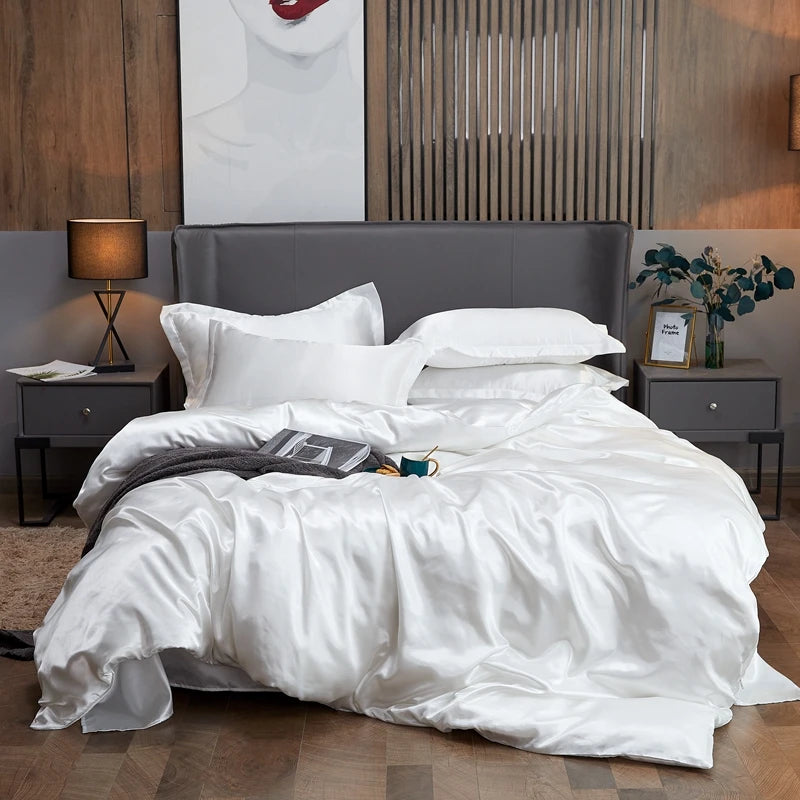
Off-white is a safe bet with blue walls, provided you choose the right shade. A very optical white can make a cool blue even more vibrant. An ivory, ecru, or soft cream provides a more diffused light and a lived-in room feel. This solution is particularly useful when the walls are dark or the room receives little direct sunlight.
Beige, greige, and natural linen are good alternatives if you like a more enveloping atmosphere. They create less contrast than white and connect easily with wood, a rug, or an armchair. On a grey-blue wall, a slightly pinkish beige can be very flattering; on a navy blue, a sandy beige keeps the bed bright without making it too precious.
If you prefer a simple base, a white 220x240 duvet cover set can be the starting point. Then add a single shade with a throw, a pillowcase, or a cushion. This is easier to evolve than an ensemble where each element claims a different color.

Warm neutrals, soft earth tones, and nuanced blues create three very different ambiances.
Create contrast without disrupting the ambiance
The easiest contrast with blue is found in earthy tones. A clay pink, a very soft terracotta, a peeled ochre, or a cinnamon brown bring complementary warmth. No need for a whole bedding set: a duvet cover in a neutral color and two warmer pillowcases can be enough to make the bedroom feel more alive.
Yellow also works, especially with a grey-blue or a navy blue. But choose a muted tone, such as butter yellow, light honey, or very peeled mustard. A bright yellow can create a more graphic atmosphere, interesting in a teen's room, but less restful if you are seeking a cocoon.
Dark contrasts require more caution. Black or anthracite bedding can be superb with a very light blue, but it absorbs light with a dark blue wall. If you like deep bedrooms, compensate with a light headboard, a soft lamp, and supple materials. The contrast should never make the bed visually heavier than the room.
Play with blue monochrome in moderation
Combining several blues works very well when they don't have the same value. With a midnight blue wall, sky blue, grey-blue, or light denim linen creates depth. With a very peeled blue wall, a petrol blue or navy duvet cover can provide an anchor point. The risk appears when the linen exactly matches the shade of the wall: the bed can blend into the background and lose its relief.
To avoid this effect, add a material that is noticeable. Washed linen, gauze, slightly matte percale, or a waffle weave blanket highlights the difference even when the colors are similar. The texture contrast then becomes more important than the hue contrast.
You can also limit blue to the main linen and leave the fitted sheet or secondary pillowcases in ecru. This alternation makes the bed less uniform and gives a more polished impression without requiring many decorative objects.
Details that connect the bed to the rest of the room
The bed linen does not need to repeat all the elements of the room. It is enough to create two or three visual links. A light wood lamp responds to a beige pillowcase. A frame in rust tones responds to a clay cushion. A cream rug echoes the duvet cover. These discreet echoes make the whole coherent without giving the impression of a forcefully coordinated decor.
Also, maintain a hierarchy. If the walls are blue and the linen already has a strong color, the curtains and rug can remain calmer. If the linen is neutral, you can allow yourself a colorful throw or a more expressive poster. A pleasant bedroom does not show everything with the same intensity.
Finally, trust time. Linen is one of the easiest elements to change. You can start with an ecru base, observe the room for a few weeks, and then introduce a color if you miss it. This slow method often produces more accurate choices than buying a whole set at once.
| Wall Shade | Recommended Bed Linen | Ambiance | To avoid |
|---|---|---|---|
| Light Blue | Ecru, sand, or dusty pink | Soft and luminous | An overly cold optical white |
| Grey-Blue | Terracotta, soft rust, or warm beige | Warm and balanced | Multiplying saturated accents |
| Deep Blue | Ivory, caramel, or lighter monochrome | Enveloping and elegant | A dark ensemble without breathing room |
Conclusion
With blue walls, bed linen can brighten, warm, or extend the color. First identify the shade of blue and the room's light, then choose a clear direction: warm neutrals, earthy contrast, or textured monochrome. A limited palette, pleasant materials, and a few discreet reminders are enough to make the bed the calm focal point of the bedroom.