Bath Towels: Cotton, Bamboo, or Linen? Comparison & Advice
Louis MikolajczakBath Towels: Cotton, Bamboo, or Linen? Comparison & Advice for Choosing According to Use
Choosing a bath towel is not just about finding the softest material at first touch. Comfort also depends on the weave, grammage, size, drying time, and how the towel will be washed. Two products advertised with the same material can therefore behave very differently.
Cotton remains very common, textiles marketed as "bamboo" offer a different feel depending on their actual composition, and linen provides a drier, lighter texture. None of these choices is automatically superior: the right textile is the one that fits your bathroom and your routine.
To compare thickness regardless of the fiber, see what grammage to choose for a bath towel. For care, our guide how to wash a bath towel provides practical benchmarks.

The criteria that really matter
Before the material, consider the use. A large, dense towel can be very pleasant but takes up more space in the machine and requires more drying time. A lighter towel can be more practical in a humid bathroom, when traveling, or when laundry is done frequently.
- Actual absorption: depends on the fiber, weave, grammage, and finishes.
- Drying time: important if the bathroom is poorly ventilated.
- Feel: fluffy, smooth, or drier depending on the textile.
- Volume: to consider for storage, washing, and travel.
- Care: always check the product label.
Cotton towel: the versatile choice
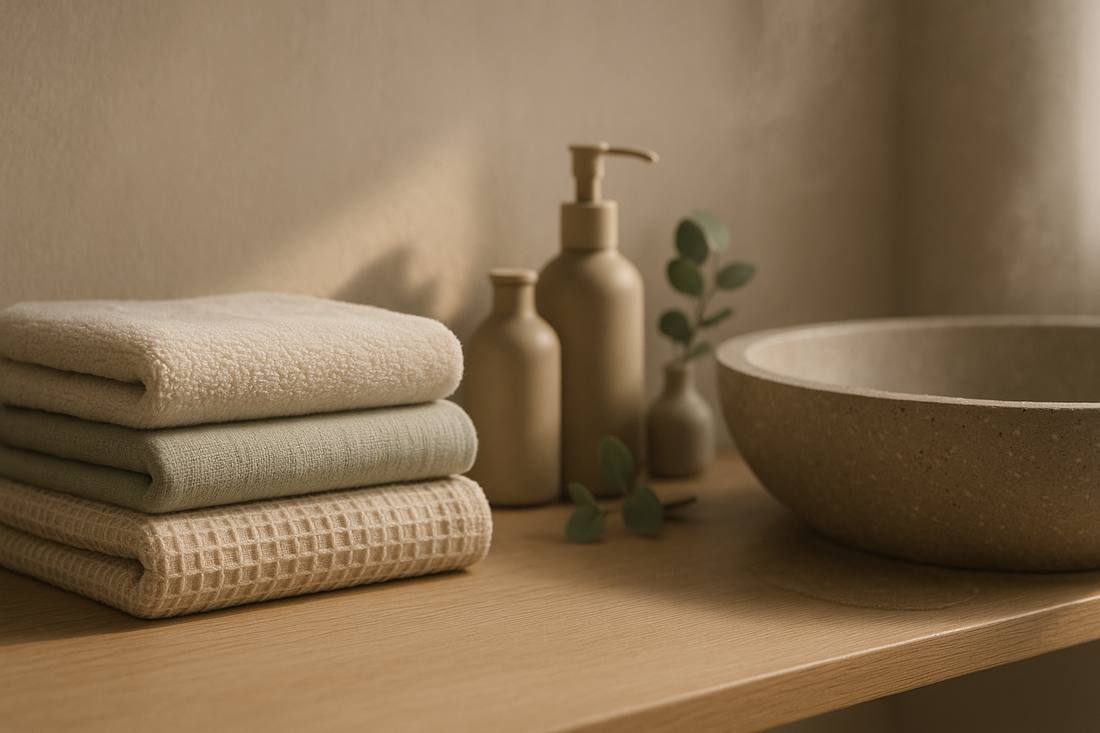
Cotton is very common in bath linen because it can be woven in many ways. A dense cotton terry gives a softer feel; a lighter cotton takes up less volume and generally dries more easily under the same conditions.
The mention "cotton" is therefore not enough to predict the feel. The loop length, density, grammage, and manufacturing quality significantly alter the result. For everyday use, choose the compromise that suits your bathroom rather than the heaviest towel available.
"Bamboo" towel: check the composition
In commerce, the term "bamboo" often refers to a textile containing viscose or a cellulosic fiber derived from bamboo, sometimes mixed with cotton. The sensation can be very supple and smooth, but performance varies depending on the blend and weave.
It is therefore better to read the exact composition than to assume that a " bamboo" towel will automatically be more absorbent, more ecological, or better suited to certain skin types. If you have particular sensitivity or a skin condition, the choice of textile does not replace the advice of a healthcare professional.
Linen towel: light and textured
Linen provides a drier feel and a different texture from classic terry. Depending on its construction, it can be interesting for a light towel, travel use, or people who prefer a less voluminous textile.
However, you should not expect the same fluffy effect as a dense terry. Some models combine linen and cotton to combine several sensations: here again, the actual composition and weave are more useful than the marketing label alone.
Comparison by use
| Option | Common feel | Volume | Good use | To check |
|---|---|---|---|---|
| Cotton terry | From soft to very fluffy | Variable, sometimes significant | Daily use, wide variety of sizes | Grammage and drying time |
| Viscose from bamboo / blend | Often smooth and supple | Variable | For those who appreciate this feel | Exact composition and washing instructions |
| Linen or linen blend | Drier and more textured | Often lighter depending on construction | Travel, compact storage, different feel | Type of weave and personal preference |

For a more enveloping shower experience, you can also compare sizes in our bath sheet collection. For the classic size, find bath towels.
Care: avoid universal recipes
One temperature or cleaning product does not suit all towels. Dye, fiber blend, finish, embroidery, and construction can change recommendations. The manufacturer's label remains the reference.
- Wash similar colors together when the product requires it.
- Avoid overdosing on detergent, which does not necessarily make laundry cleaner.
- Use fabric softener only if instructions and your preferences allow; some products can alter the feel or absorption of certain terry towels.
- Dry towels completely before folding and storing them.
- Do not systematically use vinegar, baking soda, or other home remedies without checking their compatibility with the textile and machine.
Washing frequency depends on use, drying between uses, and the household context. A towel that remains damp requires more attention than a properly spread and perfectly dry towel before reuse.
How to choose quickly
First look at cotton terry and grammage, then check that your bathroom allows for proper drying.
A less bulky textile or a more compact size can be more practical to wash, dry, and store.
Weight, folded volume, and drying time become more important than the hotel effect.
Compare the actual feel and composition rather than relying on generic benefits associated with the fiber name.

To then create a cohesive bathroom with few textiles, see bathroom: a spa atmosphere with few textiles.
Conclusion
Cotton, "bamboo" textile, and linen correspond to different feels and uses. There is no need to designate a universal winner: compare composition, grammage, volume, drying, and care before choosing.