
Summer table 2026: set a simple, inviting table
Louis MikolajczakSummer Table 2026: Setting a Simple, Elegant, and Inviting Table
The 2026 summer table doesn't need to be spectacular to make you want to sit down. The most memorable meals are often those where the table feels effortless, bright, and lively. You sense that something has been prepared, but nothing feels rigid or overly ceremonial.
This year, the trend leans towards a more natural elegance: soft tablecloths, fabric napkins, simple crockery, light but not cold colors, and useful details rather than applied decor. The table should complement the meal, not become a barrier between guests.
The basics from the article on practical and elegant outdoor table settings also apply indoors: think about use, light, flow, and maintenance before thinking about staging.
Table of Contents
Start with the Right Textile Base
The tablecloth, table runner, or placemats immediately set the tone. A bare table can be beautiful, but it quickly feels harsh if the surface is dark, shiny, or marked. A well-chosen textile softens the overall look, absorbs some noise, and creates a more welcoming feel.
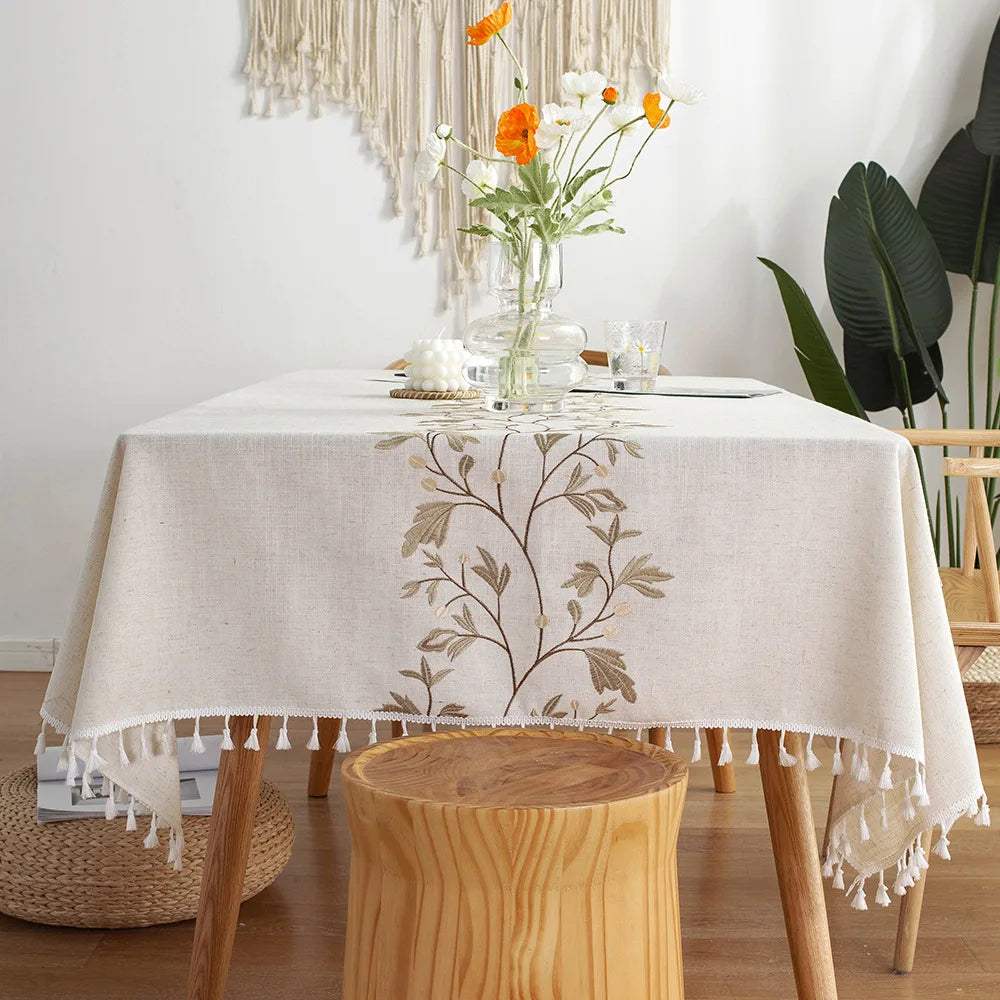
For summer, opt for materials that allow for slight movement. A tablecloth that's too taut can appear formal. Washed linen, thick cotton, or a soft canvas offer a more natural elegance. The important thing is that the textile feels designed for hosting, not just for decoration. To compare available bases, you can browse our tablecloth collection; for a patio or balcony, the outdoor tablecloth selection prioritizes more exposed uses.
- For a simple lunch: light tablecloth or natural placemats, cloth napkins, everyday crockery.
- For an outdoor dinner: table runner, stable glasses, easy-to-place napkins.
- For a large gathering: continuous textile base, then light individual details.
- For a round table: soft tablecloth or well-spaced placemats to maintain a clear shape.
The right dimensions also prevent a summer table from appearing too cluttered. For a rectangular table, our guide on tablecloth size according to surface dimensions provides guidelines for overhang; for a 150 cm round table, a specific guide allows you to directly calculate the appropriate diameter.
Choose an Appetite-Stimulating Palette
A too-white summer table can feel fresh, but also a bit cold. The most pleasant palettes often mix off-white, sand, pale yellow, soft olive green, washed blue, very light terracotta, or tea rose. These colors give a sunny impression without overwhelming the meal.
Avoid choosing one strong color everywhere. If the tablecloth is colorful, keep the plates calmer. If the crockery is expressive, choose simple napkins. The eye should be able to focus on the food and people, not just on the decor.

Create Rhythm Without Overload
Rhythm comes from heights, textures, and repetitions. A completely flat table can sometimes appear sparse. An overly decorated table hinders movement. The right balance is to keep a low line in the center: a small bouquet, a carafe, a few bowls, a candle if the meal extends into the evening.
Napkins play an important role. Simply folded, placed on the plate, or slipped under the cutlery, they add texture without taking up space. This is often the detail that transforms an everyday table into a welcoming one.
Adapt the Table to the Occasion
| Occasion | Textile Base | Detail that Makes All the Difference | To Avoid |
|---|---|---|---|
| Summer Breakfast | Placemats or short tablecloth | Colored napkins | Too much central decoration |
| Family Lunch | Easy-care cotton tablecloth | Coordinated carafe and bowls | Too delicate textile |
| Dinner with Friends | Washed linen or soft runner | Low lighting | Tall decor blocking the view |
This type of adjustment aligns with advice for setting a simple and chic table. Style comes less from the number of elements than from their appropriateness.
What Ruins a Summer Table
The first mistake is to decorate too high. Large bouquets look beautiful in a photo but are bothersome during a meal. They block views, get in the way of dishes, and make the table less convivial. In summer, low arrangements are almost always more pleasant.
The second mistake is choosing textiles that are too precious for the context. A tablecloth that no one dares to stain makes the meal tense. A beautiful table should remain livable. Washable materials, slightly mottled colors, and easily replaceable napkins make the whole setting feel more relaxed.

Finally, don't neglect empty space. A breathable table leaves room for dishes, gestures, and conversations. It's this controlled emptiness that often creates the most chic impression.
How to Improve Your Table Without a Large Budget
A beautiful summer table doesn't necessarily require new crockery. The most cost-effective change often comes from textiles. Well-chosen cloth napkins, a washable tablecloth, or a natural table runner transform simple plates into a more intentional ensemble.
The second lever is repetition. Use the same glasses, fold napkins the same way, maintain a regular distance between plates. This regularity gives an impression of care, even with ordinary objects.
The third lever is lighting. In the evening, a simple table becomes much warmer with a nearby lamp, discreet string lights, or two low candles. Soft lighting is preferable to a complicated centerpiece.
To get started quickly, prepare a small reusable base: a light tablecloth, four cloth napkins, a transparent carafe, and a low bowl for fruit or bread. With these elements, even an impromptu meal looks more polished. You can then change just one color according to the season.
This approach is also more economical. Instead of buying different decorations for each meal, you build a durable foundation. The table maintains an identity, and small additions become truly noticeable.
If you entertain often, also keep a height rule: nothing in the center should prevent two people from seeing each other. This simple constraint immediately improves comfort. Dishes circulate better, conversations remain natural, and decor doesn't overshadow the meal.
For an everyday table, the most effective detail is often the cloth napkin. It's less expensive than a complete set, easy to wash, and immediately gives a more polished feel. Choose a color that works with your usual dinnerware, not just for a summer setting.
Finally, let the food be part of the decor. Tomatoes, bread, fruit, fresh herbs, or a carafe of lemon water bring a real presence, more lively than an object added solely to fill the table.
Conclusion
The 2026 summer table favors lively simplicity over elaborate staging. A good textile, a soft palette, a few repetitions, and low decoration are enough to create a true atmosphere.
The table should make you want to stay, serve, chat, and do it all again. When it's beautiful without being fragile, it becomes one of summer's best backdrops.