
Back-to-school table: create an everyday dining area
Louis MikolajczakAt the start of the school year, the dining table should make daily life simpler
At the start of the school year, the dining table often serves multiple purposes: quick breakfasts, homework, evening meals, sorting papers, and sometimes even a remote work space. Creating a practical back-to-school table doesn't mean cluttering it. Instead, it requires a stable base, a few easy habits, and an atmosphere that helps everyone settle down.
A beautiful everyday table isn't a rigid one. It can accommodate a dish of pasta, an open notebook, and an improvised dinner all in the same week. Linens, lighting, and nearby storage should therefore support this rhythm instead of complicating it. A few simple choices make a difference: an easy-care tablecloth, a small spot for stray items, and pleasant lighting in the evening.
Here's how to prepare a dining area that retains its character when days get hectic. The article on choosing between placemats, tablecloths, and table runners for everyday use offers other ideas for maintaining this effortless pleasure.
Table of Contents
Give the table a clear function again
The first question isn't decorative: when do you actually use the table? If it hosts homework after school, keep an area clear and nearby storage for supplies. If it's used for remote work, plan a transition gesture that allows you to close the computer and switch to mealtime. If it's solely dedicated to meals, you can allow for a more prominent centerpiece.
A versatile table remains pleasant when it doesn't try to display everything at once. The paper basket can leave the tabletop before dinner. Pencils can have their place in a drawer. The meal doesn't need to coexist with every object of the day to be realistic.
This visual sorting has a simple effect: when you sit down, your brain understands that the moment is changing. The table becomes a place for a break rather than an extension of the hallway or office.
Choose a base that is easy to tidy up
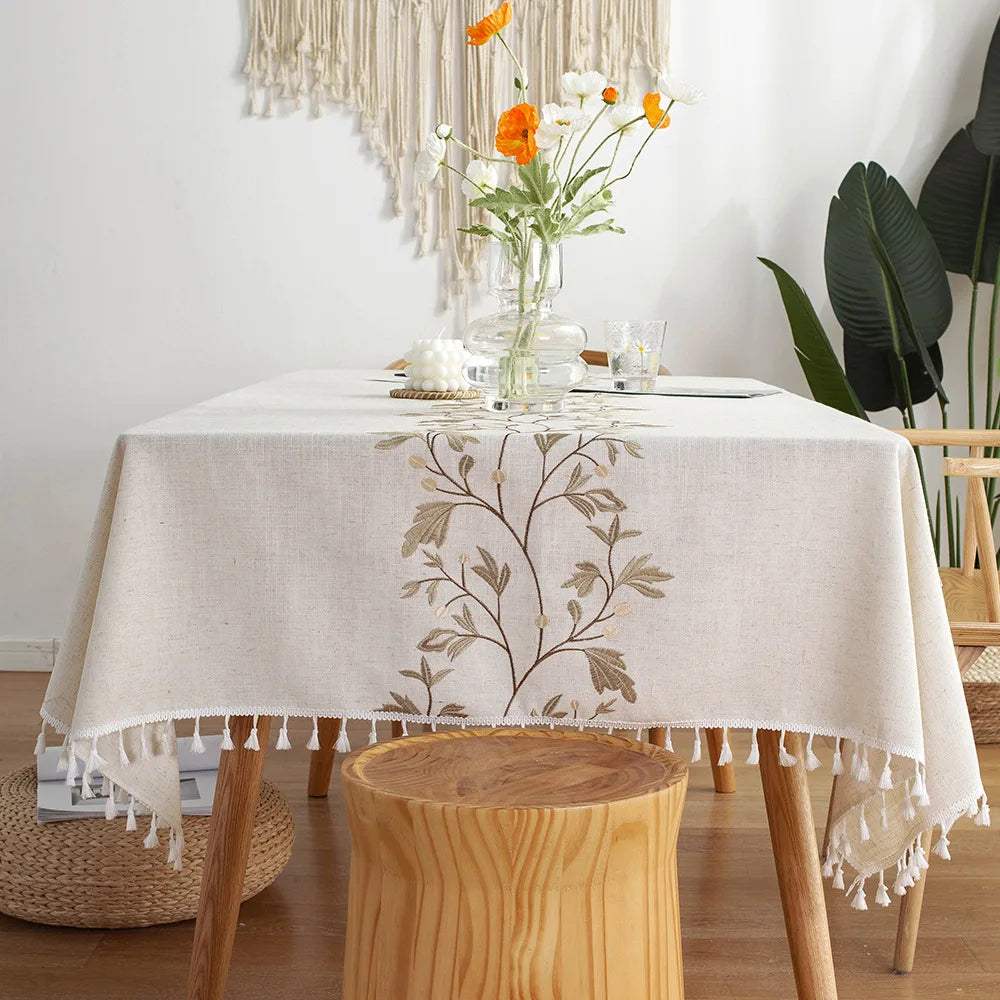
A tablecloth, table runner, or placemats can serve as a base, depending on your routine. A soft, easy-to-care-for tablecloth immediately adds warmth to a bare table. A table runner leaves more wood visible and is suitable if you need to clear the surface often. Individual placemats are practical in a household where everyone eats at a different time.
The best choice is one you'll put back without hesitation. A modern tablecloth can provide a clean base, even with very simple tableware. Choose a color that stands up to daily life: beige, soft blue, grayish green, a small pattern, or a warm tone depending on the room's light.
Avoid saving fine materials for guests. At the start of the school year, it's precisely everyday meals that need a little care. A pleasant table makes it easier when everyone arrives home tired.

A simple textile base and nearby storage help the table quickly return to its dining function.
Create discreet storage nearby
The clutter that invades the table often comes from a lack of a designated place for small items. Install a basket, box, or drawer within two meters. It will accommodate chargers, mail, pencils, and papers to process. The important thing is that it's simple enough for everyone to use, not so perfect that it stays empty.
Keep only what truly serves the table on it: a small vase, a fruit bowl, a carafe, possibly a lamp. The clearer the surface, the quicker the meal can be set up. Nearby storage avoids a big evening cleanup and makes the table available with a few gestures.
If you have children, give them an identifiable place for their belongings. One bin per person or a common box is sufficient. The goal isn't to have a table with no trace of life, but to know where to move things when it's time to eat.
Improve the dining lighting
In September, evening meals quickly become darker. A single ceiling light can feel functional but unwelcoming. A soft pendant light, a small lamp placed on a sideboard, or a low candle changes the perception of the table without requiring new decorations.
Choose lighting that illuminates faces and plates without glare. Very white light often causes eye strain after a day of screen time; warmer light helps mark the transition to evening. If you also work at the table, plan for separate lighting for daytime and meals.
The tablecloth then plays a subtle role: a light shade reflects light, while a deep shade creates a more enveloping atmosphere. Adapt it to how you want to feel, not to a seasonal rule.
Establish a five-minute ritual
The most useful thing is often a short ritual before the meal. We put papers in the basket, shake the tablecloth or placemats, set the plates, and turn on the evening light. Five minutes are enough to transform the space. This gesture becomes easier when shared: everyone can have a small responsibility.
In the morning, the same principle works in reverse. A simply tidied table, even if not perfect, prepares for the next moment. You avoid starting the day facing the remnants of dinner and reduce the mental load for the following evening.
This ritual shouldn't be a new obligation. It becomes useful precisely because it's light and visible. The table helps you structure your days, rather than reminding you of everything that still needs to be done.
You can also vary the table with almost nothing. On Monday, leave only a fruit bowl; on Wednesday, add a small bouquet; on the weekend, bring out colored napkins. These modest changes prevent the dining area from becoming purely functional. They give the family a simple signal: even when the schedule gets tight, home retains moments for gathering.
When homework or work has occupied the table, take a minute to put the chairs back in place and clear the cables. The gesture seems insignificant, but it changes the first impression at dinner time. You no longer sit in a temporary space; you find a table ready to host the meal and conversation.
Plan for a table that accommodates imperfect days
Some evenings, dinner arrives late and papers remain visible. A welcoming table doesn't demand perfection: it simply needs to be able to return to its function with a few gestures. A washable tablecloth, an accessible basket, and a small shared routine make this return much simpler. It is this flexibility that allows the dining area to remain pleasant throughout the back-to-school period.
| Need | Simple Solution | Time Required | To Avoid |
|---|---|---|---|
| Clear the table | Basket or bin nearby | Two minutes before the meal | Moving objects without a defined place |
| Create an atmosphere | Tablecloth, table runner, or placemats | Immediate setup | Saving fine textiles for guests |
| Soften the evening | Pendant light or warm accent lamp | One gesture to turn on | A single, overly bright light |
Conclusion
A successful back-to-school table is an available table: beautiful enough to invite sitting down, practical enough to accommodate real life. An easy-care textile base, nearby storage, soft lighting, and a short ritual are enough to change the atmosphere. They make it easy to return to, evening after evening, with much less rush. This is precious for the whole family during the week. The dining area then regains its essential function: to bring people together, even amidst busy days.