
Everyday table: placemat, tablecloth, or runner?
OreaEveryday Table: Placemat, Tablecloth, or Runner – Which Suits Your Rhythm Best?
The everyday table deserves more than improvised settings, but it shouldn't become complicated. Between placemats, tablecloths, and table runners, the best choice largely depends on the household's rhythm: quick meals, children, remote work, dinners for two, or a table frequently used between activities.
A beautiful everyday setting should remain easy to set up, easy to clean, and pleasant to look at. This simplicity encourages more frequent table setting, without waiting for special occasions.
In this article, we compare the options and explore how to create a table that is pretty, practical, and consistent with your actual use. To delve deeper into overall balance, our guide on everyday table decoration shows how to combine materials, colors, and dinnerware without making the meal formal.
Table of Contents
The Direct Answer: Choose According to the Moment, Not a Fixed Rule
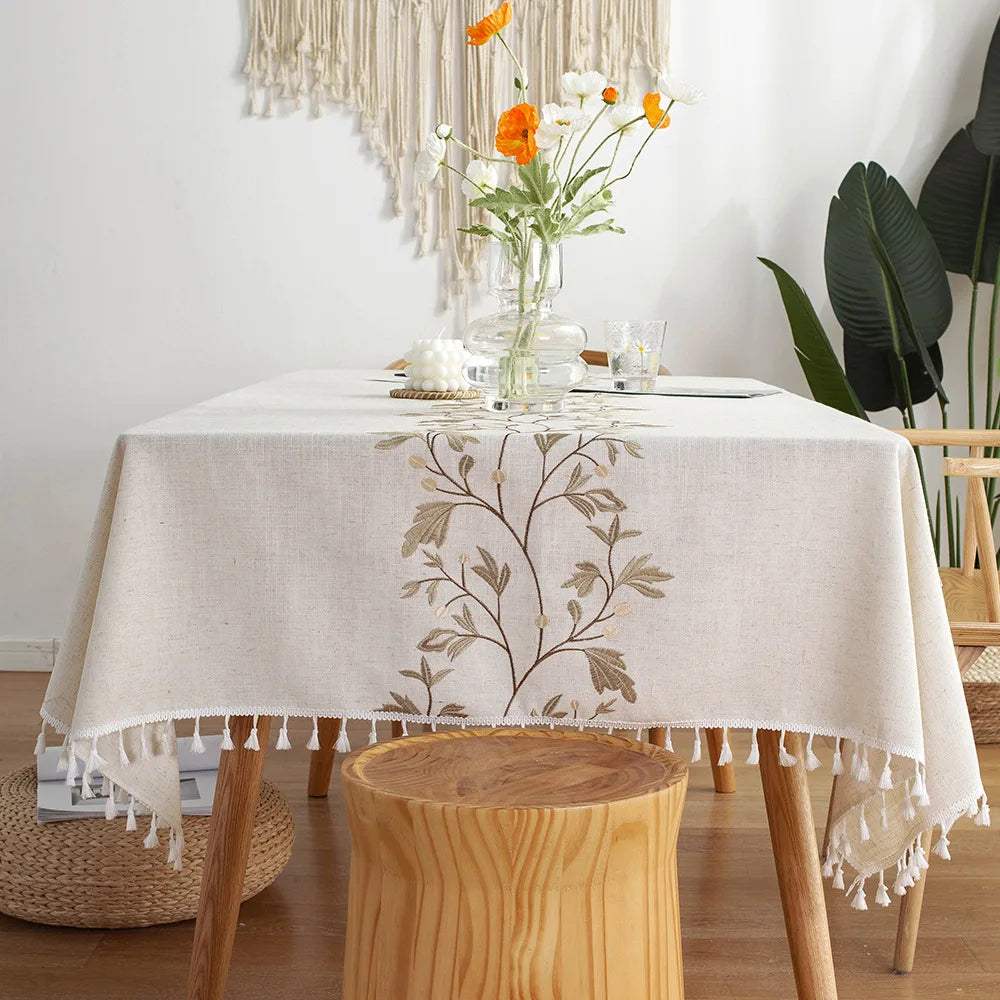
There isn't one single right choice between a tablecloth, placemat, and table runner. It all depends on the moment. For a quick meal, a placemat is practical. For a more formal table, a tablecloth provides a complete base. For a light decoration without covering the entire table, a table runner is often ideal.
The problem arises when you always use the same solution. A tablecloth can seem too formal for everyday use. Placemats might lack unity during a dinner. A runner alone can look empty if the table is large. The everyday table should remain simple, but it benefits from being well-thought-out.
The right approach is to define the use: family meal, breakfast, dinner for two, guests, a wooden table to protect, or an already decorative table. If a tablecloth is your primary choice, you can compare models in our tablecloth collection and then check the size using the guide what size tablecloth for a rectangular table.
- use placemats for quick meals
- choose a tablecloth for a more unified table
- add a runner to create a central line
- keep dinnerware simple if the textile is patterned
- avoid layering tablecloth, placemats, and runner without intention
The Placemat: Quick, Practical, and Decorative
The placemat is perfect when you want to protect the table without covering it entirely. It creates a clear space for each person, limits maintenance, and allows for quick changes in ambiance.
It works particularly well on a wooden, stone, or glass table. The placemat adds texture and avoids an overly bare effect. To maintain an elegant look, it's best to avoid placemats that are too small or too contrasting with the dinnerware.
| Option | Ideal Use | Effect | Caution |
|---|---|---|---|
| Placemat | everyday meals | well-defined place | sufficient size |
| Tablecloth | more formal meals | unified table | maintenance |
| Runner | central decor | elegant line | appropriate width |
| Placemat + runner | convivial table | complete structure | do not overload |

The Table Runner to Structure Without Covering Everything
The table runner is useful when the table lacks rhythm. It creates a central line that can hold a vase, a candle, or a basket. It also gives a more polished impression without needing a full tablecloth.
For everyday use, the runner should remain simple. If it's too decorative, it becomes bothersome as soon as dishes are placed. The right model still leaves enough space for plates, glasses, and meal interactions.
Creating Easy-to-Live-With Combinations
A successful everyday table relies on few colors. Two textile tones, simple dinnerware, and a small botanical accent are sufficient. For example: natural placemats, soft green napkins, and white dinnerware. Or ecru tablecloth, beige runner, and transparent glasses.
The goal is to make the table pleasant without creating a fragile display. Everything should be easily movable, cleanable, and storable.

The Simple Routine for an Always-Ready Table
For the table to remain pleasant every day, the most important thing is to reduce the number of steps involved. An easy-to-pull-out placemat, a table runner that stays in place, or a tablecloth reserved for real meals allow for habits to be formed. The decoration then becomes natural, not exceptional.
You can also prepare a small textile base in a nearby drawer: placemats, napkins, pot holders, and a folded runner. When everything is accessible, the table is set better without feeling like a particular effort is being made.
If the table is also used for work or homework, choose a solution that is quick to remove. Placemats are often the most practical in this case. The table runner can remain to soften the room, but it must leave enough free surface.
- store textiles near the table
- choose a quick option for short meals
- keep the tablecloth for more relaxed moments
- avoid textiles that require too much maintenance
Conclusion
For an everyday table, the right choice depends on the usage. Placemats are practical, a tablecloth unifies, and a runner structures. By using them at the right time, you gain in style without losing simplicity.
A beautiful everyday table must remain easy to live with. That's what makes you want to set it more often.