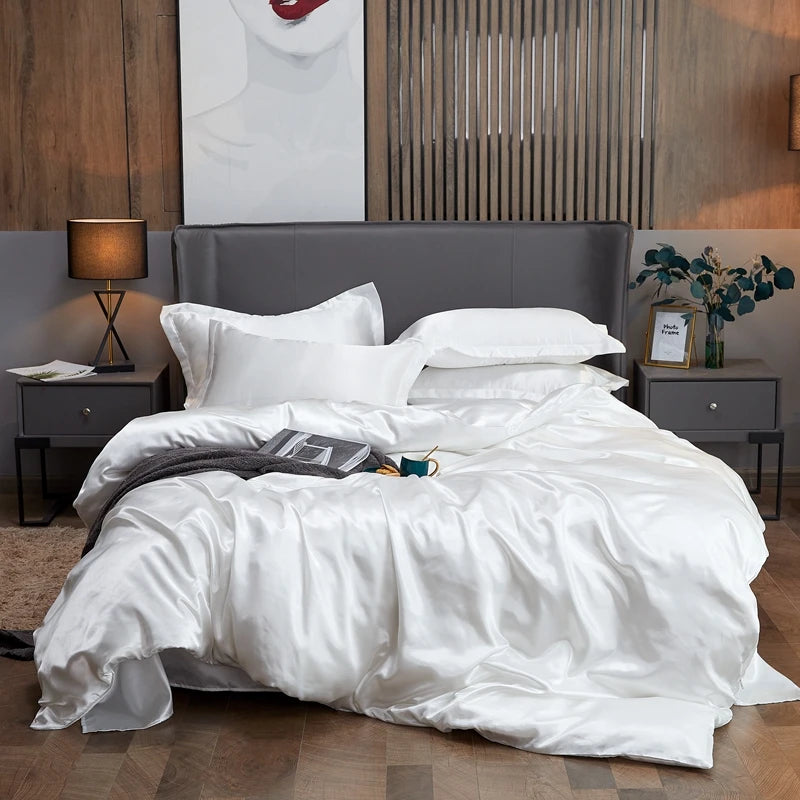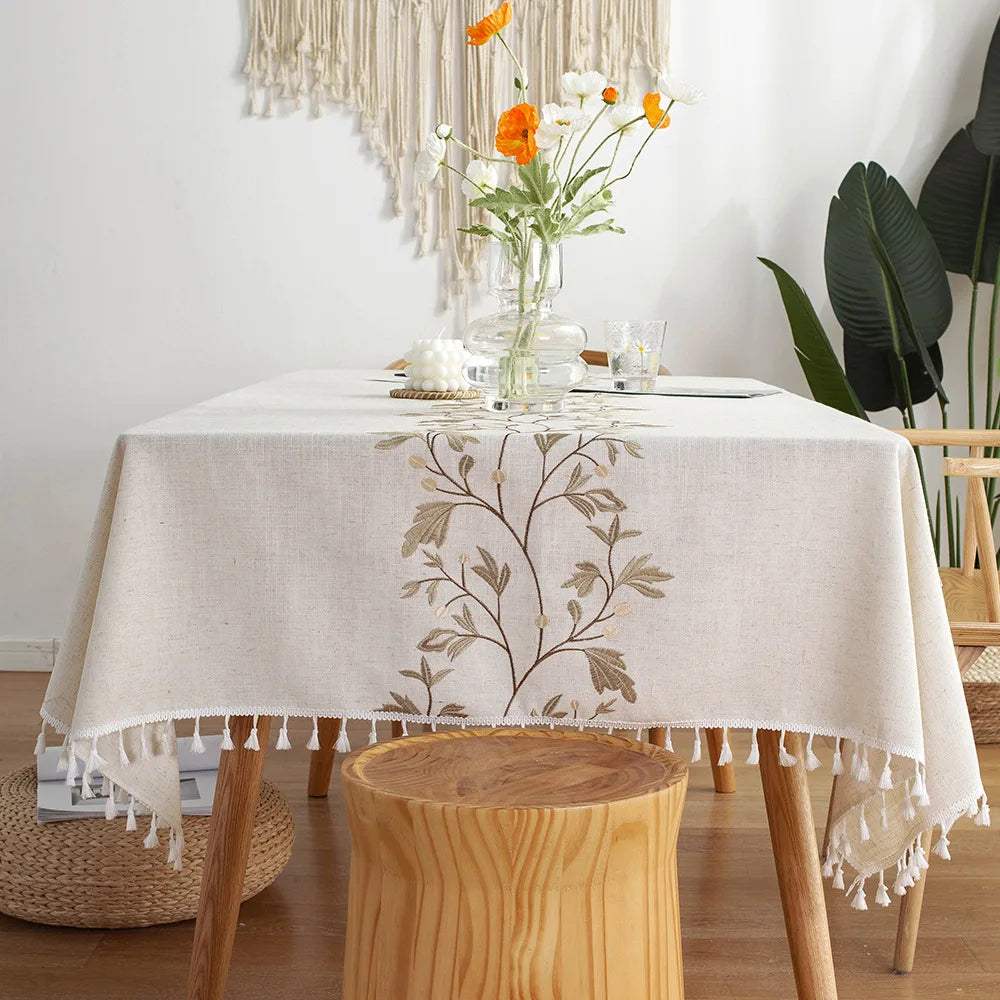

How to put a table runner?
Louis MikolajczakShare
How to set a table runner: our practical advice
Learn how to set a table runner to structure your decor without completely hiding the tabletop. Whether for a daily dinner or a special occasion, the correct placement depends mainly on the runner's length, the table's shape, and what you place around it.
To compare available styles, check out our table runner collection. And if you're still hesitating between a runner, tablecloth, and placemats for everyday use, our guide Everyday Table: placemat, tablecloth, or runner? helps you choose the most practical solution.
Summary
1. Choosing the right table runner2. Preparing the table3. Placing and centering the runner4. Different ways to arrange it5. Adding a decorative touch6. Care and storage1. Choosing the right table runner
To get started, identify the material, size, and design that suit your table and the occasion:
- Material: Linen or cotton give a natural look, while wrinkle-resistant polyester can be simpler for frequent use.
- Dimensions: Allow for a width that leaves enough space for plates. For a runner placed lengthwise, a slight overhang at both ends generally gives a more finished look.
- Color and pattern: A solid runner complements already decorative dinnerware or a tablecloth; a pattern can become the focal point of a more understated table.
2. Preparing the table
Before laying your table runner, ensure the surface is clean and flat. Remove any objects, wipe the tabletop, and de-wrinkle the textile if necessary.
With or without a tablecloth: Both work. On a beautiful wooden tabletop, the runner allows the material to remain visible. On a tablecloth, it creates an additional layer and can be used to introduce a color or texture.
If you're using a rectangular tablecloth under the runner, first check its proportion with our guide what size tablecloth for a rectangular table. A well-dimensioned base makes all subsequent table setting easier.
3. Placing and centering the runner
For the most classic arrangement, align the middle of the runner with the table's axis. Then check both ends to ensure the overhang is balanced. The runner doesn't necessarily have to touch the plates: leaving a little space around it often gives a cleaner result.
Once the dinnerware is in place, check that the runner remains visible and doesn't create bumps under glasses or dishes. An aesthetic setting should remain practical during the meal.
4. Different ways to arrange a table runner
Longitudinal placement isn't the only option. On a large rectangular table, several short runners can be placed widthwise to define face-to-face settings. On a round table, a runner can cross the diameter and leave a large part of the tabletop visible.
For a festive table, you can also layer a narrow runner over a plain tablecloth. The important thing is not to multiply layers without reason: if the textile is already eye-catching, keep the dinnerware and centerpiece simpler.
5. Adding a decorative touch
Once the runner is in place, add a few low-lying elements that follow its line: a small bouquet, candles, a carafe, or small bowls. Avoid completely covering the textile, otherwise it loses its visual role.
Consider complementary textures: a linen runner works well with ceramic or glass; a more satin material benefits from being paired with matte accessories. For a seasonal table, our guide which table runner to choose for Easter shows two very different decorative approaches.
6. Care and storage
Always follow the care instructions on the label. Gentle washing and air drying are suitable for many textiles, but the fiber and finishes can change recommendations.
For storage, avoid compressing the runner under a heavy pile. Rolling it or folding it with few creases makes it easier to put back in place. If you also use coated or oilcloth tablecloths, our guide how to de-wrinkle an oilcloth tablecloth without damaging it explains why direct heat should be avoided.