Our favorite tablecloths to welcome the beautiful days
Louis MikolajczakShare
Our favorite tablecloths to welcome the warmer weather: materials, colors, and uses
With the arrival of warmer weather, a tablecloth can be enough to give a lighter ambiance to the dining room, balcony, or terrace. The most interesting approach is not to follow a seasonal color at all costs, but to choose a textile that works with the light, tableware, and the actual use of the table.
To explore the available styles, check out our tablecloth collection. If your table is mostly used outdoors, our guide what material to choose for an outdoor tablecloth in summer helps prioritize practicality, drying, and maintenance over pattern.
Contents
1. Choosing a tablecloth suited to the season2. Materials and textures3. Colors and patterns4. Care and use5. Decorating tipsConclusion1. Choosing a tablecloth suited to the season
Start with the shape and dimensions of the table. A tablecloth that is too short quickly looks disproportionate, while a model that is too long becomes bothersome on a table where people often sit.
For a rectangular table, our guide what size tablecloth for a rectangular table helps calculate the overhang before choosing the color. For a 150 cm round table, check out the guide 150 cm round table.
- Heavily used table: choose an easy-to-clean material.
- Table dedicated to weekend meals: you can choose a more natural and vibrant texture.
- Terrace or balcony: consider wind, sun, and storage after the meal.
2. Materials and textures for warmer weather
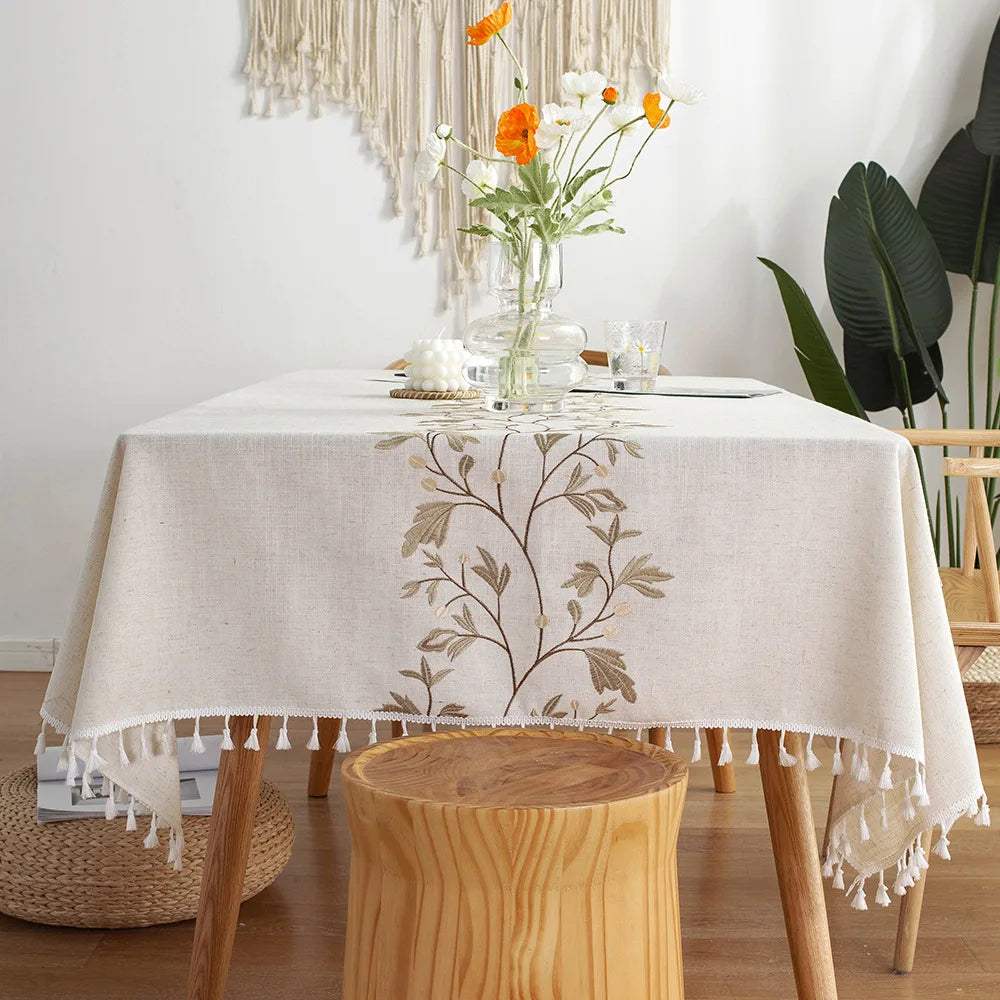
Linen and cotton are appreciated for their natural look and texture. Polyester or blends can be interesting when seeking easy care and quick drying. For a heavily used family table, coated materials offer a different approach: less cleaning hassle.
- Linen: lively and elegant look for a more natural table.
- Cotton: versatile and easy to pair with many styles.
- Practical materials: suitable for frequent meals or outdoor use depending on the model's instructions.
To compare these textile families in a daily context, consult what tablecloth material to choose for daily use.
3. Colors and patterns for spring and summer
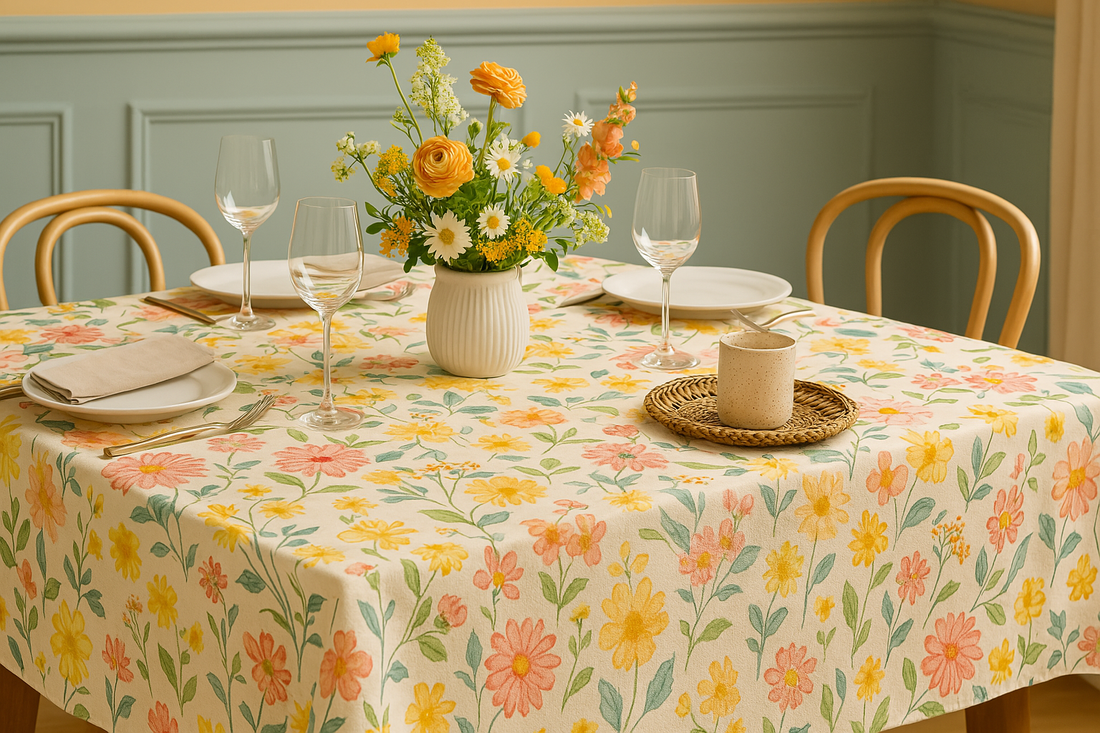
Light and slightly muted tones work easily with natural light: ecru, sand, soft green, washed blue, pale pink, or very light yellow. Floral or geometric patterns can add rhythm, but they benefit from being balanced by simpler tableware.
- Pastel shades: for a bright and soft atmosphere.
- Floral patterns: for a more expressive table.
- Stripes or checks: for a graphic and convivial look.
- Neutral base: ideal if the tableware or napkins are already colored.
4. Care and use tips
Always respect the model's label. For fabric tablecloths, treat stains before they dry and check that they have disappeared before using high heat. Our guide how to properly care for and remove stains from a linen or cotton tablecloth gathers useful tips.
If you use an oilcloth and it creases during storage, avoid direct heat and consult how to uncrease an oilcloth without damaging it.
5. Decorating tips to enhance your table
A seasonal tablecloth doesn't need to be accompanied by many accessories. A carafe, a few fabric napkins, and a low centerpiece are often enough. If you want to leave part of the tabletop visible, a runner or placemats can replace the full tablecloth.
For a more summery staging, our guide Summer Table 2026: Setting a simple table that makes you want to sit down shows how to combine textiles, colors, and light without overdoing it.
Conclusion
To welcome the warmer weather, first choose a tablecloth adapted to the table's dimensions and use, then let the material and color set the ambiance. A consistent and easy-to-live-with base will be more useful than a highly seasonal decor that is rarely brought out.