
Easter table setting: Elegance and conviviality with our household linen
Louis MikolajczakShare
The art of Easter table setting: elegance and conviviality with well-chosen linens
To celebrate Easter in a warm atmosphere, table linens primarily serve to create a cohesive base: a well-proportioned tablecloth, possibly a table runner, napkins, and a few low decorative elements. There's no need to multiply accessories if the colors and materials are already well-matched.
For a selection focused solely on tablecloths, consult our guide Which tablecloth to choose for a successful Easter table?. If you prefer to structure the center, the guide Which table runner to choose for Easter? compares two more precise approaches.
1. Define the ambiance before choosing accessories
An Easter table works well with a clear ambiance: rustic, natural, pastel, or more minimalist. First, establish a palette of two or three shades. Powder pink, soft green, washed blue, ecru, or pale yellow can evoke spring without imposing a heavily thematic decor.
The goal is not to fill the table, but to provide direction. If the tableware is already decorated, keep the tablecloth calmer. If the textile base is expressive, reduce the patterns on plates and napkins.
2. Choose table linens suited to the table
The tablecloth remains the simplest base for unifying a large table. The table runner, conversely, allows more of the tabletop to remain visible and guides the centerpiece.
- Material: cotton and linen give a natural look; an easier-to-care-for material may be preferable for a very lively family meal.
- Dimensions: measure the tabletop before choosing. For a rectangular table, the guide what size tablecloth for a rectangular table provides the main overhangs.
- Round table: for a 150 cm tabletop, consult what size tablecloth for a 150 cm round table.
- Harmony: avoid simultaneously using a highly decorated tablecloth, a strongly patterned runner, and heavily patterned napkins.
3. Set the table without overcrowding it
Start with the textile base, then place the plates and glasses before the decoration. This method allows you to immediately see the actual space available for flowers, candles, or shared dishes.
If adding a runner, center it and ensure it doesn't create an awkward bulge under glasses or plates. Our guide how to set a table runner details different arrangements according to the table's shape.
Keep central elements low enough for guests to see each other. A festive table remains primarily a space for dining and conversation.
4. Add accessories that have a real function
- Fresh flowers or branches: they bring the season without taking up much space.
- Low candles: ideal for a meal that extends into the evening.
- Place cards: useful on a large table and easy to integrate into the decor.
- Fabric napkins: a simple fold is enough; they can carry the accent color of the table.
Rabbits, eggs, and other Easter symbols can be used, but sparingly. One or two well-placed accents often appear more elegant than an accumulation.
5. Create a cohesive Easter decoration
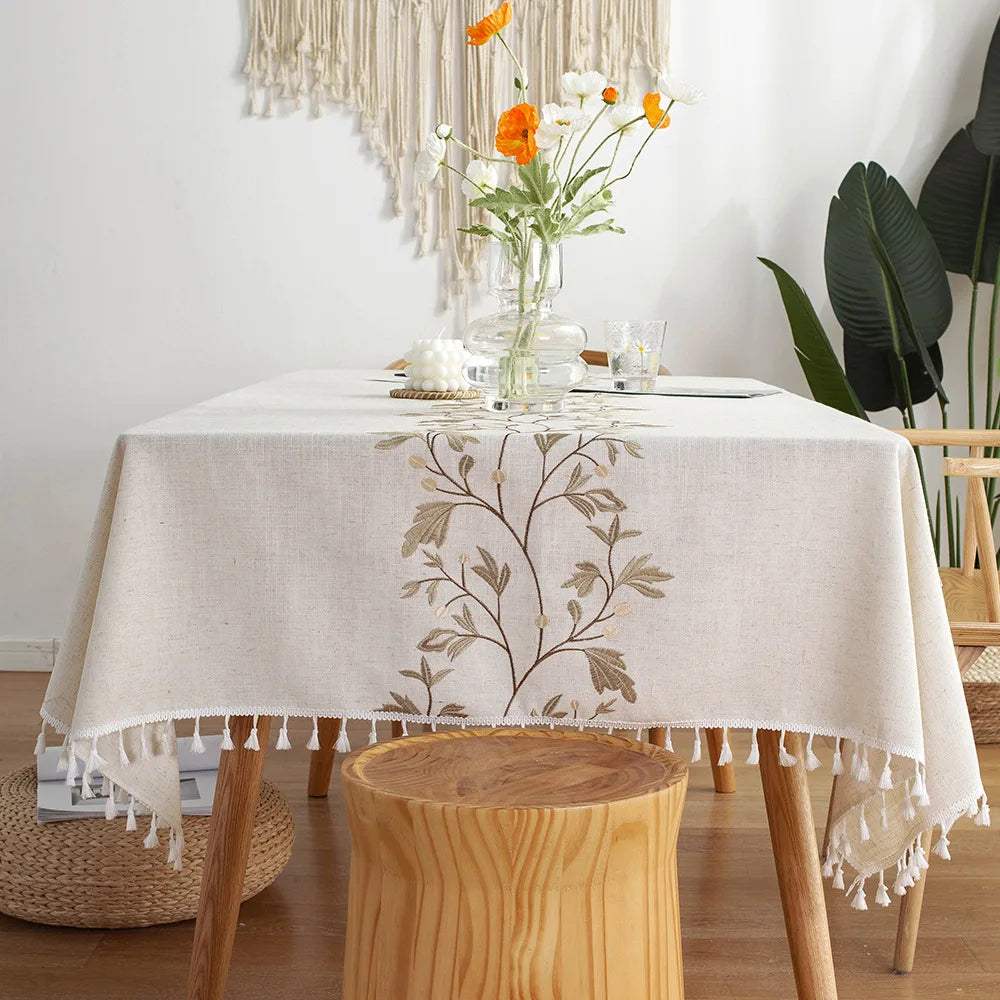
For a natural table, combine an ecru or linen tablecloth with light ceramics, a soft green runner, and a few flowers. For a more graphic table, keep a white base and choose a single pastel accent on the napkins or glasses.
You can also do without a full tablecloth if the tabletop deserves to be shown: placemats and a table runner are then sufficient to define the settings. The article Everyday table: placemat, tablecloth, or runner? helps choose this base depending on its use.
Finally, leave ample space for the dishes. The decoration should be able to remain on the table during the meal without requiring everything to be moved at serving time.
6. Conclusion
A successful Easter table relies primarily on coherence: correct dimensions, a limited palette, pleasant materials, and a few seasonal details. By first working on the table linens and then the accessories, you create a festive atmosphere without sacrificing comfort or readability.